Three environmental and public health groups are suing the
Environmental Protection Agency over its failure to establish
water quality protections for a widely used weedkiller
that’s contaminating rivers and streams across the
country, including parts of the Mountain
West. Atrazine is primarily used on crops like corn
and sorghum. While most contamination is concentrated in the
Midwest, affected watersheds extend into eastern
Colorado and New Mexico. A recent report from the
Center for Biological Diversity estimates that atrazine
contaminates 25% of river miles in the continental U.S. at
levels the EPA considers harmful to aquatic life.
… Scientific research has linked atrazine exposure to
harmful effects on aquatic plants and
wildlife. The pesticide has also raised
concerns about human health and drinking water.
A father and son from Nevada County were sentenced to jail and
ordered to restore land damaged by illegal mining along
Keystone Creek near Loganville in Sierra County, prosecutors
said. Gregory Arnoldi Jr. of Nevada City and Gregory Arnoldi
Sr. of Browns Valley pleaded no contest to felony vandalism of
public and private property and misdemeanor charges of
water pollution and stream alteration, the Sierra
County District Attorney’s Office said. The case involved
an illegally built dirt road and mining near the
creek. … The men were also charged with felony
conspiracy and misdemeanors alleging mining without a
reclamation plan or county use permit, grading without a permit
and failing to notify the California Department of Fish
and Wildlife before altering a stream.
San Diego County introduced former U.S. diplomat Bridget
Premont as its first Pollution Crisis Chief at
a news conference Monday, tapping her to lead its response to
the Tijuana River sewage crisis as preliminary
findings estimate the pollution costs the regional economy up
to $503.5 million a year. According to the county,
Premont will coordinate infrastructure planning across
agencies and pursue state and federal funding. She
will also coordinate emergency responses during sewage
spikes, chair a Sewage Crisis Interdepartmental Task
Force and maintain a public funding dashboard. In an interview
after the news conference, Premont said her immediate focus
will be on existing infrastructure, the county’s Capture and
Cleanup Initiative — constructing a wastewater
treatment plant of its own on the river — and data
showing what the region is risking.
San Diego County on Monday will introduce a former U.S.
diplomat as its first Pollution Crisis Chief, tapping
Bridget Premont to lead its response to the Tijuana
River sewage and pollution crisis as a new study
estimates the crisis could cost the region $7.9 billion over
the next two decades if it is not fixed. Premont will be
introduced at a 1 p.m. news conference at the San Diego County
Administration Center, according to the county.
… According to the county, Premont will coordinate with
federal, state and local agencies to prioritize
planning for local and cross-border infrastructure
upgrades. She will also pursue federal and state
funding, coordinate real-time emergency response when sewage
discharges spike and chair a Sewage Crisis Interdepartmental
Task Force.
PFAS chemicals are contaminating waterways across Colorado,
putting fish, wildlife and drinking water at risk. That’s the
conclusion of a new report from CoPIRG Foundation, Environment
Colorado Research & Policy Center and Frontier Group. The
study, PFAS in America’s Rivers and Lakes, finds that PFAS were
detected in Colorado’s waterways at 63% out of 16 testing
locations from 2022 to 2024. … The new report, which
covers 40 states, draws on data from the national Water Quality
Portal maintained by the U.S. Environmental Protection Agency.
Researchers detected as many as 18 different PFAS compounds at
one or more water testing locations in Colorado. … As
early as 2019, Colorado legislators began to ban the use of
PFAS, starting with certain firefighting foams. Ensuing bills
have tackled a range of consumer products including carpets,
food packaging, juvenile products, dental floss, outdoor
apparel and artificial turf.
Colorado Gov. Jared Polis and his administration are back in
court today defending against claims they failed to
protect Colorado waters and public health from factory farm
pollution. After a Colorado district court ruled in
2024 current regulations for operating permits were sufficient
to comply with the federal Clean Water Act,
conservation groups appealed. Emily Miller, staff attorney for
the advocacy group Food and Water Watch, a plaintiff in the
case, said the main problem is factory farms are
operating as sewer-less cities. “They store vast
quantities of untreated waste that is not just manure. It is
filled with pollutants, including harmful nitrates, bacteria,
heavy metals, antibiotics and hormones that are fed to the
animals,” Miller outlined. … The state agency charged with
regulating factory farms argued monitoring for leaks
was unnecessary because there was no evidence manure pits
leak.
Microplastic concentrations in Nevada’s Truckee River increased
nearly tenfold during spring runoff, according to new research
that offers a glimpse into how plastic pollution moves
through some western waterways. Researchers with the
Desert Research Institute sampled the river, which flows from
Lake Tahoe through Reno and eventually to Pyramid Lake, during
low flows in fall 2022 and again during unusually high spring
flows in 2023. On average, they detected 0.4 microplastic
particles per liter in the fall and 3.7 per liter in the
spring. … [T]he new research highlights how much
concentrations can change depending on river
conditions — something the authors say water
managers and researchers should consider when deciding when to
sample.
The newly signed California state budget includes $5 million
for a Los Banos groundwater treatment project. … The
funding is intended to help the city address hexavalent
chromium, also known as chromium-6, in its groundwater supply
and comply with drinking-water requirements. The project
predates the new state budget allocation. State Water Resources
Control Board funding documents identify the City of Los Banos’
“Hexavalent Chromium Treatment Projects” as a drinking-water
project and classify the city’s water system as serving a
disadvantaged community. Those state documents list an
estimated population of 48,896 and 12,069 service connections
associated with the Los Banos water system.
Gov. Gavin Newsom has signed two bills targeting the health
effects of the Tijuana River sewage crisis. One orders the
state’s first update in more than a half-century to its
hydrogen sulfide air standard. The other requires workplace
protections for lifeguards, park rangers and others working
outdoors in the Tijuana River Valley. Senate Bill 58, by state
Sen. Steve Padilla, directs the California Air Resources Board
to update the state’s air quality standard for hydrogen
sulfide, which has not been updated since 1969, according to
Padilla’s office. Senate Bill 1046, by Sen. Catherine
Blakespear, directs Cal/OSHA to develop workplace standards to
minimize exposure to cross-border pollution. Newsom signed the
bill Sunday, according to Blakespear’s office. Both laws take
effect Jan. 1, 2027.
Microplastics are occurring at a higher concentration in the
Truckee River than in Lake Tahoe by a factor of 3-4, according
to a recently published study. Researchers say this could mean
the extra pollution is coming from the river’s surrounding
landscape and emphasize that reducing single-use plastics is
critical to protecting the river’s water quality. It’s another
study within the last few years seeking to understand this
ubiquitous material and how it impacts human and environmental
health. … Adding further context, the Truckee River’s
concentrations are comparable to those found in studies of
other Western rivers. The Truckee River’s role in
providing drinking water to half a million people is just one
implication of this data.
The EPA has released a 53-page, $93.4 million plan to remove
dangerous chemicals from Richmond’s Heckathorn Superfund site,
but community members who’ve long advocated for a more
extensive cleanup aren’t impressed. While there may be some
aspects of the EPA’s United Heckathorn Superfund Site plan that
the Richmond Shoreline Alliance (RSA) might agree with, said
coordinator Janet Johnson, they don’t consider it a complete
cleanup. The RSA and its partner agencies became so frustrated
with the EPA last year that they wrote their own cleanup plan,
one that has been endorsed by the city of Richmond and Sen.
Jesse Arreguín. … The community is also concerned
that the channel will remain vulnerable to sea level and
groundwater rise, Johnson said.
The ubiquitous plastics of modern life are degrading into tiny
fragments and littering Earth’s landscapes and waterways.
Scientists are starting to examine and measure this phenomenon
to better understand how microplastics move through the
environment and ultimately impact human and environmental
health. A new study focuses on the Truckee River, which stems
from the clear blue waters of Lake Tahoe and traverses through
Reno and Sparks, Nevada, before reaching Pyramid Lake. The
research sought to illuminate the concentrations and types of
plastics accumulating throughout the river — which supplies
drinking water to nearly half a million people. Published
September 15th in ACS EST Water, the research was led by Hannah
Lukasik, former master’s student at DRI and the University of
Nevada Reno.
When rain falls across San Diego, it does more than send water
rushing through local rivers and creeks. It can also mobilize
pollution across the watershed. New research published in
Journal of Hydrology: Regional Studies (October 2026) from San
Diego State University finds larger storms transport greater
pollutant loads through the San Diego River watershed, offering
new insight into how storm intensity, urbanization and aging
sewer infrastructure can shape water quality in the region.
Researchers in SDSU’s Department of Civil, Construction, and
Environmental Engineering examined the San Diego River and
Alvarado Creek, a small, highly urbanized tributary adjacent to
SDSU that feeds into the river. … They found a
statistically significant relationship between a storm’s
maximum discharge, or peak flow, and the cumulative amount of
pollutants transported.
Tucson’s long-term water supply “is in significant danger” if
PFAS contamination of the city’s central wellfield isn’t
addressed, City Manager Tim Thomure says. He made the statement
Tuesday in a pitch to the City Council to approve what he said
is a first step toward launching a cleanup: the proposed
agreement between the city and a private, nonprofit group of
Air Force veterans, which sources previously told the Star
would result in the Air Force helping to pay to start PFAS
cleanup. … In the past 20 years, the city has stopped
using most of those [contaminated] wells in favor of the
renewable CAP water delivered from the Colorado River. But with
CAP supplies jeopardized for the long-term due to river flow
declines, city officials may need to rely on city groundwater
supplies to some extent instead.
San Diego County officials presented preliminary findings
Tuesday from a long-awaited study that estimates the Tijuana
River sewage and pollution crisis costs the regional economy
between $125.6 million and $503.5 million annually,
with unmitigated losses potentially reaching $7.9
billion over 20 years. The Board of Supervisors
received the draft report during its regular meeting, though no
action was required. The board directed the county’s chief
administrative officer in September 2025 to commission the
study, which was ultimately awarded to the consulting firm
ECOnorthwest. Supervisor Paloma Aguirre said the
findings will bolster the county’s case for outside
intervention and aid in this crisis.
The U.S. Environmental Protection Agency (EPA) is launching a
new scientific study designed to identify a broad
range of known and previously unidentified pollutants that
may be present in drinking water. The research will
use non-targeted analysis, an analytical approach that allows
scientists to screen samples for thousands of potential
contaminants rather than testing only for a predetermined list
of chemicals. EPA said the study will examine potential
pollutants including pharmaceuticals, per- and polyfluoroalkyl
substances (PFAS) and more than 1,000 other contaminants.
… EPA said the findings are expected to help
inform future research and prioritize potential agency
actions.
Cities across California and the Southwest are significantly
increasing and diversifying their use of recycled wastewater as
traditional water supplies grow tighter.
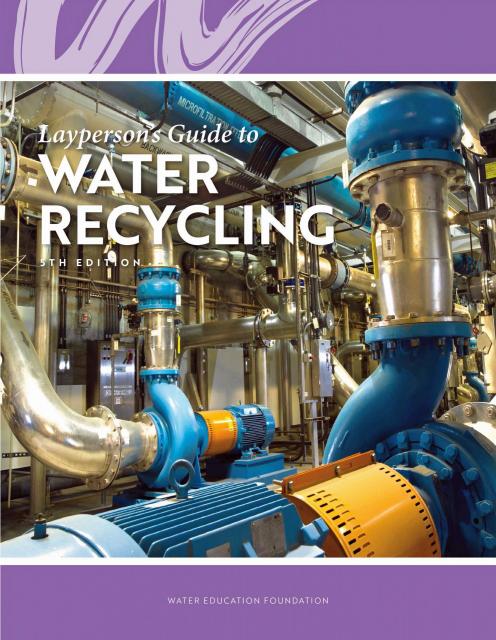
The 5th edition of our Layperson’s Guide to Water Recycling
covers the latest trends and statistics on water reuse as a
strategic defense against prolonged drought and climate change.
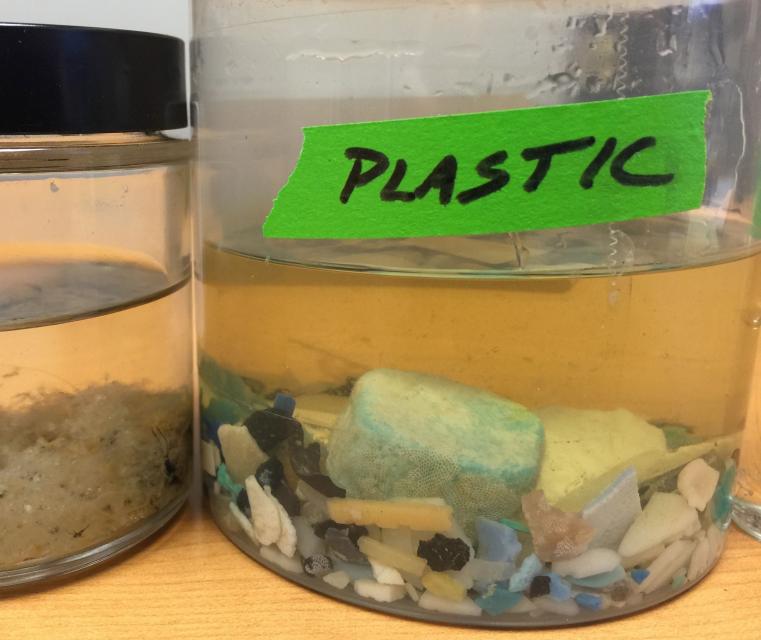
Tiny pieces of plastic waste shed
from food wrappers, grocery bags, clothing, cigarette butts,
tires and paint are invading the environment and every facet of
daily life. Researchers know the plastic particles have even made
it into municipal water supplies, but very little data exists
about the scope of microplastic contamination in drinking
water.
After years of planning, California this year is embarking on a
first-of-its-kind data-gathering mission to illuminate how
prevalent microplastics are in the state’s largest drinking water
sources and help regulators determine whether they are a public
health threat.
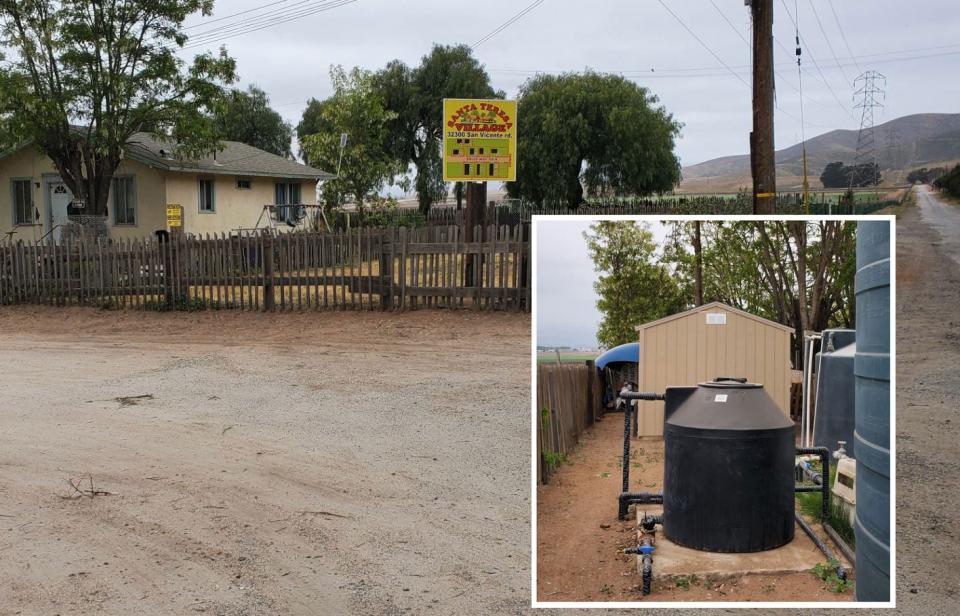
A pilot program in the Salinas Valley run remotely out of Los Angeles is offering a test case for how California could provide clean drinking water for isolated rural communities plagued by contaminated groundwater that lack the financial means or expertise to connect to a larger water system.
Martha Guzman recalls those awful
days working on water and other issues as a deputy legislative
secretary for then-Gov. Jerry Brown. California was mired in a
recession and the state’s finances were deep in the red. Parks
were cut, schools were cut, programs were cut to try to balance a
troubled state budget in what she remembers as “that terrible
time.”
She now finds herself in a strikingly different position: As
administrator of the U.S. Environmental Protection Agency’s
Region 9, she has a mandate to address water challenges across
California, Nevada, Arizona and Hawaii and $1 billion to help pay
for it. It is the kind of funding, she said, that is usually
spread out over a decade. Guzman called it the “absolutely
greatest opportunity.”
Innovative efforts to accelerate
restoration of headwater forests and to improve a river for the
benefit of both farmers and fish. Hard-earned lessons for water
agencies from a string of devastating California wildfires.
Efforts to drought-proof a chronically water-short region of
California. And a broad debate surrounding how best to address
persistent challenges facing the Colorado River.
These were among the issues Western Water explored in
2019, and are still worth taking a look at in case you missed
them.
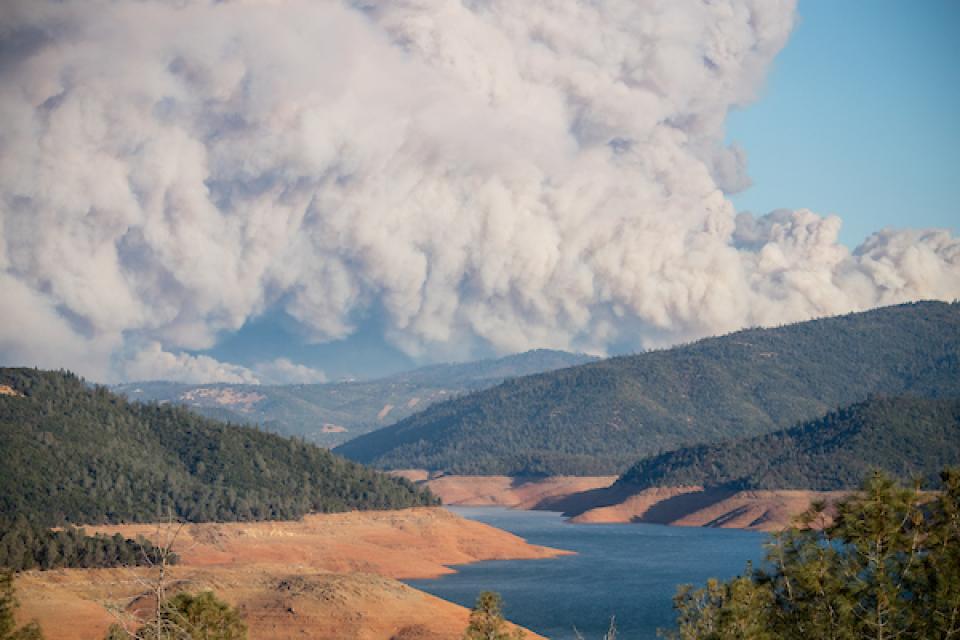
It’s been a year since two devastating wildfires on opposite ends
of California underscored the harsh new realities facing water
districts and cities serving communities in or adjacent to the
state’s fire-prone wildlands. Fire doesn’t just level homes, it
can contaminate water, scorch watersheds, damage delivery systems
and upend an agency’s finances.
Blasted by sun and beaten by waves,
plastic bottles and bags shed fibers and tiny flecks of
microplastic debris that litter the San Francisco Bay where they
can choke the marine life that inadvertently consumes it.
Summer is a good time to take a
break, relax and enjoy some of the great beaches, waterways and
watersheds around California and the West. We hope you’re getting
a chance to do plenty of that this July.
But in the weekly sprint through work, it’s easy to miss
some interesting nuggets you might want to read. So while we’re
taking a publishing break to work on other water articles planned
for later this year, we want to help you catch up on
Western Water stories from the first half of this year
that you might have missed.
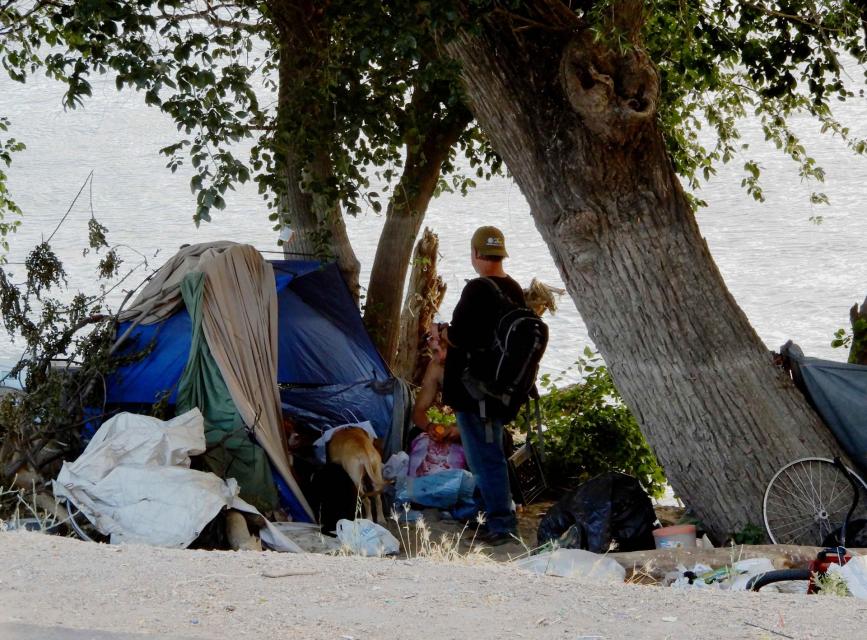
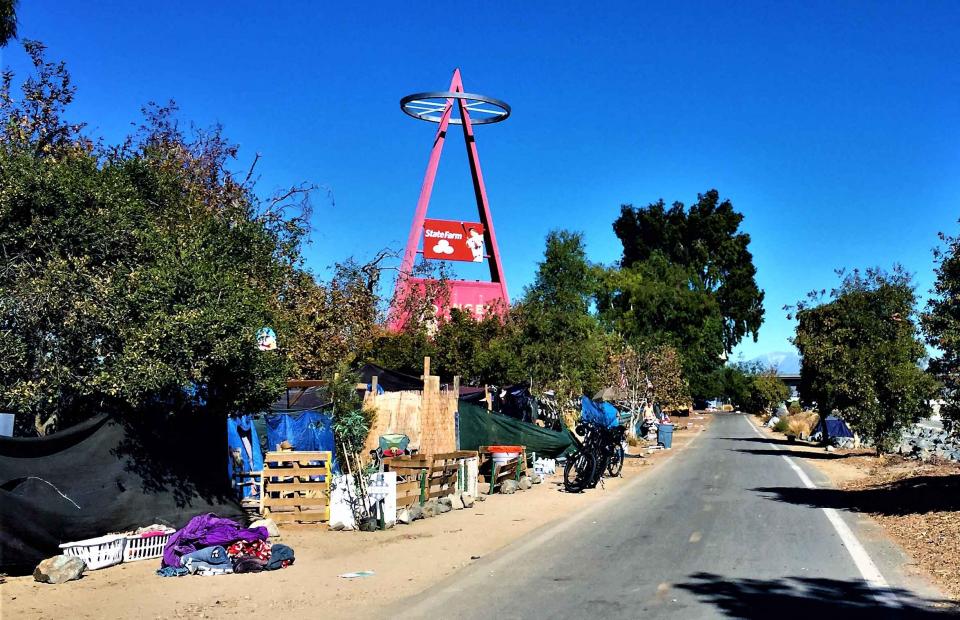
Each day, people living on the streets and camping along waterways across California face the same struggle – finding clean drinking water and a place to wash and go to the bathroom.
Some find friendly businesses willing to help, or public restrooms and drinking water fountains. Yet for many homeless people, accessing the water and sanitation that most people take for granted remains a daily struggle.
One of California Gov. Gavin
Newsom’s first actions after taking office was to appoint Wade
Crowfoot as Natural Resources Agency secretary. Then, within
weeks, the governor laid out an ambitious water agenda that
Crowfoot, 45, is now charged with executing.
That agenda includes the governor’s desire for a “fresh approach”
on water, scaling back the conveyance plan in the Sacramento-San
Joaquin Delta and calling for more water recycling, expanded
floodplains in the Central Valley and more groundwater recharge.
Low-income Californians can get help with their phone bills, their natural gas bills and their electric bills. But there’s only limited help available when it comes to water bills.
That could change if the recommendations of a new report are implemented into law. Drafted by the State Water Resources Control Board, the report outlines the possible components of a program to assist low-income households facing rising water bills.
The growing leadership of women in water. The Colorado River’s persistent drought and efforts to sign off on a plan to avert worse shortfalls of water from the river. And in California’s Central Valley, promising solutions to vexing water resource challenges.
These were among the topics that Western Water news explored in 2018.
We’re already planning a full slate of stories for 2019. You can sign up here to be alerted when new stories are published. In the meantime, take a look at what we dove into in 2018:
Disadvantaged communities are those carrying the greatest
economic, health and environmental burdens. They include
poverty, high unemployment, higher risk of asthma and heart
disease, and often limited access to clean, affordable drinking
water.
For decades, cannabis has been grown
in California – hidden away in forested groves or surreptitiously
harvested under the glare of high-intensity indoor lamps in
suburban tract homes.
In the past 20 years, however, cannabis — known more widely as
marijuana – has been moving from being a criminal activity to
gaining legitimacy as one of the hundreds of cash crops in the
state’s $46 billion-dollar agriculture industry, first legalized
for medicinal purposes and this year for recreational use.
As we continue forging ahead in 2018
with our online version of Western Water after 40 years
as a print magazine, we turned our attention to a topic that also
got its start this year: recreational marijuana as a legal use.
State regulators, in the last few years, already had been beefing
up their workforce to tackle the glut in marijuana crops and
combat their impacts to water quality and supply for people, fish
and farming downstream. Thus, even if these impacts were perhaps
unbeknownst to the majority of Californians who approved
Proposition 64 in 2016, we thought it important to see if
anything new had evolved from a water perspective now that
marijuana was legal.
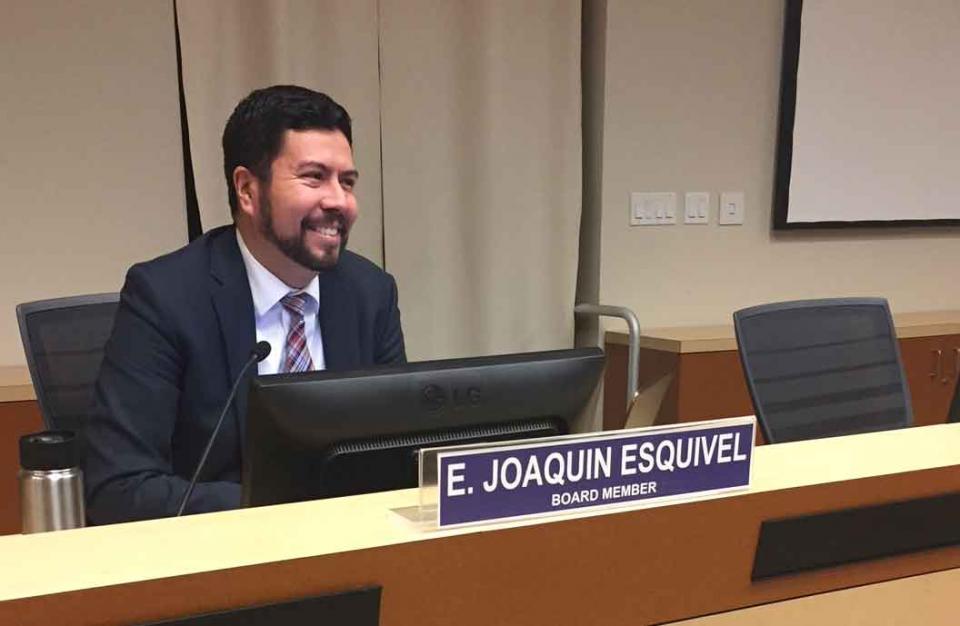
Joaquin Esquivel learned that life is
what happens when you make plans. Esquivel, who holds the public
member slot at the State Water Resources Control Board in
Sacramento, had just closed purchase on a house in Washington
D.C. with his partner when he was tapped by Gov. Jerry Brown a
year ago to fill the Board vacancy.
Esquivel, 35, had spent a decade in Washington, first in several
capacities with then Sen. Barbara Boxer, D-Calif., and then as
assistant secretary for federal water policy at the California
Natural Resources Agency. As a member of the State Water Board,
he shares with four other members the difficult task of
ensuring balance to all the uses of California’s water.
A new study could help water
agencies find solutions to the vexing challenges the homeless
face in gaining access to clean water for drinking and
sanitation.
The Santa Ana Watershed Project
Authority (SAWPA) in Southern California has embarked on a
comprehensive and collaborative effort aimed at assessing
strengths and needs as it relates to water services for people
(including the homeless) within its 2,840 square-mile area that
extends from the San Bernardino Mountains to the Orange County
coast.
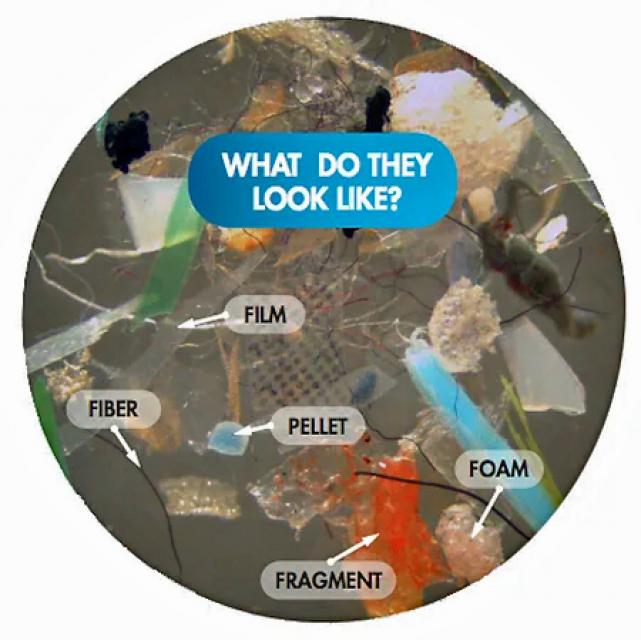
Microplastics – plastic debris
measuring less than 5 millimeters – are an
increasing water quality concern. They enter waterways and
oceans as industrial microbeads from various consumer
products or larger plastic litter that degrades into small bits.
Microbeads have been used in exfoliating agents, cosmetic washes
and large-scale cleaning processes. Microplastics are used
pharmaceutically for efficient drug delivery to affected sites in
patients’ bodies and by textile companies to create artificial
fibers.
Contaminants exist in water supplies from both natural and
manmade sources. Even those chemicals present without human
intervention can be mobilized from introduction of certain
pollutants from both
point and nonpoint sources.
Directly detecting harmful
pathogens in water can be expensive, unreliable and incredibly
complicated. Fortunately, certain organisms are known to
consistently coexist with these harmful microbes which are
substantially easier to detect and culture: coliform bacteria.
These generally non-toxic organisms are frequently used as
“indicator
species,” or organisms whose presence demonstrates a
particular feature of its surrounding environment.
Point sources release pollutants from discrete conveyances, such
as a discharge pipe, and are regulated by federal and state
agencies. The main point source dischargers are factories and
sewage treatment plants, which release treated
wastewater.
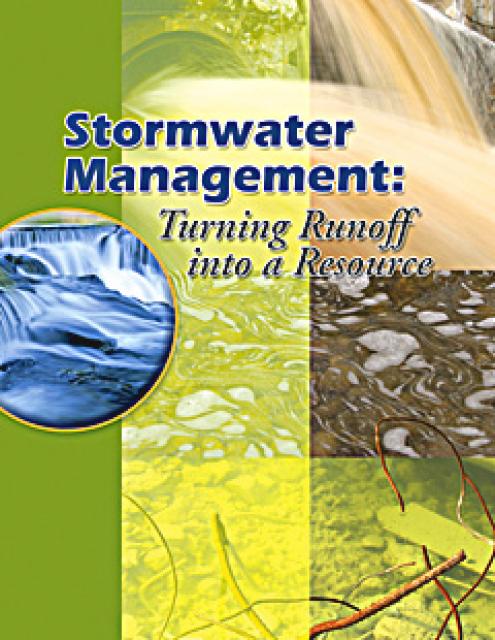
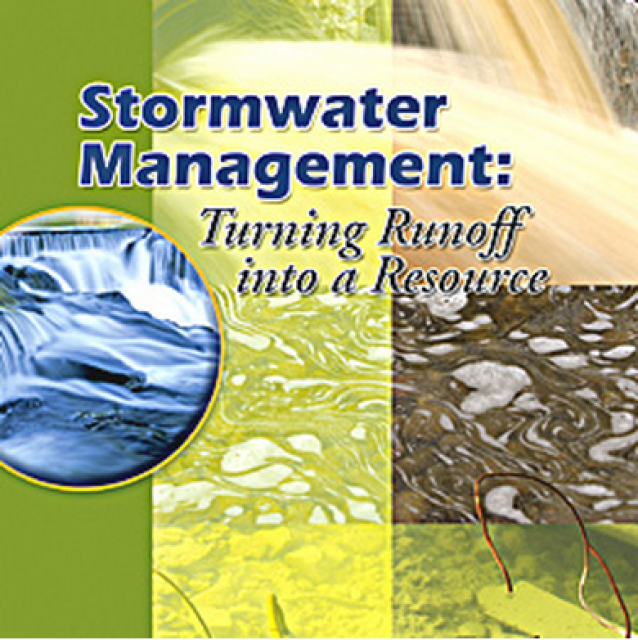
Problems with polluted stormwater and steps that can be taken to
prevent such pollution and turn what is often viewed as
“nuisance” runoff into a water resource is the focus of this
publication, Stormwater Management: Turning Runoff into a
Resource. The 16-page booklet, funded by a grant from the State
Water Resources Control Board, includes color photos and
graphics, text explaining common stormwater pollutants and
efforts to prevent stormwater runoff through land use/
planning/development – as well as tips for homeowners to reduce
their impacts on stormwater pollution.
20-minute version of the 2012 documentary The Klamath Basin: A
Restoration for the Ages. This DVD is ideal for showing at
community forums and speaking engagements to help the public
understand the complex issues related to complex water management
disputes in the Klamath River Basin. Narrated by actress Frances
Fisher.
For over a century, the Klamath River Basin along the Oregon and
California border has faced complex water management disputes. As
relayed in this 2012, 60-minute public television documentary
narrated by actress Frances Fisher, the water interests range
from the Tribes near the river, to energy producer PacifiCorp,
farmers, municipalities, commercial fishermen, environmentalists
– all bearing legitimate arguments for how to manage the water.
After years of fighting, a groundbreaking compromise may soon
settle the battles with two epic agreements that hold the promise
of peace and fish for the watershed. View an excerpt from the
documentary here.
This 25-minute documentary-style DVD, developed in partnership
with the California Department of Water Resources, provides an
excellent overview of climate change and how it is already
affecting California. The DVD also explains what scientists
anticipate in the future related to sea level rise and
precipitation/runoff changes and explores the efforts that are
underway to plan and adapt to climate.
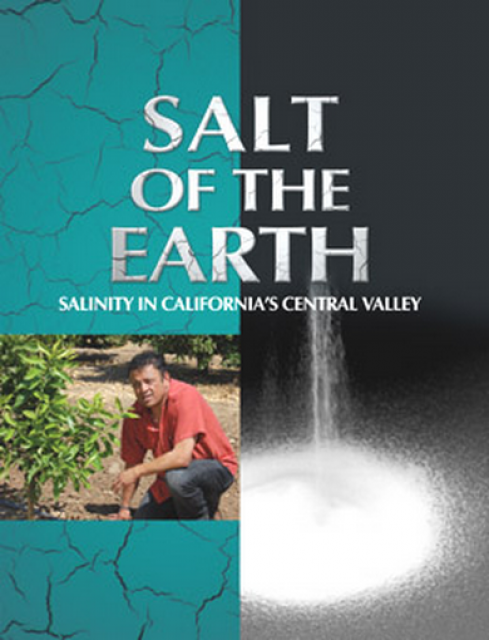
Salt. In a small amount, it’s a gift from nature. But any doctor
will tell you, if you take in too much salt, you’ll start to have
health problems. The same negative effect is happening to land in
the Central Valley. The problem scientists call “salinity” poses
a growing threat to our food supply, our drinking water quality
and our way of life. The problem of salt buildup and potential –
but costly – solutions are highlighted in this 2008 public
television documentary narrated by comedian Paul Rodriguez.
A 20-minute version of the 2008 public television documentary
Salt of the Earth: Salinity in California’s Central Valley. This
DVD is ideal for showing at community forums and speaking
engagements to help the public understand the complex issues
surrounding the problem of salt build up in the Central Valley
potential – but costly – solutions. Narrated by comedian Paul
Rodriquez.
20-minute DVD that explains the problem with polluted stormwater,
and steps that can be taken to help prevent such pollution and
turn what is often viewed as a “nuisance” into a water resource
through various activities.
Many Californians don’t realize that when they turn on the
faucet, the water that flows out could come from a source close
to home or one hundreds of miles away. Most people take their
water for granted; not thinking about the elaborate systems and
testing that go into delivering clean, plentiful water to
households throughout the state. Where drinking water comes from,
how it’s treated, and what people can do to protect its quality
are highlighted in this 2007 PBS documentary narrated by actress
Wendie Malick.
A 30-minute version of the 2007 PBS documentary Drinking Water:
Quenching the Public Thirst. This DVD is ideal for showing at
community forums and speaking engagements to help the public
understand the complex issues surrounding the elaborate systems
and testing that go into delivering clean, plentiful water to
households throughout the state.
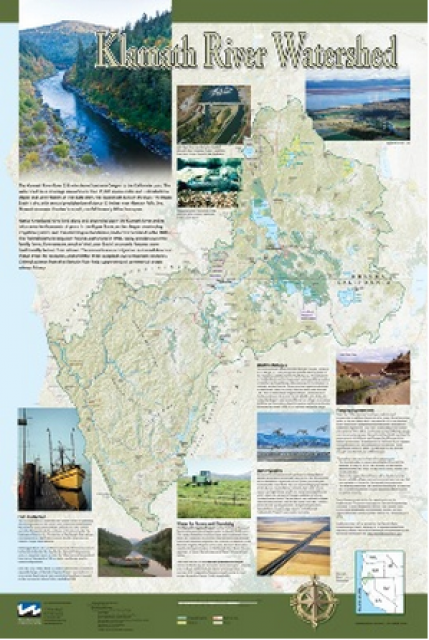
This beautiful 24×36-inch poster, suitable for framing, displays
the rivers, lakes and reservoirs, irrigated farmland, urban areas
and Indian reservations within the Klamath River Watershed. The
map text explains the many issues facing this vast,
15,000-square-mile watershed, including fish restoration;
agricultural water use; and wetlands. Also included are
descriptions of the separate, but linked, Klamath Basin
Restoration Agreement and the Klamath Hydroelectric Agreement,
and the next steps associated with those agreements. Development
of the map was funded by a grant from the U.S. Fish and Wildlife
Service.
The 28-page Layperson’s Guide to California
Wastewater is an in-depth, easy-to-understand publication
that provides background information on the history of wastewater
treatment and how wastewater is collected, conveyed, treated and
disposed of today. The guide also offers case studies of
different treatment plants and their treatment processes.
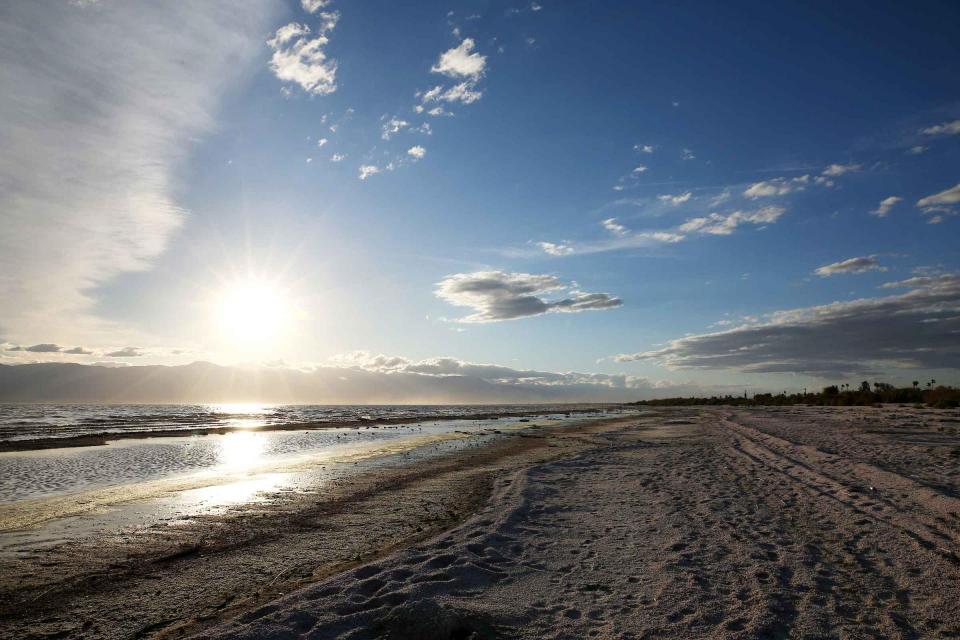
As part of the historic Colorado
River Delta, the Salton Sea regularly filled and dried for
thousands of years due to its elevation of 237 feet below
sea level.
The most recent version of the Salton Sea was formed in 1905 when
the Colorado River broke
through a series of dikes and flooded the seabed for two years,
creating California’s largest inland body of water. The
Salton Sea, which is saltier than the Pacific Ocean, includes 130
miles of shoreline and is larger than Lake Tahoe.
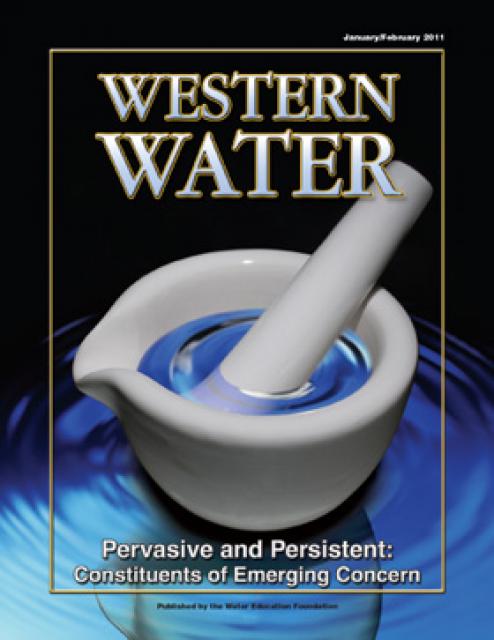
This printed issue of Western Water, based on presentations
at the November 3-4, 2010 Water Quality Conference in Ontario,
Calif., looks at constituents of emerging concerns (CECs) – what
is known, what is yet to be determined and the potential
regulatory impacts on drinking water quality.
This issue of Western Water looks at some of the issues
facing drinking water providers, such as compliance with
increasingly stringent treatment requirements, the need to
improve source water quality and the mission of continually
informing consumers about the quality of water they receive.
This issue of Western Water examines PPCPs – what they are, where
they come from and whether the potential exists for them to
become a water quality problem. With the continued emphasis on
water quality and the fact that many water systems in the West
are characterized by flows dominated by effluent contributions,
PPCPs seem likely to capture interest for the foreseeable future.
This issue of Western Water examines the presence of mercury in
the environment and the challenge of limiting the threat posed to
human health and wildlife. In addition to outlining the extent of
the problem and its resistance to conventional pollution
remedies, the article presents a glimpse of some possible courses
of action for what promises to be a long-term problem.
This issue of Western Water examines the problem of perchlorate
contamination and its ramifications on all facets of water
delivery, from the extensive cleanup costs to the search for
alternative water supplies. In addition to discussing the threat
posed by high levels of perchlorate in drinking water, the
article presents examples of areas hard hit by contamination and
analyzes the potential impacts of forthcoming drinking water
standards for perchlorate.
2002 marks the 30th anniversary of one of the most significant
environmental laws in American history, the Clean Water Act
(CWA). The CWA has had remarkable success, reversing years of
neglect and outright abuse of the nation’s waters. But challenges
remain as attention turns to the thorny issue of cleaning up
nonpoint sources of pollution.