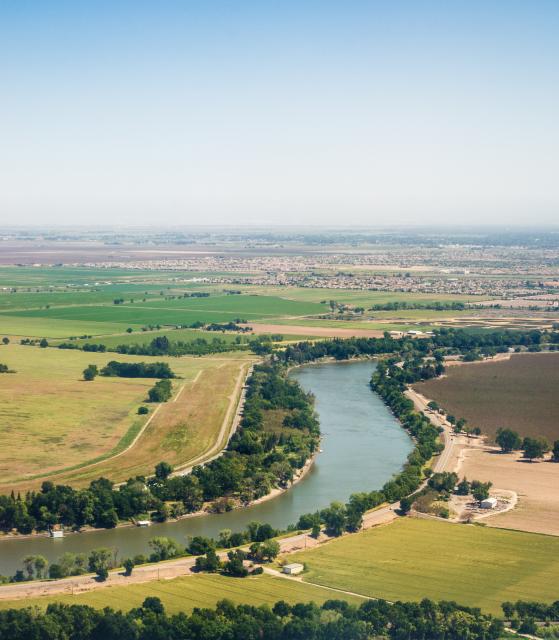
Watch our series of brief videos on
the importance of the Sacramento-San Joaquin Delta, how it works
and the challenges it is facing. Learn about its significance as
a water delivery hub for California, an agricultural community, a
water sports playground and a haven for fish and other wildlife.
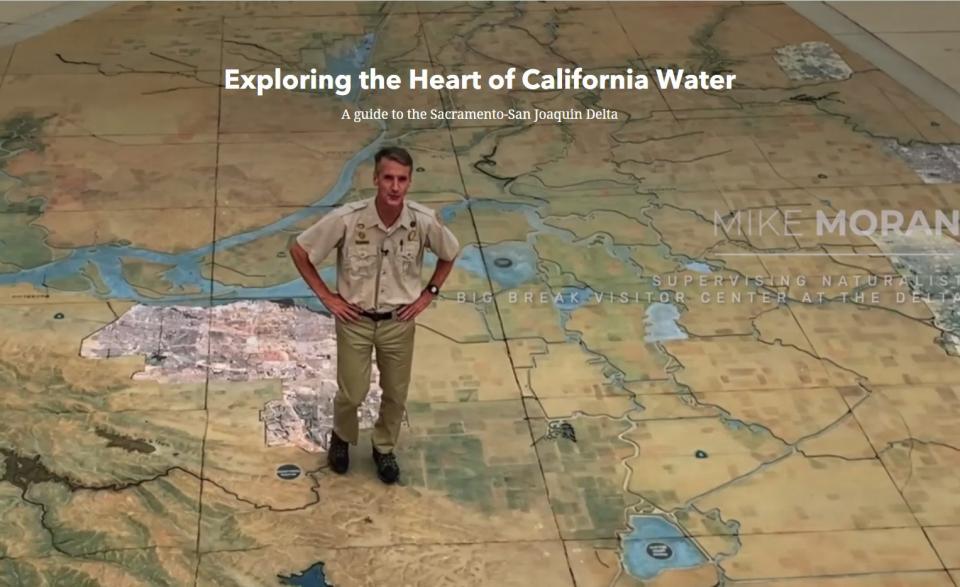
Take an interactive online tour of
the Sacramento-San Joaquin Delta and learn more about its
importance as a water delivery hub, an agricultural cornucopia, a
haven for fish and wildlife, a playground for boaters and anglers
and a home for families with deep generational roots.
This page is a resource for all things drought – where you
can find real-time reservoir levels, drought severity
maps, special reports, a newsfeed of current
developments and general background on droughts in California and
the West, as well as answers to common drought questions and tips
for how you can save water at home.
What is Drought?
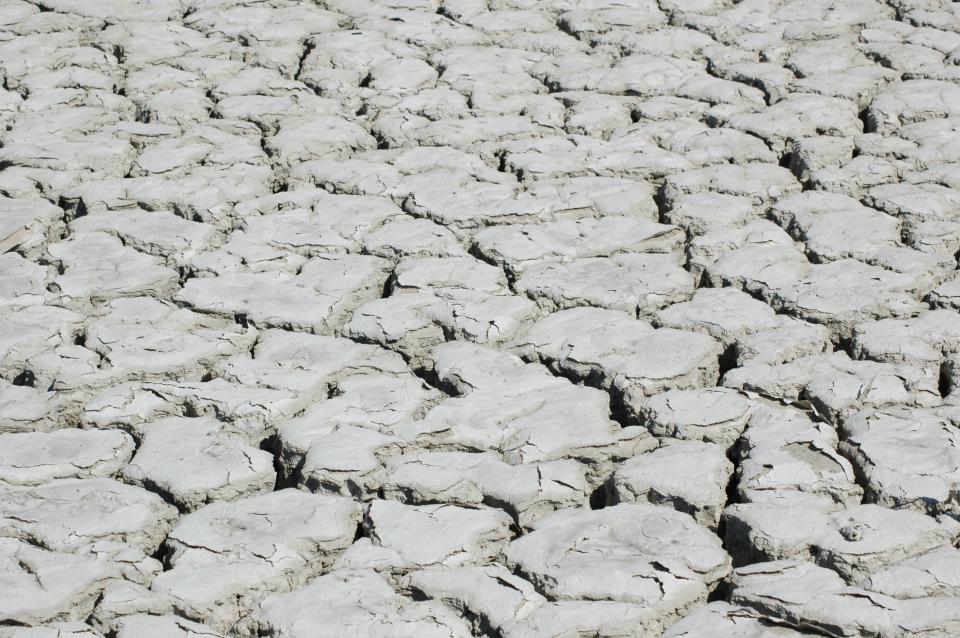
Drought – an extended period of limited or no
precipitation – is a fact of life in California and the
West, with water resources following boom-and-bust patterns.
In spring 2026, record-high temperatures across the West
obliterated much of the region’s already meager snowpack,
sparking governors Utah, Colorado and New Mexico to declare
statewide drought emergencies and some cities, such as Denver, to
launch mandatory watering use reductions.
The Colorado River Basin, which spans seven U.S. states and
portions of Mexico, has been battered by an extended drought
since 2000. Scientists now believe the drought ranks among the
worst in more than 1,200 years. During the winter of 2025-2026,
snowpack in the river’s mountain headwaters in Colorado, Utah and
Wyoming reached record lows, prompting hydrologists to project
runoff into the river during the critical April-July period to be
just 13 percent of average.
California has weathered several severe droughts over the past
quarter century, most recently from 2020-2022, when Gov. Gavin
Newsom declared drought emergencies in all 58 of the state’s
counties. Newsom relaxed those restrictions in March 2023,
after an exceptionally wet winter filled reservoirs and packed
the Sierra Nevada with record snowfall. But drought fears
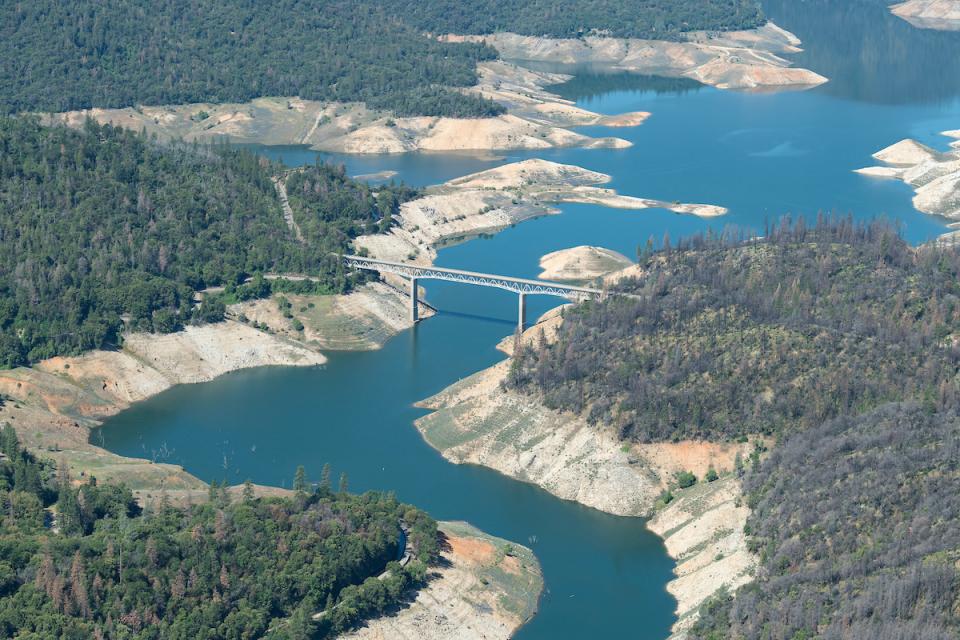
have returned again. In May 2026, statewide reservoir levels
stood at 117 percent of average, but snowpack was just 21
percent of average, raising concerns about water supplies the
following year.
Read more about droughts and their
impacts in Aquapedia, our online water
encyclopedia
California is no stranger to drought. When conditions become dry,
water storage declines and water conservation mandates make news
headlines; questions from the public often surface about what
appear to be easy solutions to augment the state’s water supply.
But the answers can be complicated and, in the end, there is no
silver bullet to ensure a resilient water supply, especially
during drought.
We explore “frequently asked questions” often posed by the public
and provide answers below. Simply click on the question for the
answer to appear.
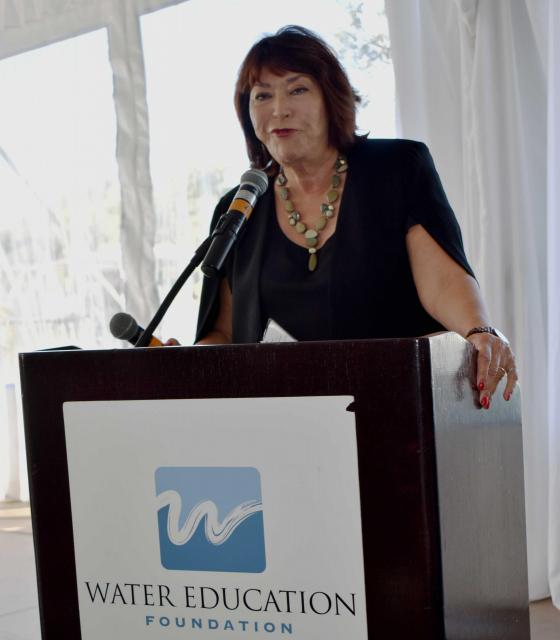
The Water Education Foundation
established an annual award in 2022 to honor excellence in
journalism that illuminates complicated water issues in
California and the West. The award was named for and funded by
the Foundation’s longtime executive director, Rita Schmidt
Sudman, who retired in 2014.
The award includes $1,000 cash and allows the recipient to take
advantage of the Foundation’s resources, such as water maps, Layperson’s Guides and water tours, to beef up their knowledge
and sources.
Sudman said she endowed the journalism award with $50,000 to
support and encourage coverage of water in California and across
the West. Independent, impartial journalism that explains myriad
water resource issues throughout the West has been a key part of
the Foundation’s mission since its founding in 1977.
Looking for more information about water resources and COVID-19?
The Water Education Foundation has put together a list of
resources and background information to keep you updated.
What You Need to Know about Water and COVID-19:
TAP WATER: California’s safe drinking water
standards require a multistep treatment process that includes
filtration and disinfection. This process removes and kills
viruses, including coronaviruses such as COVID-19, as well as
bacteria and other pathogens. Read our Aquapedia page on water
treatmentfor more information.
California has been called the most
hydrologically altered landmass on the planet, and it is true.
Today the state bears little resemblance to its former self.
Where deserts and grasslands once prevailed, now reservoirs store
water to move it to the arid land. Swampy marshes have given way
to landfill for urban development. Wetlands have been converted to
farmland. California’s water resources now support 35 million
people and irrigate more than 5.68 million acres of farmland.
California has a history of
multi-year droughts and periodic years of abundant rain. The
state’s Mediterranean climate means there is a short window for
the rainy season. A robust Sierra Nevada snowpack is critical
in helping to meet water demands during the long, hot
summer. Severe drought occurred in the late 1970s, the late 1980s
and the late 2000s.
Watersheds are all around us. You’re sitting or standing in one
right now.
A watershed is more than just a piece of land that water flows
through. It is a place where people and animals live, and plants
and trees grow. All life is dependent on a healthy watershed.
Without watersheds, we wouldn’t have water for farms, cities,
wildlife, recreation – everything!
The slideshow is packed full of useful information and
photographs, maps and web links to help you explore each topic
further.
Salt. In the right amount, it’s a gift from nature. Our bodies
need some salt to absorb water and, basically, to survive. But
any doctor will tell you, if you take in too much salt, you’ll
start to have health problems. A similar negative effect is
happening in California and is particularly obvious in the
Central Valley.
Excess salinity poses a growing threat to food production,
drinking water quality and public health. Salts increase the cost
of urban drinking water and wastewater treatment, which are paid
for by residents and businesses.
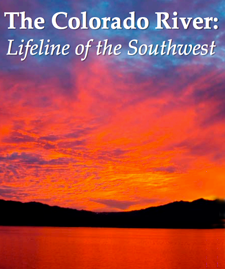
The 1,440-mile-long Colorado River passes through parts of seven states, several Indian reservations and into Mexico. Since the river was first tapped by humans 1,500 years ago, the water has been claimed, reclaimed, divided and subdivided many times.
Today, there are many demands for Colorado River water: Agriculture and Livestock, Municipal and Industrial, Recreation, Fish/Wildlife and Habitat, Hydroelectricity, Tribes and Mexico.
More water is exported from the Colorado River’s 250,000 square-mile basin than from any other river basin in the world. Every drop of its average 5 trillion gallons of water is used each year. In fact, the river often runs dry before it reaches its final destination at the Sea of Cortez in Mexico because of use by the United States and Mexico. There’s no doubt: All the competing demands for the water make it one of the most controlled and controversial rivers in the United States.
Watch the Colorado River slideshow, which is full of useful information and photographs, maps and web links to help you explore Colorado River topics further.
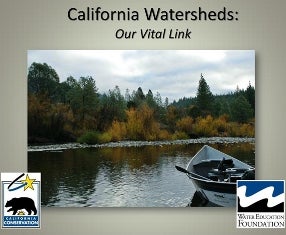
California Watersheds: Our Vital Link Slideshow
Watersheds are all around us. You’re sitting or standing in one right now.
A watershed is more than just a piece of land that water flows through. It is a place where people and animals live, and plants and trees grow. All life is dependent on a healthy watershed. Without watersheds, we wouldn’t have water for farms, cities, wildlife, recreation – everything!
The slideshow is packed full of useful information and photographs, maps and web links to help you explore each topic further.
What you will learn:
How watersheds function and how their overall health impacts all life around it
What issues threaten watersheds: Land-based pollutants, recreation, development, water quality, high-intensity fire and unhealthy forests
What’s being done through watershed management to ensure watershed health is maintained and improved
Where individual projects all over California are making a real difference
How you can locate the watershed in your area and get involved.
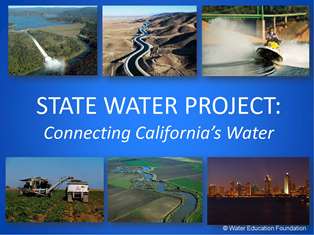
State Water Project Slideshow
This full-color slideshow, entitled “The State Water Project: Connecting California’s Water,” pays tribute to California’s State Water Project (SWP), celebrating its 50th anniversary in 2010.
The slideshow highlights the historical value of the SWP to the daily lives of Californians. In total, the SWP provides drinking water for 25 million people and irrigation water for more than 750,000 farmland acres. In 2001, the American Society of Civil Engineers selected the SWP as one of the greatest engineering achievements of the 20th century.