Water containing wastes – aka wastewater – from residential,
commercial and industrial processes requires treatment to remove
pollutants prior to discharge. After treatment, the water is
suitable for nonconsumption (nonpotable) and even potable use.
In California, water recycling is a critical component of the
state’s efforts to use water supplies more efficiently. The state
presently recycling about 669,000 acre-feet of water per year and
has the potential to reuse an additional two million acre-feet
per year.
Non-potable uses include:
landscape and crop irrigation
stream and wetlands enhancement
industrial processes
recreational lakes, fountains and decorative ponds
toilet flushing and gray water applications
as a barrier to protect groundwater supplies
from seawater intrusion
wetland habitat creation, restoration, and maintenance
San Diego County officials presented preliminary findings
Tuesday from a long-awaited study that estimates the Tijuana
River sewage and pollution crisis costs the regional economy
between $125.6 million and $503.5 million annually,
with unmitigated losses potentially reaching $7.9
billion over 20 years. The Board of Supervisors
received the draft report during its regular meeting, though no
action was required. The board directed the county’s chief
administrative officer in September 2025 to commission the
study, which was ultimately awarded to the consulting firm
ECOnorthwest. Supervisor Paloma Aguirre said the
findings will bolster the county’s case for outside
intervention and aid in this crisis.
E. coli levels in the Tijuana River watershed are often 30,000
times higher than the federal standard for freshwater bodies,
according to a new report San Diego Coastkeeper released last
week. And chemicals researchers said they can’t find thresholds
for because they’re not expected to be found in water are also
being detected in the binational river. … Coastkeeper’s
findings come ahead of what could be another public health
report on the Tijuana River crisis. San Diego County announced
last week that it’s launching a second survey with the Centers
for Disease Control and Prevention (CDC). … CDC and
county volunteers conducting the survey are expected to select
households randomly Sept. 17 and 18 between 2 p.m. and 7 p.m.
and Saturday from 10 a.m. to 7 p.m.
Washington County officials know the idea of drinking treated
wastewater can be hard to stomach for some. They’re hoping a
new $7 million demonstration facility can help get
southern Utahns past that “ick factor.” The Washington
County Water Conservancy District is designing the facility to
allow visitors see — and taste — the purification process
firsthand in hopes of building public confidence in
recycled water long before the district’s full-scale
treatment facility comes online. “We want to be
transparent,” said Zach Renstrom, district general manager.
“People will be able to come [to the facility] and actually see
the process … and we will describe all the different methods
that we have to go through to get to that [drinkable]
standard.”
A steady stream of industrial chemicals, heavy metals and
pesticides are flowing into the Tijuana River on a regular
basis, according to a new water quality report from San Diego
Coastkeeper, a pattern the nonprofit’s executive director says
points to ongoing, unregulated discharges from
manufacturing plants across the border. … The
report, released this month, documents a year of monthly
sampling at four sites in the lower Tijuana River watershed,
tracking sewage contamination, heavy metals, industrial
chemicals, pesticides and other pollutants flowing
across the border from Mexico into the river, its estuary and
the Pacific Ocean. … E. coli levels at all four sites
exceeded the laboratory’s measurable range for most of the
year, according to the report.
The $5.8 million San Diego County supervisors approved Sept. 1
for the Tijuana Sewage Crisis won’t build a sewage treatment
plant. It funds design and engineering work — the first step,
supervisors say, before the county can chase the hundreds of
millions of dollars an actual fix will cost. Supervisors
approved the funding in a 4-1 vote, framing it as San Diego’s
answer to decades of waiting on Mexico and the federal
government, according to its champions, Supervisors Terra
Lawson-Remer and Paloma Aguirre. The money will fund design for
a permanent box culvert fix at Saturn Boulevard and engineering
work on a capture and cleanup system that Aguirre described as
the first infrastructure the county would build to capture and
treat river flows directly, on U.S. soil.
The California State Water Resources Control Board is
rightfully turning attention back to how much water
the Los Angeles Department of Water and Power should take
from the Mono Lake Basin. As climate change puts more pressure
on water resources, it’s high time to reconsider that question.
Los Angeles’ appropriation of water from remote places like
Mono Lake is the desert metropolis’ original sin, with
existential consequences for rural parts of the state. But in
recent commitments to double down on municipal water
reclamation, the city has made brave decisions to shift toward
greater water security and stewardship. –Written by Erin Ryan, the Charles and Ramona
Hilliard Professor of Law at the University of Southern
California’s Gould School of Law and the author of “Law for the
Land: The Public Trust Doctrine, Mono Lake, and a Quiet
Revolution in Environmental Rights.”
A year ago, Lee Zeldin, head of the U.S. Environmental
Protection Agency (EPA), visited the Tijuana River, one
of the nation’s most polluted rivers, and vowed to act
urgently to stop the crisis. Now, the federal agency is
committing to bringing the same sense of urgency to
another heavily polluted river more than 100 miles east of the
San Diego-Mexico border in Imperial Valley. “Our
commitment here to you is that we’re here to do the same,” Mike
Martucci, acting regional administrator for EPA’s Region 9,
said at a recent roundtable in Calexico. The agency and the
U.S. International Boundary and Water Commission (IBWC) hosted
the meeting last month to announce their latest efforts to stop
the decades-long, cross-border problem.
The San Diego County Board of Supervisors unlocked
approximately $6 million in reserves and is planning to spend a
portion of that money on evaluating the first phase of a
project to build a new treatment plant, separate from the
existing South Bay plant, to capture and treat Tijuana River
sewage flows. On Sept. 1, the board established the Tijuana
River Capture and Cleanup Initiative with three phases to build
a new treatment plant near the U.S.-Mexico border, at a
starting cost of $1.8 million to evaluate options including
past proposals. A county board letter about the initiative
does not include a total price estimate nor where that money
would come from or the treatment capacity for the plant and
where it would be built. However, the letter says the first
phase will consider a 2021 river diversion study by the U.S.
Environmental Protection Agency.
The San Diego County Board of Supervisors voted Tuesday to
launch a new phase of the county’s fight against Tijuana River
pollution, approving funding to plan a new treatment
system to capture sewage from the river itself and to
advance a permanent fix at a toxic air pollution hot spot in
South County. … The capture and cleanup measure directs the
county’s chief administrative officer to begin an 18-month
project development and engineering analysis, funded by $1.8
million from the county’s Unlocked Reserves Framework,
according to a county staff report. … A separate measure
allocates $4 million to advance design, environmental review
and permitting for a permanent box culvert
project at Saturn Boulevard, where hydrogen sulfide
levels have reached 16 times the state air quality
standard.
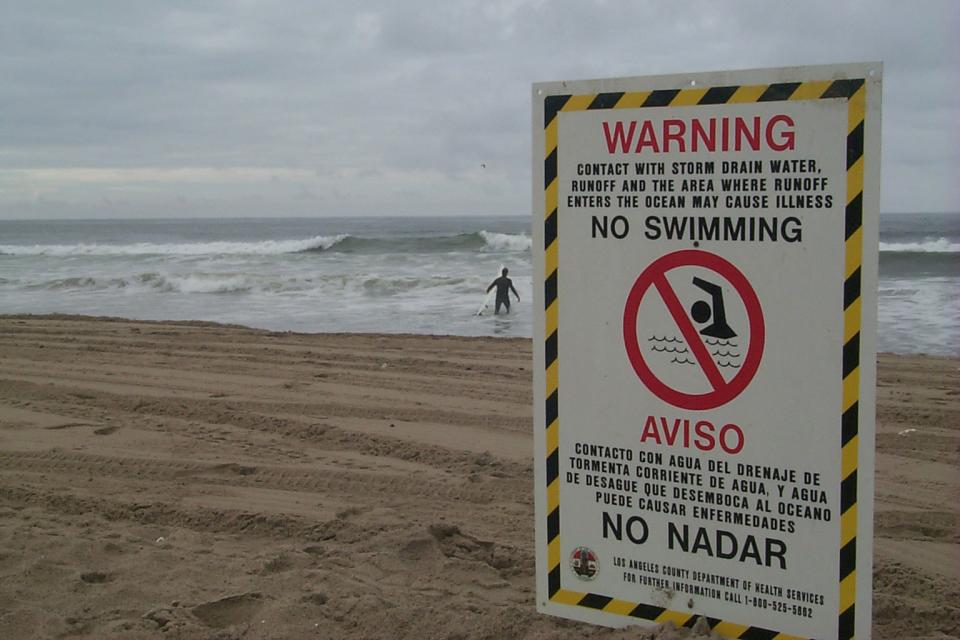
After decades of pollution and years of beach closures caused
by raw sewage in the Tijuana River, San Diego County
Supervisors are pursuing a local plan to divert the
river and treat it directly. They’re calling for the
county to design a new treatment plant to capture and
clean contaminated water before it enters San Diego
communities, using potential local tax revenue to back
nearly a billion dollars worth of bonds to build it.
… The supervisors called for spending $1.8 million to
design a system to divert and treat the river water. They also
proposed $4 million to immediately fix a sewage hot spot on
Saturn Boulevard, where river pollution becomes aerosolized.
The board will vote on the plan Tuesday.
Coronado Mayor John Duncan challenged the validity of San Diego
County’s public health safety testing for ocean water at the
Aug. 18 City Council meeting. The tense conversation
focused on a relatively new testing protocol implemented in May
2022 to check the sewage levels coming from
Tijuana. Before adopting the method, known as Polymerase
Chain Reaction (ddPCR), the county relied on Enterolert – a
culture-based protocol standardized nationwide by the
Environmental Protection Agency (EPA). The EPA approved a pilot
program for the ddPCR protocol in 2021 and stated that a study
had “found good agreement” between the two
methods. However, beach closures in Coronado jumped
significantly after the county started using the ddPCR
testing.
The 24-page Layperson’s Guide to the Delta explores the competing
uses and demands on California’s Sacramento-San Joaquin
Delta. The 11th edition examines this critical
water hub and its myriad challenges. The 2025 version
includes the latest information on the tunnel project, habitat
restoration efforts, climate change impacts and an updated
section on the legal and political facets of the Delta.
Cities across California and the Southwest are significantly
increasing and diversifying their use of recycled wastewater as
traditional water supplies grow tighter.
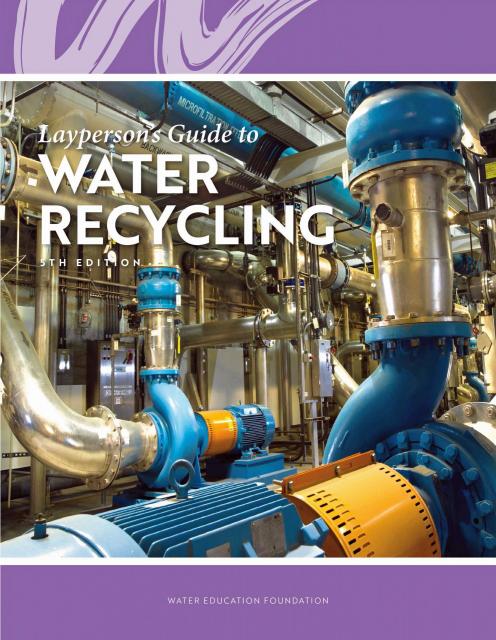
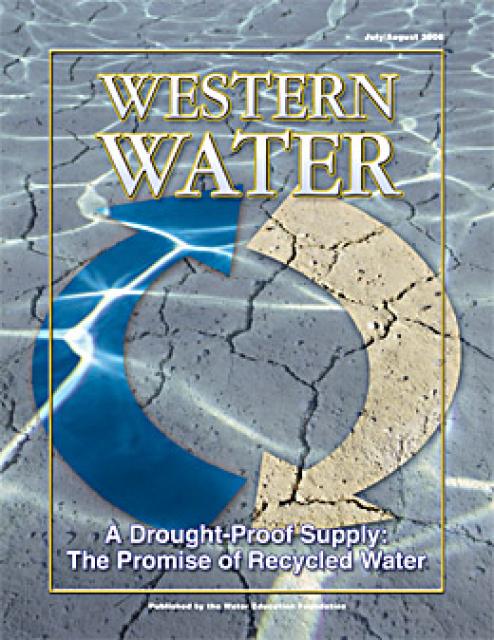
The 5th edition of our Layperson’s Guide to Water Recycling
covers the latest trends and statistics on water reuse as a
strategic defense against prolonged drought and climate change.
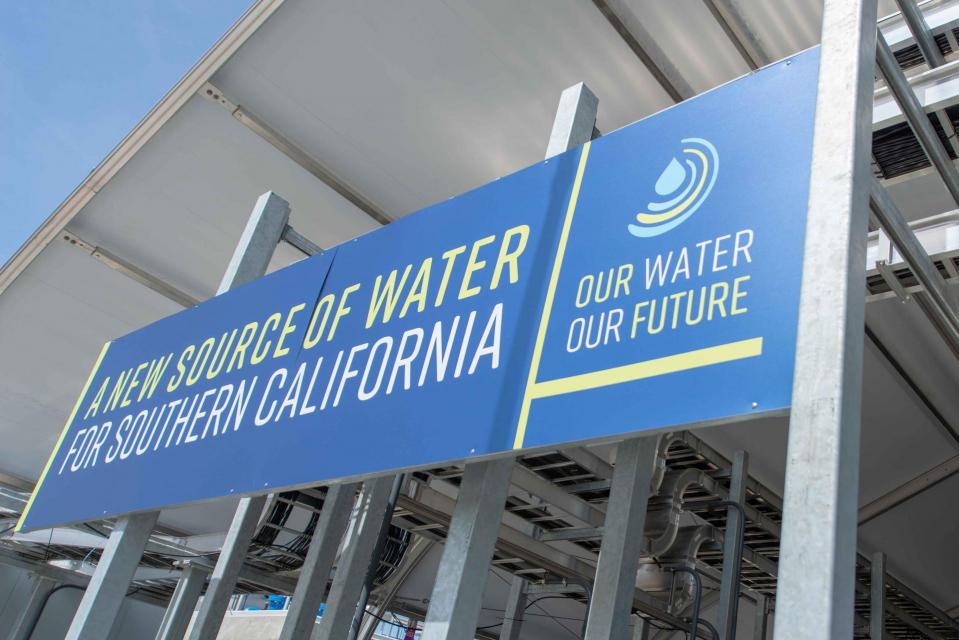
Momentum is building for a unique
interstate deal that aims to transform wastewater from Southern
California homes and business into relief for the stressed
Colorado River. The collaborative effort to add resiliency to a
river suffering from overuse, drought and climate change is being
shaped across state lines by some of the West’s largest water
agencies.
Martha Guzman recalls those awful
days working on water and other issues as a deputy legislative
secretary for then-Gov. Jerry Brown. California was mired in a
recession and the state’s finances were deep in the red. Parks
were cut, schools were cut, programs were cut to try to balance a
troubled state budget in what she remembers as “that terrible
time.”
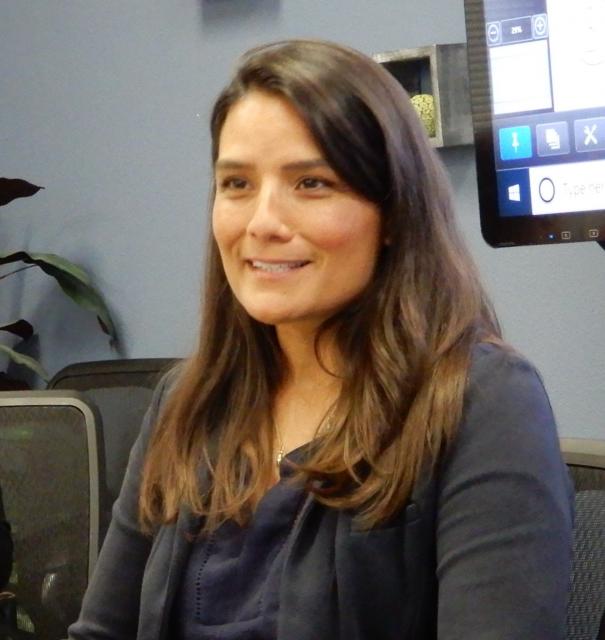
She now finds herself in a strikingly different position: As
administrator of the U.S. Environmental Protection Agency’s
Region 9, she has a mandate to address water challenges across
California, Nevada, Arizona and Hawaii and $1 billion to help pay
for it. It is the kind of funding, she said, that is usually
spread out over a decade. Guzman called it the “absolutely
greatest opportunity.”
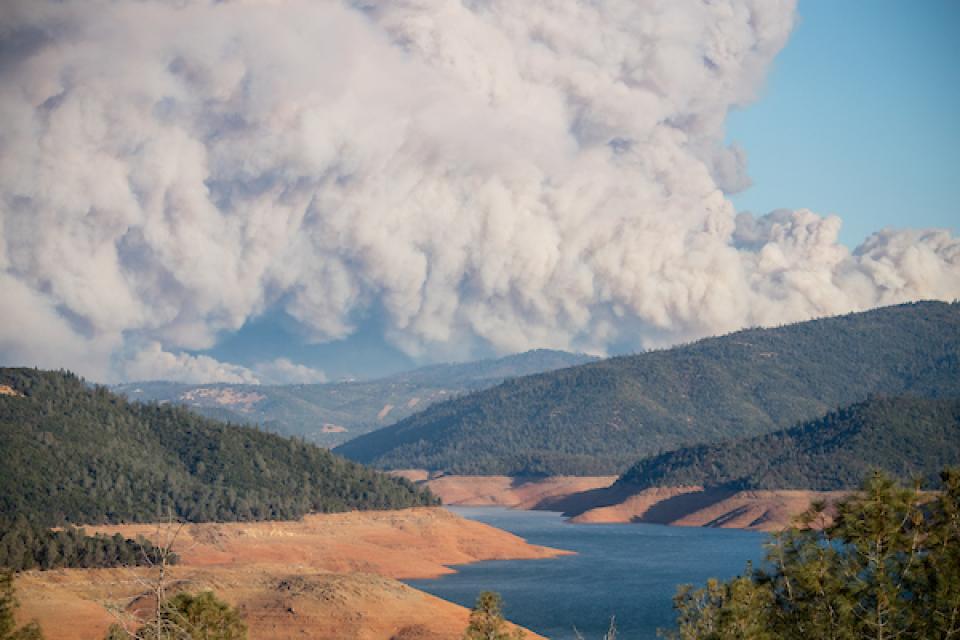
Innovative efforts to accelerate
restoration of headwater forests and to improve a river for the
benefit of both farmers and fish. Hard-earned lessons for water
agencies from a string of devastating California wildfires.
Efforts to drought-proof a chronically water-short region of
California. And a broad debate surrounding how best to address
persistent challenges facing the Colorado River.
These were among the issues Western Water explored in
2019, and are still worth taking a look at in case you missed
them.
The southern part of California’s Central Coast from San Luis Obispo County to Ventura County, home to about 1.5 million people, is blessed with a pleasing Mediterranean climate and a picturesque terrain. Yet while its unique geography abounds in beauty, the area perpetually struggles with drought.
Indeed, while the rest of California breathed a sigh of relief with the return of wet weather after the severe drought of 2012–2016, places such as Santa Barbara still grappled with dry conditions.
Blasted by sun and beaten by waves,
plastic bottles and bags shed fibers and tiny flecks of
microplastic debris that litter the San Francisco Bay where they
can choke the marine life that inadvertently consumes it.
Summer is a good time to take a
break, relax and enjoy some of the great beaches, waterways and
watersheds around California and the West. We hope you’re getting
a chance to do plenty of that this July.
But in the weekly sprint through work, it’s easy to miss
some interesting nuggets you might want to read. So while we’re
taking a publishing break to work on other water articles planned
for later this year, we want to help you catch up on
Western Water stories from the first half of this year
that you might have missed.
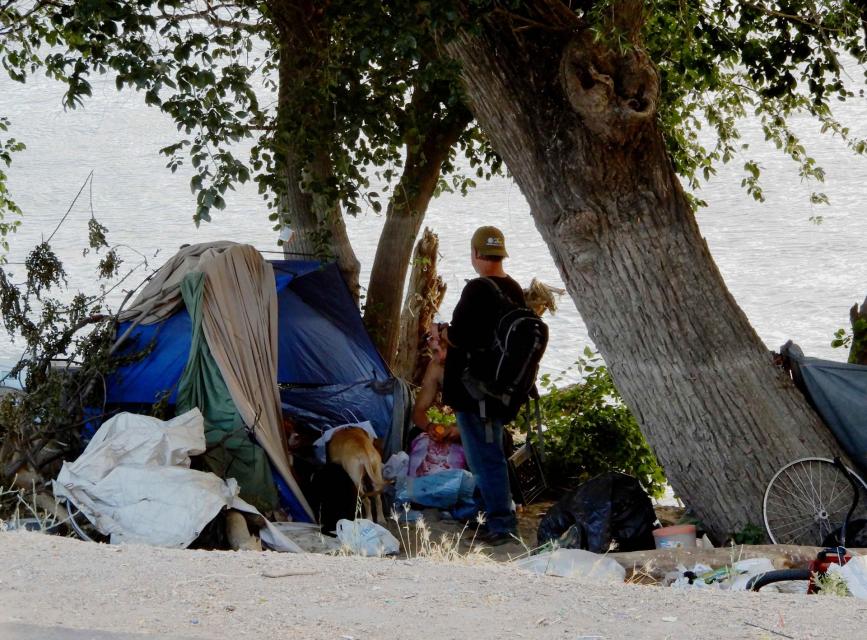
Each day, people living on the streets and camping along waterways across California face the same struggle – finding clean drinking water and a place to wash and go to the bathroom.
Some find friendly businesses willing to help, or public restrooms and drinking water fountains. Yet for many homeless people, accessing the water and sanitation that most people take for granted remains a daily struggle.
Californians have been doing an
exceptional job
reducing their indoor water use, helping the state survive
the most recent drought when water districts were required to
meet conservation targets. With more droughts inevitable,
Californians are likely to face even greater calls to save water
in the future.
For the bulk of her career, Jayne
Harkins has devoted her energy to issues associated with the
management of the Colorado River, both with the U.S. Bureau of
Reclamation and with the Colorado River Commission of Nevada.
Now her career is taking a different direction. Harkins, 58, was
appointed by President Trump last August to take the helm of the
United States section of the U.S.-Mexico agency that oversees
myriad water matters between the two countries as they seek to
sustainably manage the supply and water quality of the Colorado
River, including its once-thriving Delta in Mexico, and other
rivers the two countries share. She is the first woman to be
named the U.S. Commissioner of the International Boundary and
Water Commission for either the United States or Mexico in the
commission’s 129-year history.
Although Santa Monica may be the most aggressive Southern California water provider to wean itself from imported supplies, it is hardly the only one looking to remake its water portfolio.
In Los Angeles, a city of about 4 million people, efforts are underway to dramatically slash purchases of imported water while boosting the amount from recycling, stormwater capture, groundwater cleanup and conservation. Mayor Eric Garcetti in 2014 announced a plan to reduce the city’s purchase of imported water from Metropolitan Water District by one-half by 2025 and to provide one-half of the city’s supply from local sources by 2035. (The city considers its Eastern Sierra supplies as imported water.)
Imported water from the Sierra
Nevada and the Colorado River built Southern California. Yet as
drought, climate change and environmental concerns render those
supplies increasingly at risk, the Southland’s cities have ramped
up their efforts to rely more on local sources and less on
imported water.
Far and away the most ambitious goal has been set by the city of
Santa Monica, which in 2014 embarked on a course to be virtually
water independent through local sources by 2023. In the 1990s,
Santa Monica was completely dependent on imported water. Now, it
derives more than 70 percent of its water locally.
In rural areas with widely dispersed houses, reliance upon a
centralized
sewer system is not practical compared to individual
wastewater treatment methods. These on-site management facilities
– or septic systems – are more commonplace given their simpler
structure, efficiency and easy maintenance.
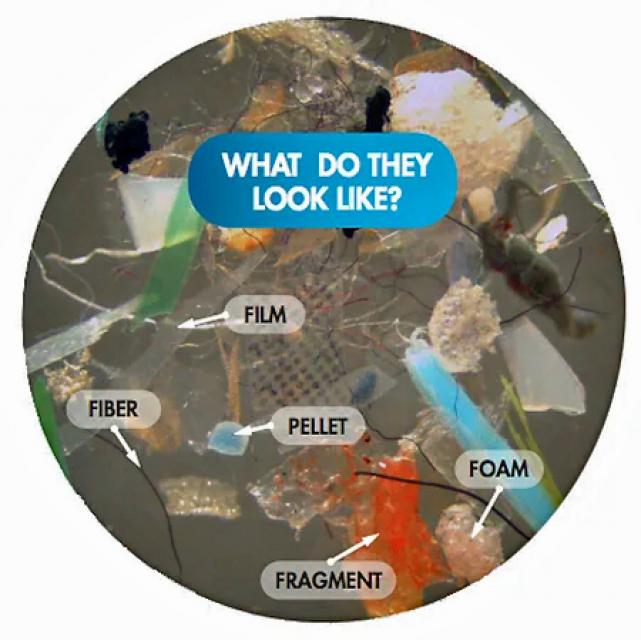
Microplastics – plastic debris
measuring less than 5 millimeters – are an
increasing water quality concern. They enter waterways and
oceans as industrial microbeads from various consumer
products or larger plastic litter that degrades into small bits.
Microbeads have been used in exfoliating agents, cosmetic washes
and large-scale cleaning processes. Microplastics are used
pharmaceutically for efficient drug delivery to affected sites in
patients’ bodies and by textile companies to create artificial
fibers.
Directly detecting harmful
pathogens in water can be expensive, unreliable and incredibly
complicated. Fortunately, certain organisms are known to
consistently coexist with these harmful microbes which are
substantially easier to detect and culture: coliform bacteria.
These generally non-toxic organisms are frequently used as
“indicator
species,” or organisms whose presence demonstrates a
particular feature of its surrounding environment.
The biochemical oxygen demand (BOD) of water determines the
impact of decaying matter on species in a specific ecosystem.
Sampling for BOD tests how much oxygen is needed by bacteria to
break down the organic matter.
Point sources release pollutants from discrete conveyances, such
as a discharge pipe, and are regulated by federal and state
agencies. The main point source dischargers are factories and
sewage treatment plants, which release treated
wastewater.
This 30-minute documentary-style DVD on the history and current
state of the San Joaquin River Restoration Program includes an
overview of the geography and history of the river, historical
and current water delivery and uses, the genesis and timeline of
the 1988 lawsuit, how the settlement was reached and what was
agreed to.
This 25-minute documentary-style DVD, developed in partnership
with the California Department of Water Resources, provides an
excellent overview of climate change and how it is already
affecting California. The DVD also explains what scientists
anticipate in the future related to sea level rise and
precipitation/runoff changes and explores the efforts that are
underway to plan and adapt to climate.
Many Californians don’t realize that when they turn on the
faucet, the water that flows out could come from a source close
to home or one hundreds of miles away. Most people take their
water for granted; not thinking about the elaborate systems and
testing that go into delivering clean, plentiful water to
households throughout the state. Where drinking water comes from,
how it’s treated, and what people can do to protect its quality
are highlighted in this 2007 PBS documentary narrated by actress
Wendie Malick.
A 30-minute version of the 2007 PBS documentary Drinking Water:
Quenching the Public Thirst. This DVD is ideal for showing at
community forums and speaking engagements to help the public
understand the complex issues surrounding the elaborate systems
and testing that go into delivering clean, plentiful water to
households throughout the state.
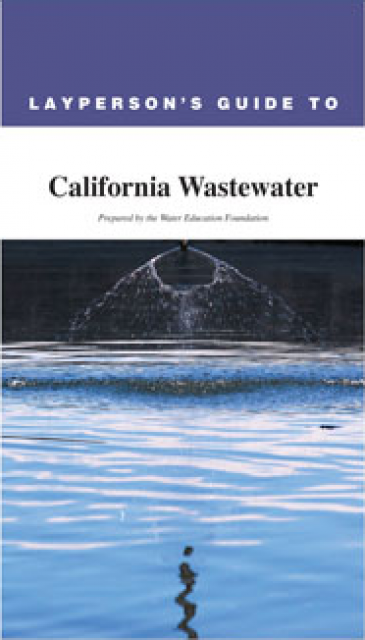
The 28-page Layperson’s Guide to California
Wastewater is an in-depth, easy-to-understand publication
that provides background information on the history of wastewater
treatment and how wastewater is collected, conveyed, treated and
disposed of today. The guide also offers case studies of
different treatment plants and their treatment processes.
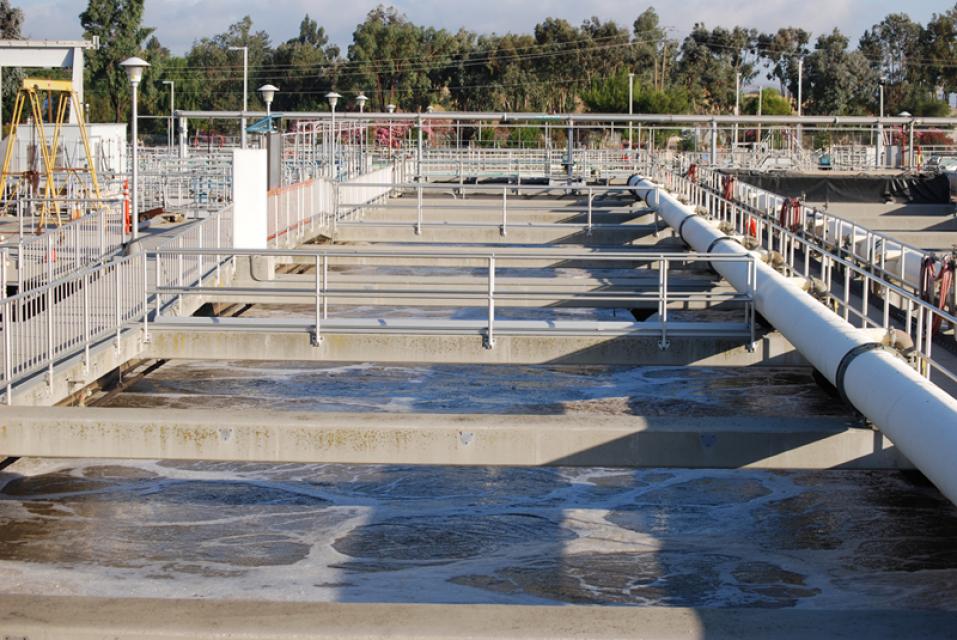
Wastewater management in California centers on the collection,
conveyance,
treatment, reuse and disposal of wastewater. This process is
conducted largely by public agencies, though there are also
private systems in places where a publicly owned treatment plant
is not feasible.
In California, wastewater treatment takes place through 100,000
miles of sanitary sewer lines and at more than 900 wastewater
treatment plants that manage the roughly 4 billion gallons of
wastewater generated in the state each day.