




Kern River
 Flowing from the high Sierra Nevada to the bottomlands
of the southern San
Joaquin Valley, the Kern River is relied on for many uses –
as a fishery, a place of recreation and whitewater rafting, a
resource for generating hydroelectricity and a vital supply of
drinking water and agricultural irrigation. The Kern has
inspired song, slaked the thirst of growing communities and
supported a multi-billion-dollar farm economy. The Kern has also
been fought over repeatedly, leading to a historic California
Supreme Court decision that affirmed the state’s dual system of
water rights. And it may rewrite water rights law in the future.
Flowing from the high Sierra Nevada to the bottomlands
of the southern San
Joaquin Valley, the Kern River is relied on for many uses –
as a fishery, a place of recreation and whitewater rafting, a
resource for generating hydroelectricity and a vital supply of
drinking water and agricultural irrigation. The Kern has
inspired song, slaked the thirst of growing communities and
supported a multi-billion-dollar farm economy. The Kern has also
been fought over repeatedly, leading to a historic California
Supreme Court decision that affirmed the state’s dual system of
water rights. And it may rewrite water rights law in the future.
BACKGROUND
The Kern River begins its journey west of Mt. Whitney in the Southern Sierra Nevada. The Kern is a rare Sierra river whose headwaters cut a path from north to south through canyons and valleys before reaching Lake Isabella near the historic Gold Rush town of Kernville. From there it tumbles about 2,000 feet in elevation to reach the floor of the San Joaquin Valley.
Named for Edward Kern, a 23-year-old U.S. Army mapmaker and member of John C. Fremont’s 1845 topographical expedition to the West Coast, the river supported a vast historic ecosystem of wetlands, swamps and shallow lakes. Swollen with winter runoff or spring snowmelt, the river spilled across the valley floor in channels, sloughs and marshland, sometimes changing course, before ending its run at Tulare Lake.
For early settlers to the southern San Joaquin Valley, the Kern River also proved to be a flood menace. Bakersfield, founded beside the Kern River in 1859, flooded numerous times in its first 90 years before the U.S. Army Corps of Engineers completed a pair of earthen dams in 1953 that impounded the river in Lake Isabella. Lake Isabella provides flood control and water storage and is a popular recreation destination. In 2022, the Army Corps completed dam safety improvements that raised the height of Lake Isabella’s main and auxiliary dams by 16 feet, to 201 feet and 116 feet respectively.
Yet the power of the river and its elevation drop proved attractive to early developers of hydroelectricity. Predecessors of Southern California Edison began building hydroelectric plants on the Kern River in 1902. More than 120 years later, Edison is seeking to renew federal power licenses for two of its Kern River power plants and to decommission its historic Borel Hydroelectric Project west of Lake Isabella. A separate hydroelectric powerplant is also located at the base of the main Isabella Dam.
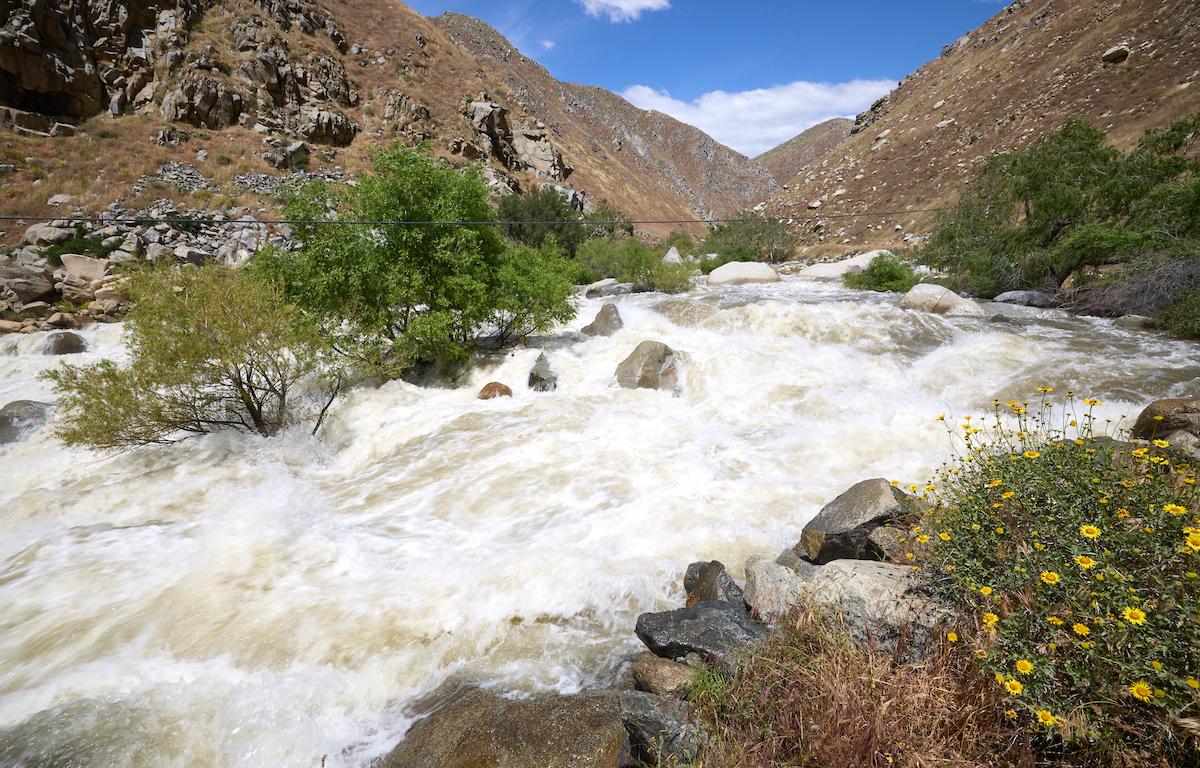
North of Lake Isabella, the north and south forks of the Kern River have been designated national wild and scenic rivers. The North Fork flows past large rock formations and rocky ledges through Sequoia National Park and Sequoia National Forest. The South Fork tumbles over waterfalls, through whitewater rapids, past large granite outcrops and through open meadows before spilling into Lake Isabella. The upper tributaries are also home to the Kern River trout, a once-abundant native fish whose populations have dwindled to a fraction of their historic numbers due to overfishing, habitat loss and hybridization with other trout.
 Flowing through that rugged and
picturesque landscape has made the Kern River a popular
destination with whitewater rafters and kayakers, who prize its
varied and challenging river runs. The river is also popular with
San Joaquin Valley residents seeking a respite from the valley’s
searing summer heat with sometimes tragic results. Cold, swift
and deadly, the river is reported to have claimed more than 300
lives since 1968. Country singer Merle Haggard memorialized the
danger in his song, Kern River, a fictional account of a
girlfriend’s drowning.
Flowing through that rugged and
picturesque landscape has made the Kern River a popular
destination with whitewater rafters and kayakers, who prize its
varied and challenging river runs. The river is also popular with
San Joaquin Valley residents seeking a respite from the valley’s
searing summer heat with sometimes tragic results. Cold, swift
and deadly, the river is reported to have claimed more than 300
lives since 1968. Country singer Merle Haggard memorialized the
danger in his song, Kern River, a fictional account of a
girlfriend’s drowning.
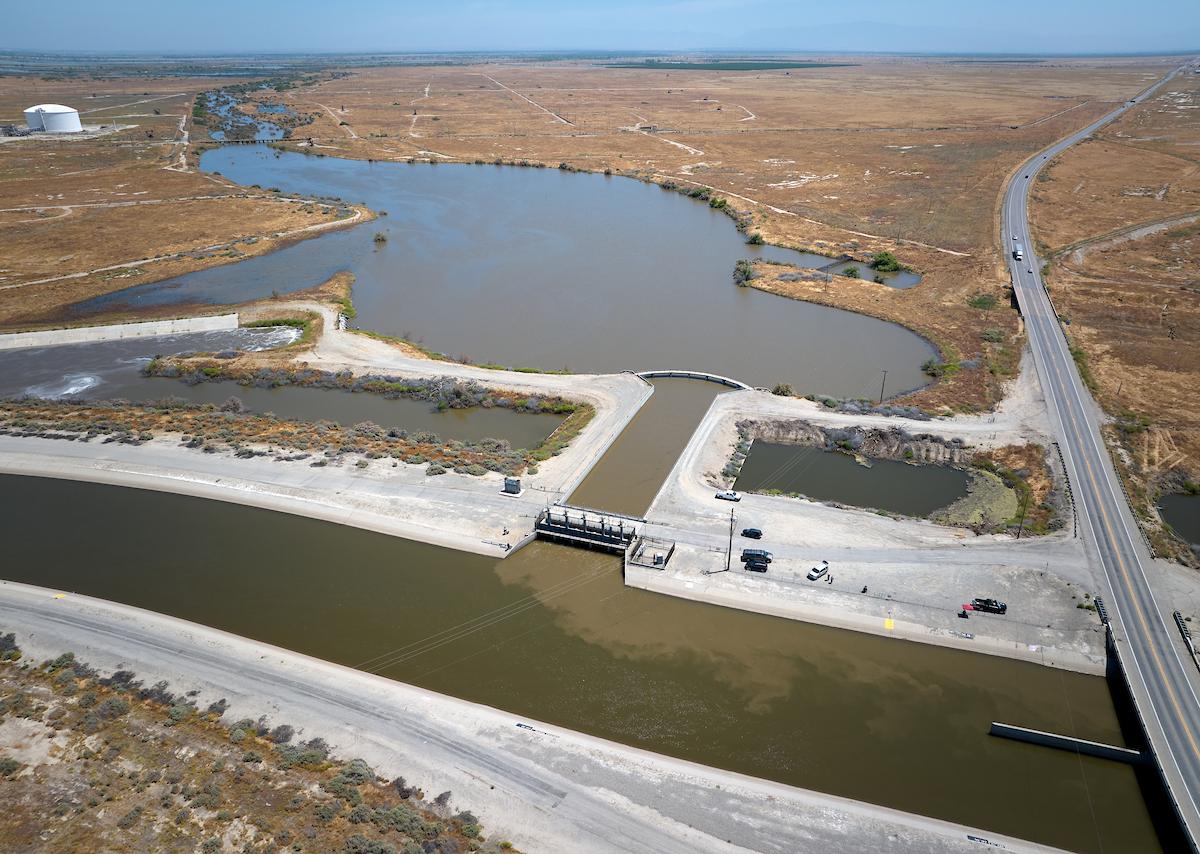
In years of heavy winter runoff, flood flows on the Kern River can be redirected west of Bakersfield to an intertie with the State Water Project to protect downstream communities from damage. Since the intertie was built in 1977, it has been used 10 times to divert flood waters from the Kern.
CHALLENGES AND CONTROVERSIES
Blessed with water and rich soil, Kern County’s early non-Indigenous settlers began gouging out canals in the 1860s to drain marshland and move river water for irrigating crops. The arrival in 1874 of the Southern Pacific Railroad opened new markets to the valley’s farmers and with the railroad came land speculators seeing opportunity. Speculators snapped up land, drained marshes and sloughs, and built networks of irrigation canals to expand farm acreage.
Among the biggest land acquirers in the 1870s were the Miller and Lux cattle empire on the west side of the valley and James B. Haggin, a wealthy San Francisco speculator who bought vast tracts on the east side of the valley. Haggin’s upstream appropriations of Kern River water left little in the river for Miller and Lux downstream, so they sued. In an 1886 landmark decision known as Lux v. Haggin, the California Supreme Court held that Miller and Lux’s riparian claims to the river’s flows had a higher priority than Haggin’s upstream appropriations. Thus, the court formally recognized California’s dual system of riparian and appropriative water rights. In the end, though, Miller and Lux could do little if drought left the river dry. Eventually they partnered with Haggin on a holding reservoir at Buena Vista Lake to store water for dry times.
Yet the decision in Lux v. Haggin did not forever settle conflict on the Kern. A court adjudication in 1900 affirmed river allocations among water rights holders, mainly agricultural users. That ruling became part of what’s known as the “law of the river” – a collection of court judgments, agreements, practices and customs that guide the river’s operations in the San Joaquin Valley.
In 1970, a new contest over water rights began. The city of Bakersfield went to court to acquire water rights once held by Haggin’s Kern County Land Company. The rights had been acquired in the 1960s by Tenneco West, a large conglomerate with interests in oil and agricultural. After six years of litigation and negotiation, Tenneco West and Bakersfield cut a deal that for the first time gave the city its own rights to Kern River flows and an assured supply for future growth. It also made the city responsible for managing deliveries for a number of agricultural water rights holders. (The city’s domestic water system is managed under contract by California Water Service.)
In 2007, an appellate court ruling touched off yet another competition for Kern River water rights. The court found that Kern Delta Water District forfeited some of its water rights through non-use. Soon, several other water agencies submitted applications with the State Water Resources Control Board seeking to claim the forfeited water rights. The State Water Board is still weighing how much of the river remains unallocated and who can claim it.
In 2022, public interest groups sued Bakersfield, pressing the city to study whether the public trust doctrine required flows to be maintained in the river for the benefit of fish. Demands of water users have often left the Kern River little more than a dry, sandy wash through the city. When high flows in 2023 returned fish to the river in Bakersfield, interest groups won a preliminary injunction to keep water in the river bottom. Agricultural districts, however, challenged the injunction. The California Supreme Court has agreed to hear appeals in the case.
LOOKING AHEAD
Challenges over water rights and fisheries are likely to persist. The State Water Resources Control Board still must decide whether forfeited agricultural water rights can be reallocated to others, or whether there’s any water available to reallocate. The California Supreme Court is expected to weigh in on what role, if any, the public trust doctrine plays in supporting a fishery when a river’s flows have already been put to use by others. And efforts to extend the licenses of hydroelectric facilities on the upper Kern River face their own set of challenges over impacts to fisheries and water flows.
In the decades ahead, climate change is expected to alter precipitation patterns across the Sierra Nevada, including in the Kern River watershed. State water managers say warmer temperatures could bring longer droughts or more intense storms, which could challenge flood control systems. In the Sierra, precipitation is likely to fall less as snow and more as rain, and what snow falls is expected to melt faster in the spring. That may challenge water managers who depend on a slow melt to get them through the hot valley summer.
Updated February 2026


