




Sacramento-San Joaquin Delta Infrastructure
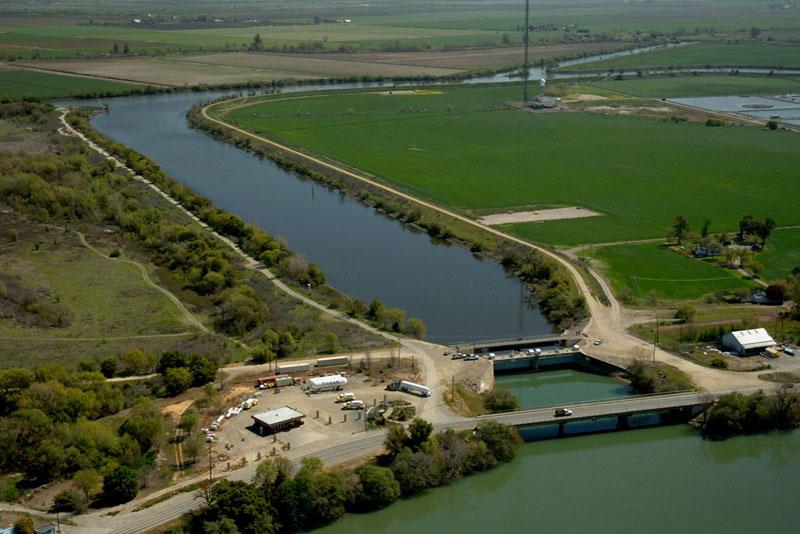 For roughly a century, between the
mid-1800s and the 1950s, the primary infrastructure in the Delta
consisted of levees built to enable farming in the Delta itself.
But with construction of the Central Valley Project
(CVP) and the State
Water Project (SWP), the Delta became a critical link in
the state’s complex water distribution system. Today, the
majority of people, farms and businesses in California depend on
water transported through the Sacramento-San
Joaquin Delta.
For roughly a century, between the
mid-1800s and the 1950s, the primary infrastructure in the Delta
consisted of levees built to enable farming in the Delta itself.
But with construction of the Central Valley Project
(CVP) and the State
Water Project (SWP), the Delta became a critical link in
the state’s complex water distribution system. Today, the
majority of people, farms and businesses in California depend on
water transported through the Sacramento-San
Joaquin Delta.
Water released from upstream reservoirs travels to the south Delta, where state and federal facilities pump water into the California Aqueduct and CVP canals. These projects provide water to roughly 2.5 million acres of irrigated farmland, primarily in the San Joaquin Valley, and to some 30 million people in Central and Southern California and portions of the Bay Area. In all, water transported through the Sacramento-San Joaquin Delta is a partial or total source of drinking water for three quarters of the state.
BACKGROUND
Beginning in the mid-19th century, an extensive system of levees was built to “reclaim” the Delta’s marshes as farmland, creating dozens of what are now popularly referred to as Delta islands. Progressively higher levees were built to keep the surrounding waters out, the lands were pumped dry and the marsh was transformed into productive island farms, mostly below sea level. Some islands now sit 25 feet or more below the water level in the surrounding channels, protected only by the levees surrounding them.
Today, there are roughly 1,115 miles of levees in the Delta, which are classified as either project or non-project levees. Project levees are part of the federal flood control program and are built to higher standards that comply with U.S. Army Corps of Engineers guidelines. Non-project levees, comprising 65 percent of Delta levees, are those constructed and maintained by island landowners or local reclamation districts. These levees are generally less stable than project levees. A state program initiated in the early 1970s has provided substantial funding to strengthen levees, particularly non-project levees.
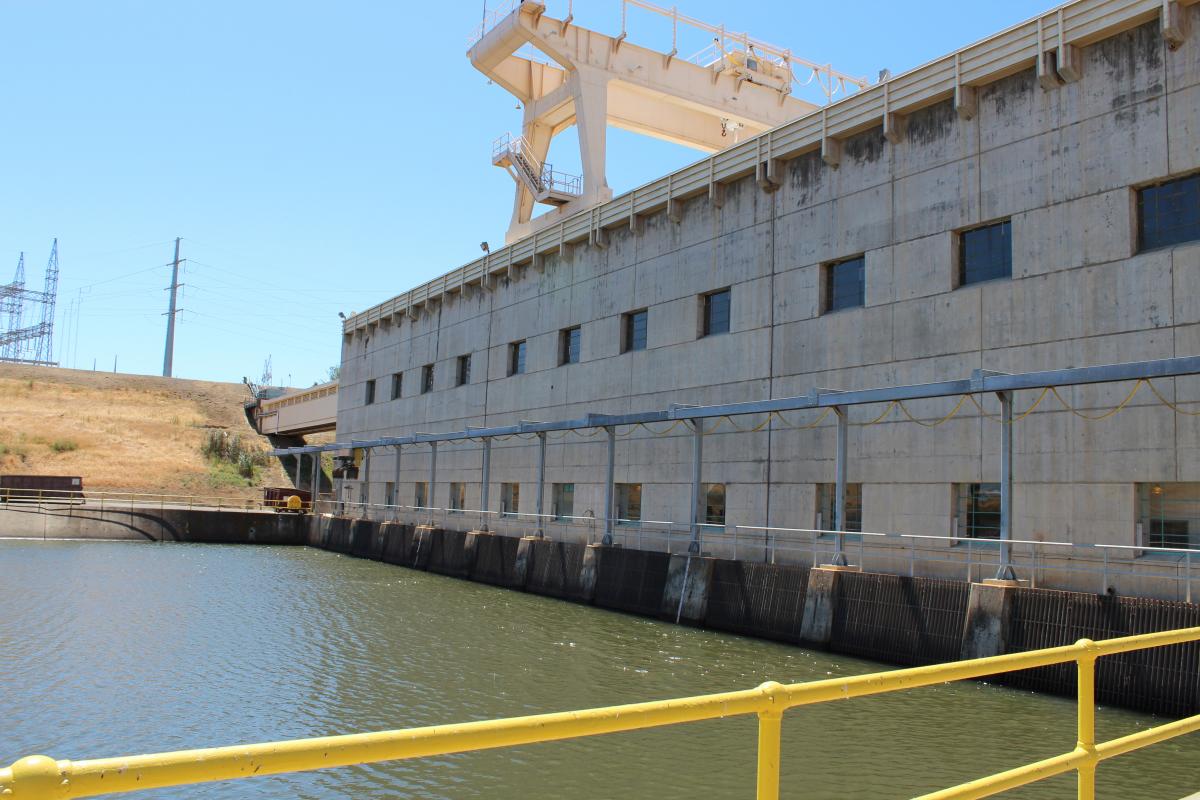 The use of Delta channels as conduits
for transporting water began in 1940 with completion of the first
unit of the CVP, the Contra Costa Canal, which
diverts water for use in nearby cities such as
Concord, Walnut Creek, Martinez and Antioch. Then,
in 1951, the Delta became part of a vast water export system. The
mile-plus-long Delta Cross Channel was completed to
divert water from the Sacramento River near Walnut
Grove into a branch of the Mokelumne River, where it follows
natural channels for about 50 miles to the CVP’s Jones Pumping Plant
near Tracy. The Jones Pumping Plant uses six large pumps to lift
water 197 feet into the Delta-Mendota Canal, which
supplies farms south of the Delta in the San Joaquin Valley.
The use of Delta channels as conduits
for transporting water began in 1940 with completion of the first
unit of the CVP, the Contra Costa Canal, which
diverts water for use in nearby cities such as
Concord, Walnut Creek, Martinez and Antioch. Then,
in 1951, the Delta became part of a vast water export system. The
mile-plus-long Delta Cross Channel was completed to
divert water from the Sacramento River near Walnut
Grove into a branch of the Mokelumne River, where it follows
natural channels for about 50 miles to the CVP’s Jones Pumping Plant
near Tracy. The Jones Pumping Plant uses six large pumps to lift
water 197 feet into the Delta-Mendota Canal, which
supplies farms south of the Delta in the San Joaquin Valley.
In 1969, when the Harvey O. Banks Delta Pumping Plant became operational, the SWP also began exporting water out of the Delta to Southern California through the California Aqueduct.
For decades, political leaders in California have discussed building a canal or tunnel system to convey export water around, rather than directly through, the Delta. The first push to turn the concept into reality came from Gov. Jerry Brown, who proposed the Peripheral Canal, a 30-foot-deep, 43-mile-long unlined channel to move water from the Sacramento River to the export pumps. But the project divided state voters — many in the North viewed it as a water grab by the South — and in 1982, they defeated the project in a statewide referendum by a nearly 2-to-1 margin.
Despite that setback, governors George Deukmejian, Arnold Schwarzenegger, Jerry Brown (back for a second term) and Gavin Newsom all proposed variations on the concept, none of which have — at least as yet — been approved. Newsom’s proposal, called the Delta Conveyance Project, is still slowly working its way through the permitting process.
CONTROVERIES AND CHALLENGES
One of the biggest infrastructure challenges in the Delta is its levees, which must be regularly maintained — an effort that costs millions of dollars annually. The Delta’s levees are particularly vulnerable to failure due to floods and earthquakes.
On many Delta islands, the levee foundations are composed of the same peat soil formed by the marsh’s original vegetation. This organic soil is rich in nutrients, but it oxidizes (vaporizes quickly), resulting in as much as 1.5 inches of soil loss per year. Oxidation, combined with compaction and settling, is known as subsidence — a critical problem because the process puts additional stress on levees.
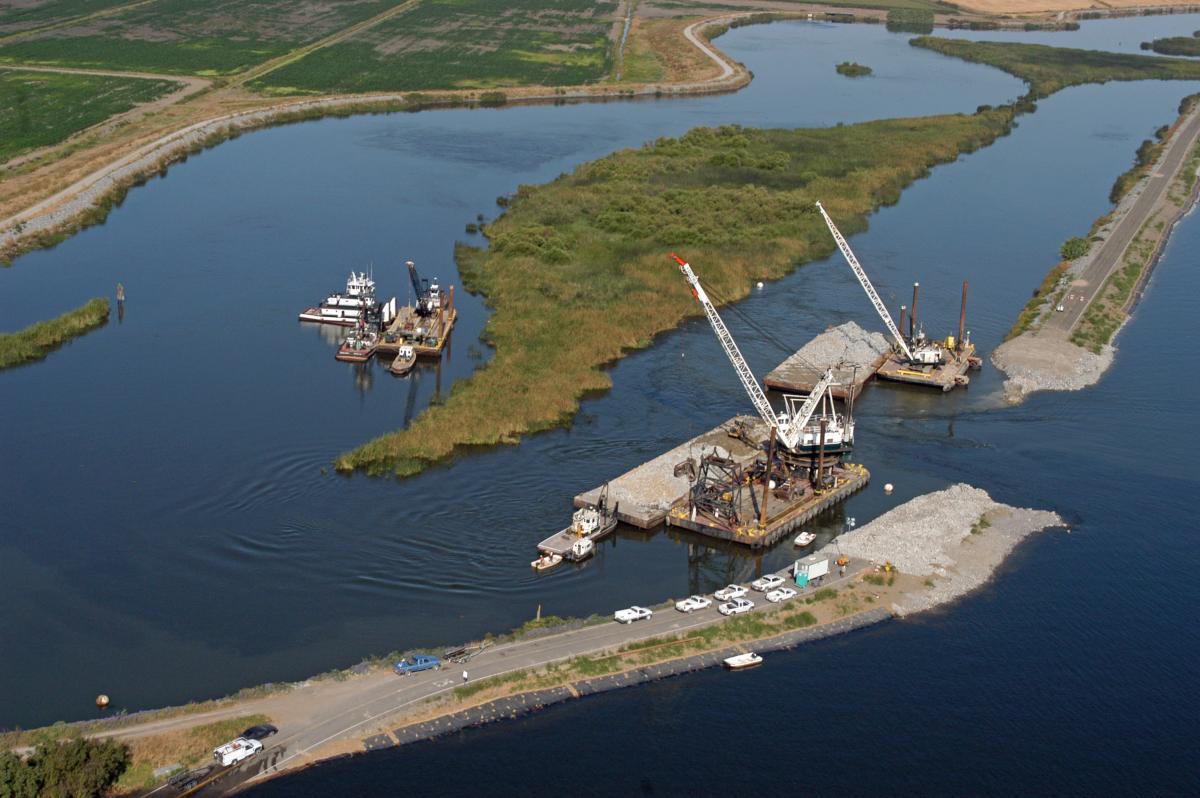 When levees fail, water rushes into
the lower-than-sea level islands, pulling in saltwater from San
Francisco Bay and potentially rendering water in the Delta
unusable. Since 1980, 27 Delta islands have been partially or
completely flooded, including a 2004 levee break at Upper Jones
Tract that cost about $90 million to repair. Widespread flooding
due to levee failure could force a long-term shutdown of the CVP
and SWP export pumps in the south Delta that supply much of
California with water. It would also threaten an extensive
network of public utilities (pipelines, highways, rail lines) and
more than 400,000 acres of farmland in the Delta.
When levees fail, water rushes into
the lower-than-sea level islands, pulling in saltwater from San
Francisco Bay and potentially rendering water in the Delta
unusable. Since 1980, 27 Delta islands have been partially or
completely flooded, including a 2004 levee break at Upper Jones
Tract that cost about $90 million to repair. Widespread flooding
due to levee failure could force a long-term shutdown of the CVP
and SWP export pumps in the south Delta that supply much of
California with water. It would also threaten an extensive
network of public utilities (pipelines, highways, rail lines) and
more than 400,000 acres of farmland in the Delta.
Many of the proposals for a canal or tunnel to route some of the Sacramento River’s flow directly to the export pumps have been promoted as a way to reduce the water supply system’s dependence on the Delta’s aging levees. The proposals also have been touted as isolating the water supply system from the Delta ecosystem, thereby lessening conflicts between the two. But they have drawn considerable opposition both from farmers and communities in the Delta. And conservation organizations worry that the proposals could lead to greater water exports while depriving the Delta environment of much-needed freshwater inflow to counteract saltier incoming seawater.
LOOKING AHEAD
Infrastructure in the Delta faces numerous significant threats in the future, including earthquakes and floods, as well as climate-change-driven sea-level rise, which will put additional stress on levees. The U.S. Geological Survey has calculated that there is a 72 percent probability of at least one 6.7 magnitude or greater earthquake hitting the San Francisco Bay region before 2043 — an event that would likely cause multiple breaches to Delta’s levees. Hurricane Katrina, which flooded New Orleans and pummeled other parts of the Gulf Coast in 2005, demonstrated the level of destruction that could be unleashed by a series of breached levees.
The effort to protect ecosystems in the Delta is starting to reshape the infrastructure there. A 2022 amendment to the Delta Plan, the state’s comprehensive management strategy for the Delta, identifies a restoration target of roughly 70,000 acres in the Delta by 2050 (measured against a 2007 baseline). That would include 32,500 acres of tidal wetlands, 19,500 acres of non-tidal wetlands and 16,300 acres of riparian and floodplain habitat. To achieve those goals, the Department of Water Resources’ Division of Multi-Benefit Initiatives is working with partners to replace some existing levees with “setback levees” that allow for a wider floodplain to support species like the Delta smelt, as well as breaching levees to create new habitat for fish and birds as well as additional storage space for floodwaters.
Meanwhile, Gov. Newsom’s administration continues to push for approval of its Delta Conveyance Project. The administration has cast the project as a climate adaptation strategy that will not only protect Delta water supplies against the rising salinity levels that will come with sea-level rise, but also allow the SWP to capture more of the water that comes with the kinds of big, but infrequent, storms that climate change is projected to bring. Despite that, the project still faces numerous permitting and financing hurdles.
Updated May 2026.


