



Subsidence From Groundwater Overdraft Risks Choking Off a Vital Water Artery for Central and Southern California
WESTERN WATER NOTEBOOK-Fixing the sinking California Aqueduct could cost as much as $4 billion, but who should pay the bill?
 One of the major rationales for building California’s two biggest surface water supply projects was to provide a supplemental source of water from Northern California so San Joaquin Valley farmers could reduce their reliance on groundwater.
The imported water, it was hoped, would lessen reliance on local groundwater and slow or even halt land subsidence caused by excessive pumping from the aquifers.
The idea didn’t work as planned. Today, subsidence and the resulting damage to water infrastructure along California’s State Water Project (SWP) and its sister, the federally run Central Valley Project (CVP), is widespread throughout the San Joaquin Valley, complicating efforts to keep water flowing.
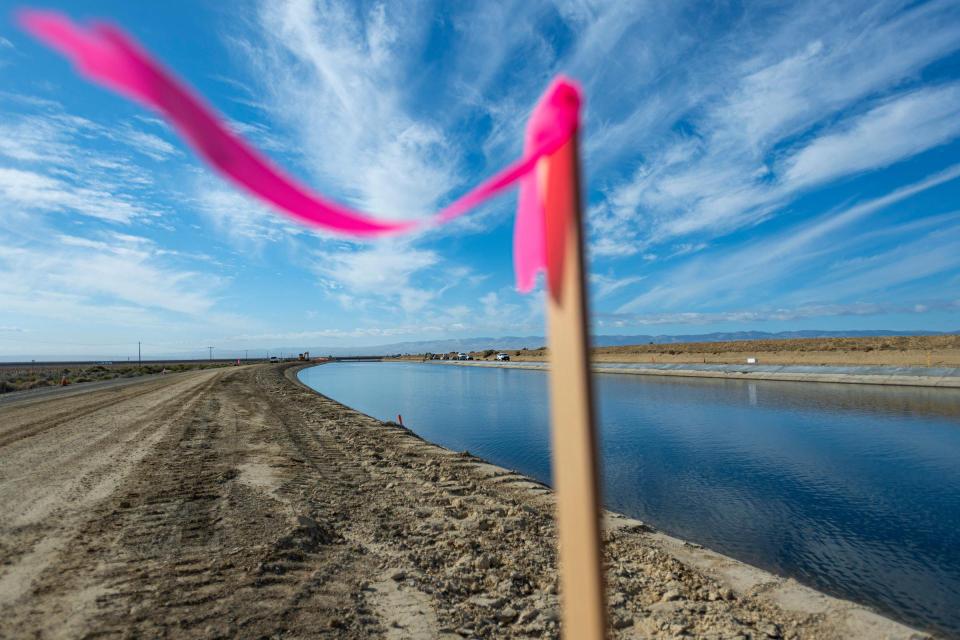
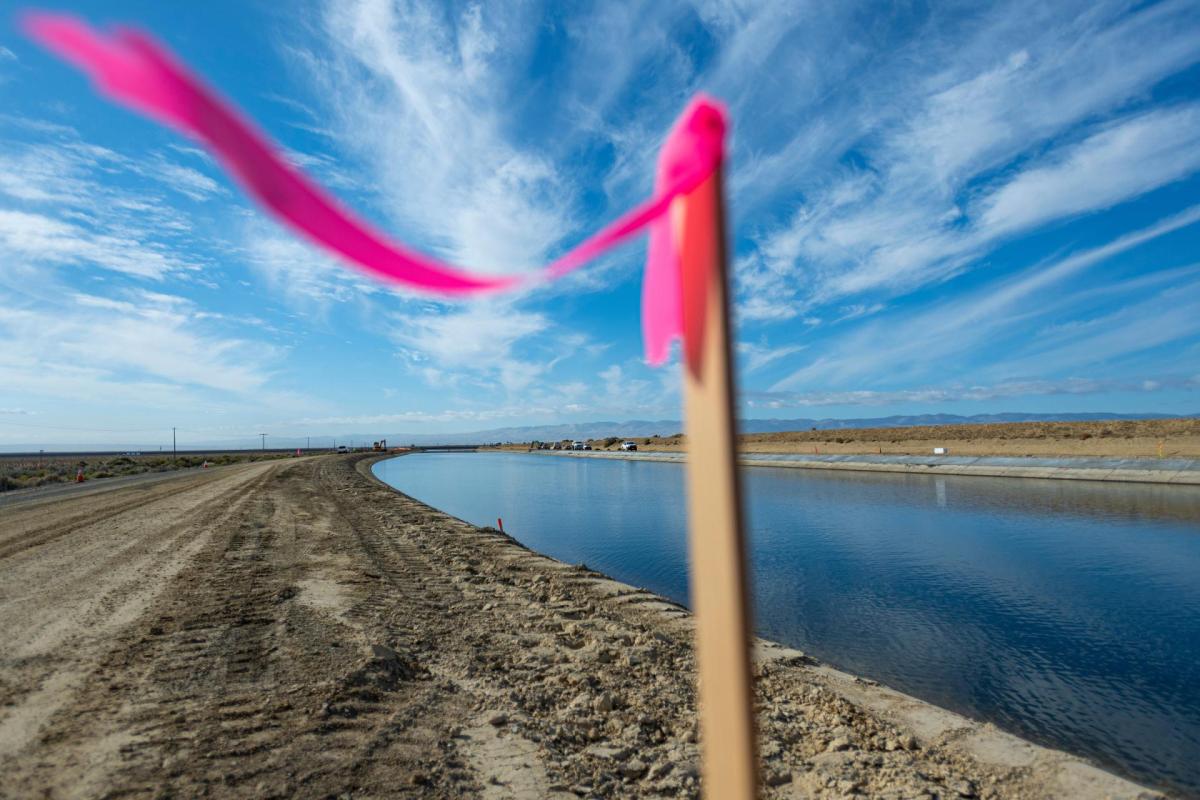
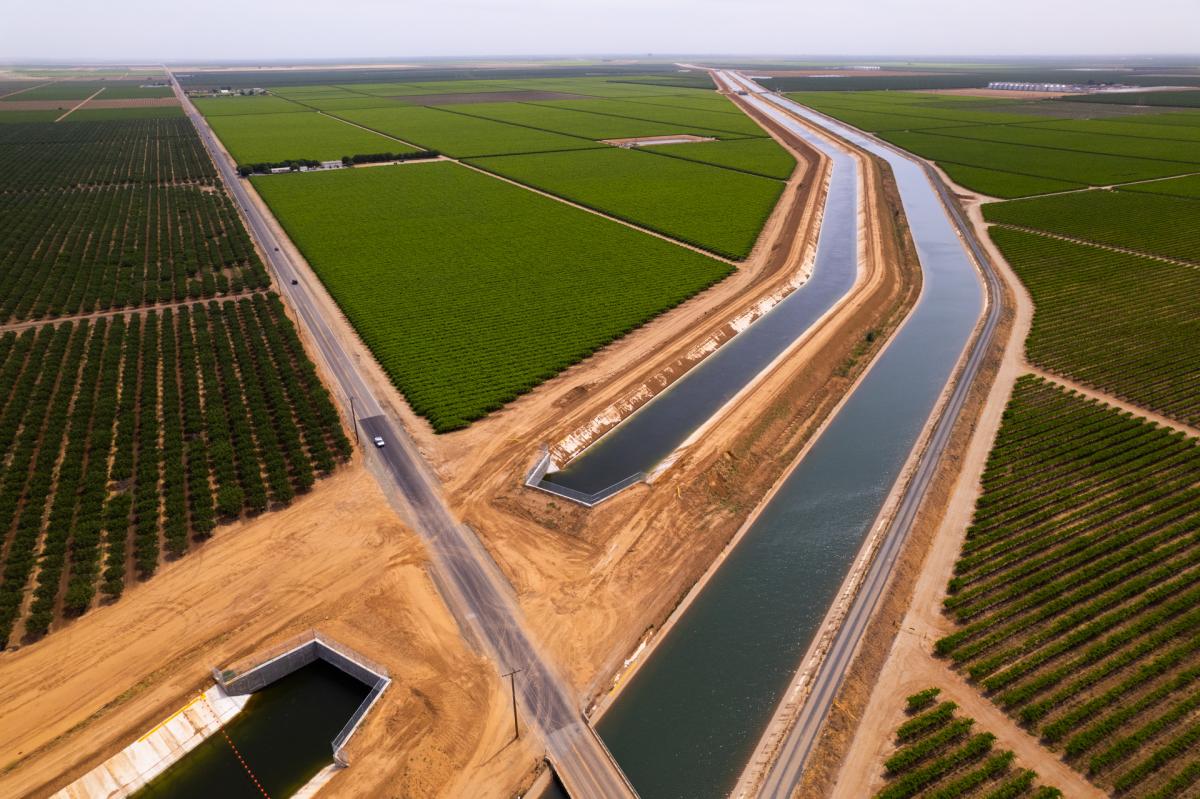
But the stakes are highest on the SWP’s 444-mile-long California Aqueduct, a crucial artery in the state’s water-supply system. Water flowing through the parts of the aqueduct “pinched” by subsidence serves some 24 million people along the Central Coast and in Southern California and 1.5 million acres of farmland. That pinch is getting worse.
“We’re at the tipping point where just a little bit more subsidence could have a significant impact on the system.”
~Manny Bahia, infrastructure manager for State Water Contractors
Over the next 17 years, according to the California Department of Water Resources (DWR), which operates the SWP, ongoing subsidence could cause the aqueduct’s capacity to shrink by nearly 90 percent.
“We’re at the tipping point where just a little bit more subsidence could have a significant impact on the system,” says Manny Bahia, the infrastructure manager for the State Water Contractors, a coalition of water agencies that rely on the California Aqueduct. “There’s no more buffer to absorb any of this impact.”
A plan to fix the problem is taking shape, but it could cost up to $4 billion — and will raise hard questions about who’s on the hook to pay.
‘A Top Risk’
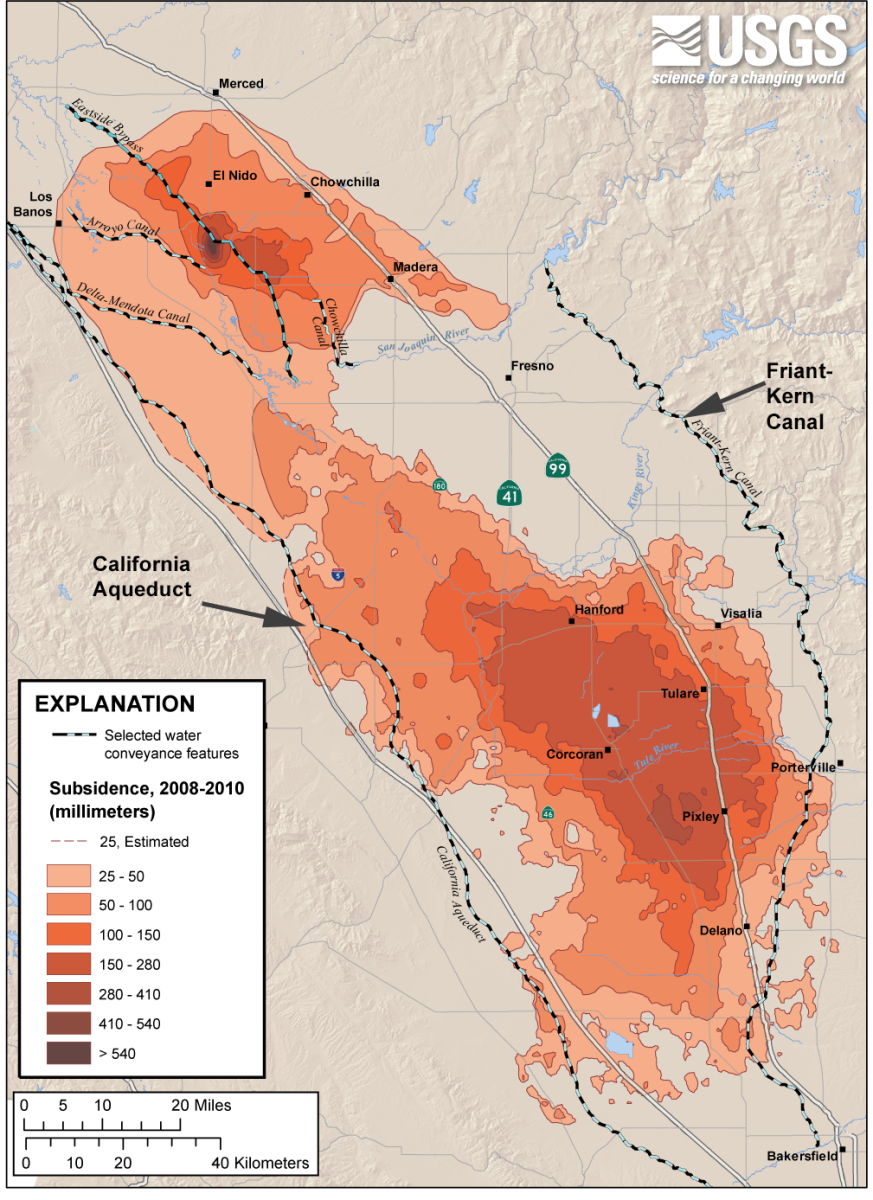
Subsidence in the San Joaquin Valley has been a known problem since roughly the 1920s and the debate about how to fix subsidence along the California Aqueduct has been quietly brewing for years. The aqueduct was actually designed with some allowance for anticipated subsidence. And so far, DWR has managed to goose the aqueduct along by operating it above its rated capacity, so that the long-term average delivery capability has only gone down by 3 percent. But the impacts are already being felt in other ways.
 In the past, DWR could strategically pump water into and through the aqueduct when power costs were low. Now, however, it spends an additional $10 million to $20 million per year on average to buy the extra power it needs to keep water moving across the state more or less year-round.
Although several sections of the aqueduct have been affected by subsidence, the worst-hit section is a roughly 70-mile-long stretch running along the west side of the San Joaquin Valley north of Kettleman City. That section, known as the San Luis Canal, is jointly operated by DWR and the federal Bureau of Reclamation (Reclamation).
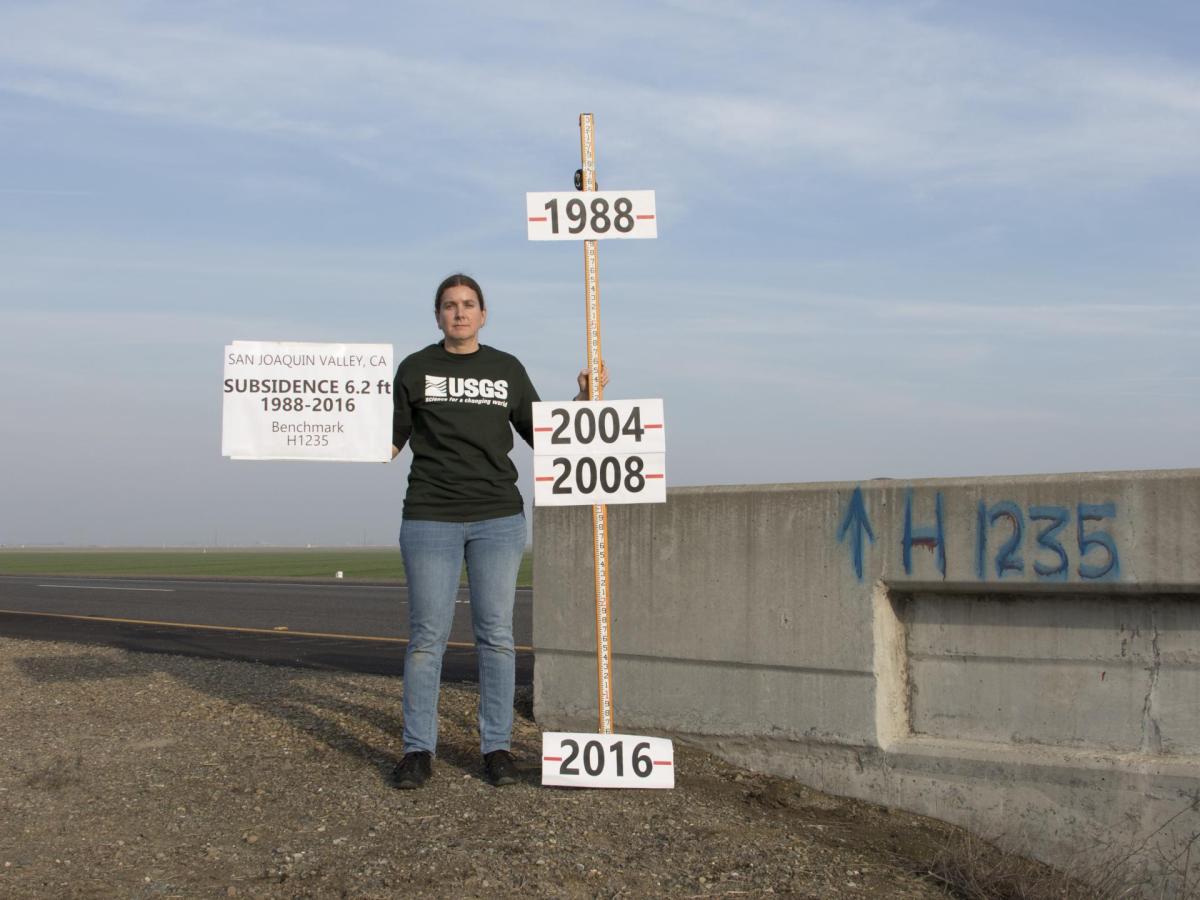
In 2006, DWR operators first noticed a reduction in flow capacity in a stretch of the canal near Kettleman City. Drought tends to make subsidence worse as water-short farmers and cities turn to groundwater to make up for reduced water from surface supplies and reservoirs. During a drought between 2013 and 2016, some parts of the aqueduct in the San Luis Canal section sank nearly three feet.
“That really got the department’s attention,” says DWR’s David Sarkisian. The agency launched a comprehensive investigation, the results of which were published in 2017. “That painted the full picture of what was happening and elevated it to a top risk to the State Water Project.”
The following year, DWR established the California Aqueduct Subsidence Program (CASP), which Sarkisian now leads.
Meanwhile, California — which had the dubious distinction of being the last Western state to put comprehensive groundwater regulations in place — finally moved to do so. In 2014, the Legislature passed the Sustainable Groundwater Management Act, known as SGMA.
SGMA required 94 medium- and high-priority groundwater subbasins statewide to create Groundwater Sustainability Agencies and come up with plans to end excessive pumping by the early 2040s. That, at least in theory, provided a framework to halt overpumping.
 That 70-mile stretch of the aqueduct with the worst subsidence runs across land managed by the Westside Subbasin Groundwater Sustainability Agency (GSA), and which DWR has designated as a “critically overdrafted basin.” The GSA is overseen by Westlands Water District, the nation’s largest agricultural water district. But as Westside formulated its Groundwater Sustainability Plan (GSP) and submitted it to the state for approval, DWR itself repeatedly challenged the adequacy of the plan in protecting the aqueduct from continued subsidence. It was joined by the State Water Contractors and the Metropolitan Water District of Southern California (Metropolitan), which has contracts for roughly half the total amount of water delivered through the State Water Project and serves roughly 19 million people in urban Southern California.
In a 2020 letter, Metropolitan noted that the Westside Subbasin GSA was planning to allow pumping at levels 53 percent greater than “safe yield,” and that “investment in rehabilitation projects will be wasted if subsidence continues to occur at the rate proposed by your GSP.” Last year, the State Water Contractors sent a letter warning that “the ongoing significant and unreasonable land subsidence that substantially interferes with the [San Luis Canal section] has devastating impacts on the SWP and must be adequately acknowledged and addressed in the GSP to comply with SGMA.”
In Pursuit of a Fix
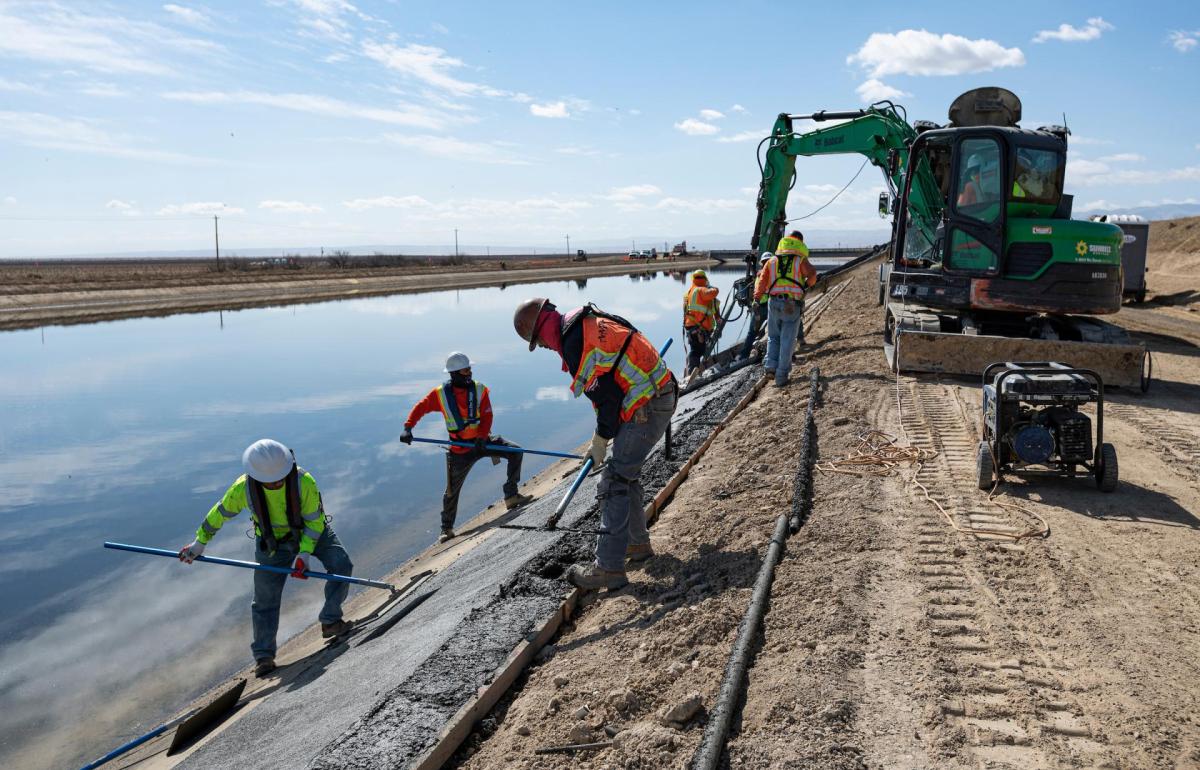
 DWR is currently moving forward with five “interim action projects” in critical sections of the aqueduct; those include raising the height of the aqueduct’s concrete liner to allow more water to be pushed through and modifying control gates to eliminate hydraulic bottlenecks. Totaling $75.4 million, the interim projects are scheduled to be finished over the next three years and have already secured state and federal funding.
“Making sure those are underway as quickly as possible is a top priority,” says Kristin White, a Bay Delta Initiatives program manager for Metropolitan, “so that we can have some immediate flexibility to maintain water deliveries.”
But a much bigger fix is needed. And DWR has pegged the cost of bringing the aqueduct back up to its original design capacity at $3.87 billion — a number the agency says is subject to an uncertainty range of “30 percent under and 50 percent over.”
Last year, DWR began a consultation process that includes State Water Contractors, water contractors for the Central Valley Project, including Westlands, and representatives from Reclamation. Separate technical and policy work groups have been meeting at least monthly, largely to refine modeling and reach agreement on what future impacts of subsidence will be — and what it will take to address them.
“Really, this collaborative process is pulling a lot of different ideas and minds together to try to think as much outside the box as we can to keep this reliability and this critical water supply, but minimize the cost,” White says. “We’re hopeful that we’ll get a result that’s less than $4 billion.”
 Less costly alternatives to rebuilding the aqueduct to its original design capacity could include installing additional pumps along the canal or bypassing subsided areas.
Because the northernmost portion of the aqueduct — including the section that crosses the Westside Subbasin — is jointly operated by DWR and Reclamation, any work there would need to be evaluated and approved through a federal planning process known as an “extraordinary maintenance,” or XM, study. Sarkisian says that the group of interested parties hopes to initiate that process by the first quarter of 2027.
That could open an avenue for federal funding for the big fix. It may also help motivate interested parties like Westlands to participate in the process.
“I’m hoping that’s another outcome of these meetings, is that everyone gets behind an alternative,” Sarkisian says. “And then if they get behind pursuing funding, that would be pretty powerful. So seeking alignment, we see as something that’s important for the success of the program.”
Settling Who Pays the Bill
Still, the groundwater pumpers causing the problem will also potentially be on the hook — a situation that’s already led to one ugly fight elsewhere in the San Joaquin Valley.
 The CVP’s Friant-Kern Canal, which supplies San Joaquin Valley farms between Fresno and Bakersfield, has also been significantly impaired by subsidence, losing an estimated 60 percent of its conveyance capacity. The saga to fix that has already dragged on for roughly a decade: An initial $326 million reconstruction of a 10-mile parallel stretch of that canal has been completed, but a comprehensive fix will likely require rebuilding a total of 33 miles at a cost that could ultimately reach $1 billion.
The state and federal governments have contributed substantial amounts of funding to that effort. But local groundwater pumpers are on the hook for much of the cost — at one point, up to $200 million — and the effort to recover that money turned into an acrimonious legal fight that is still being sorted out.
“We really need to figure out what the solution is and what level (of funding) are we talking about.”
~Kristin White, a Bay Delta Initiatives program manager for Metropolitan Water District of Southern California.
The effort to fix the California Aqueduct will likely be similarly contentious. Earlier this year, Westlands’ board of directors — comprised of district landowners or their representatives — drew a pre-emptive line in the sand, passing a resolution asserting “that the damage to state and federal conveyance infrastructure caused by subsidence is not the product of wrongdoing on the part of Westlands or its growers; rather, it is one consequence of redistributing water that was stored behind farmer-funded dams and reappropriating it for environmental purposes (a public benefit). Therefore, the consequences of this policy decision should be borne by the public, and the impacts of water unreliability should be shared by all.”
For now, how to pay for a more comprehensive California Aqueduct subsidence fix is a question the parties participating in the CASP are carefully avoiding.
“These are questions that are in the back of everyone’s mind,” says White, of Metropolitan. “But we really need to figure out what the solution is and what level (of funding) are we talking about. Because a conversation about cost allocation for a $4-billion project is drastically different from a conversation about a $500-million project.”
DWR’s Sarkisian agrees, saying that the debate over how to fund a fix will come once there’s more clarity about what that fix will actually look like.
“We’re not there yet,” he says. “We’re just looking to continue to build on that momentum, and hopefully it’ll help us with those tougher conversations.”
Western Water, our flagship publication by Foundation journalists, is available online. Check out our latest articles. Reach writer Matt Jenkins at mjenkins@watereducation.org.
Know someone who wants to stay connected to water in the West? Encourage them to sign up for Western Water and follow us on LinkedIn and Instagram.