




Sacramento-San Joaquin Delta Ecosystem
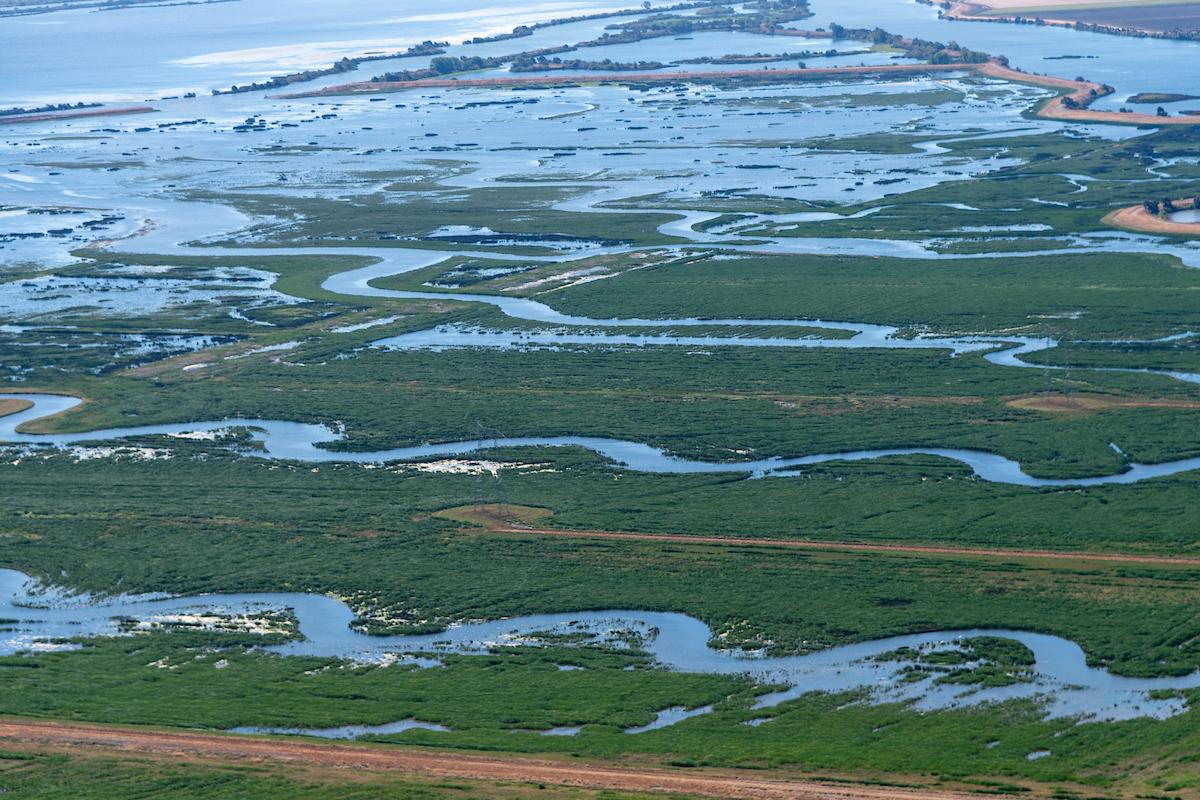 The Sacramento-San
Joaquin Delta, part of the largest freshwater tidal estuary
on the West Coast, supports more than 55 fish species and more
than 750 plant and wildlife species. The Delta’s most iconic
native fish is salmon, which rely on a healthy ecosystem for food
and refuge during their migration from the streams where they
were born through the estuary to the ocean, and then back again
to spawn. But the Delta ecosystem has been put under increasing
stress by a combination of factors, imperiling not just
populations of salmon, but several other species as well.
The Sacramento-San
Joaquin Delta, part of the largest freshwater tidal estuary
on the West Coast, supports more than 55 fish species and more
than 750 plant and wildlife species. The Delta’s most iconic
native fish is salmon, which rely on a healthy ecosystem for food
and refuge during their migration from the streams where they
were born through the estuary to the ocean, and then back again
to spawn. But the Delta ecosystem has been put under increasing
stress by a combination of factors, imperiling not just
populations of salmon, but several other species as well.
BACKGROUND:
Historically, the Delta was rich with wildlife: everything from vast flocks of ducks, geese and sandhill cranes to abundant runs of salmon and even grizzly bears drawn by the aquatic feast. That natural abundance led to the establishment of several booming commercial fisheries after the arrival of non-Indigenous settlers in the mid-1850s, for native species including salmon, steelhead, trout, sardine, herring, anchovy, sole, flounder and sturgeon, as well as introduced species such as American shad and striped bass. But overfishing led to the end of commercial fisheries for all but salmon by the late 1950s.
The Delta itself has been dramatically reshaped over the past 175 years. Gold Rush-era mining operations in the Sierra Nevada unleashed sediment — and contaminants, including mercury — that washed down into the Delta. Dredging and levee construction to create farms and ship channels and provide flood protection reconfigured the Delta’s natural layout. Dam construction upstream and export pumping from the Delta itself have reduced the amount of water flowing through it and altered its natural flow patterns. Other contaminants from urban and agricultural runoff are present throughout the system, and dam operations and climate change have also increased water temperatures, bringing an added stressor into the mix.
Several fish hatcheries have been built to maintain salmon runs and compensate for the loss of upstream spawning grounds blocked by dams. But more than 200 exotic species have been intentionally or accidentally introduced. Striped and largemouth bass, for instance, are the basis of a sport fishery that brings millions of dollars each year to local businesses, but they also are top predators in the Delta.
CONTROVERIES AND CHALLENGES:
Populations of several native fish, including the Delta smelt, have declined to record lows. Once one of the Delta’s most common fish, the 3-inch Delta smelt — which is found only in the Delta — is considered an indicator species used to gauge the overall health of the ecosystem. The smelt was declared threatened under the California Endangered Species Act (CESA) after a six-year drought in 1993. By 2009, the Delta smelt’s condition worsened, and the species was reclassified as endangered. It is classified as threatened under the federal Endangered Species Act (ESA). Since 2018, no Delta smelt have been found in an annual survey by the California Department of Fish and Wildlife, leading some scientists to believe that the species is now functionally extinct.
While scientists are still working to understand the cause of that collapse, they generally believe it is driven by a number of interrelated factors, including altered flow patterns, poor water quality, limited food supply, lack of habitat, increasing temperatures, competition with and predation by nonnative species, as well as entrainment in pumping facilities.
 In 2021, an effort began that
released hatchery-raised smelt into the Delta, with an aim of
enhancing wild spawning success and boosting overall numbers. As
many as 125,000 were released in 2024. Scientists, however, have
expressed doubt that the releases will provide lasting relief for
the species unless they are coupled with large-scale habitat
enhancements and increased flows of water through the
Delta.
In 2021, an effort began that
released hatchery-raised smelt into the Delta, with an aim of
enhancing wild spawning success and boosting overall numbers. As
many as 125,000 were released in 2024. Scientists, however, have
expressed doubt that the releases will provide lasting relief for
the species unless they are coupled with large-scale habitat
enhancements and increased flows of water through the
Delta.
Other native species that rely on the Delta have also seen steep declines in recent years, including multiple runs of chinook salmon, Central Valley steelhead, longfin smelt and green sturgeon, all of which are protected under the ESA and CESA. To protect the chinook runs, the salmon ocean fishery was closed for the first time in 2008, then again in 2009 and had only a limited opening in 2010. After a rebound in chinook numbers, the population crashed again, prompting another series of fishery closures. In 2024, the U.S. Fish and Wildlife Service listed the San Francisco Bay-Delta “distinct population segment” of the longfin smelt as endangered.
Tensions between the Delta’s role as both a regionally important ecosystem and the hub of California’s water supply have led to intense — and ongoing — legal fights over how much water can be safely exported from the region. After a period of intense litigation beginning in 2005, the state and federal governments, as well as tribes and environmental groups, reached a relatively peaceful detente. But in 2025, President Donald Trump issued an executive order to maximize federal water deliveries from the Delta. The move was opposed by environmental and fishing groups and several state agencies, raising the prospect of a return to the courts.
 The threat from invasive plants and
animals — which are now estimated to represent at least 95
percent of the Delta’s total biomass — continues to grow, as
well. The Chinese mitten crab, Asian clam and many other
introduced species have arrived via ship ballast water. Others,
including several species of nonnative bass, are the result of
deliberate introduction to establish fisheries. Still others
arrived as fishermen’s bait or when people emptied their
aquariums into the water.
The threat from invasive plants and
animals — which are now estimated to represent at least 95
percent of the Delta’s total biomass — continues to grow, as
well. The Chinese mitten crab, Asian clam and many other
introduced species have arrived via ship ballast water. Others,
including several species of nonnative bass, are the result of
deliberate introduction to establish fisheries. Still others
arrived as fishermen’s bait or when people emptied their
aquariums into the water.
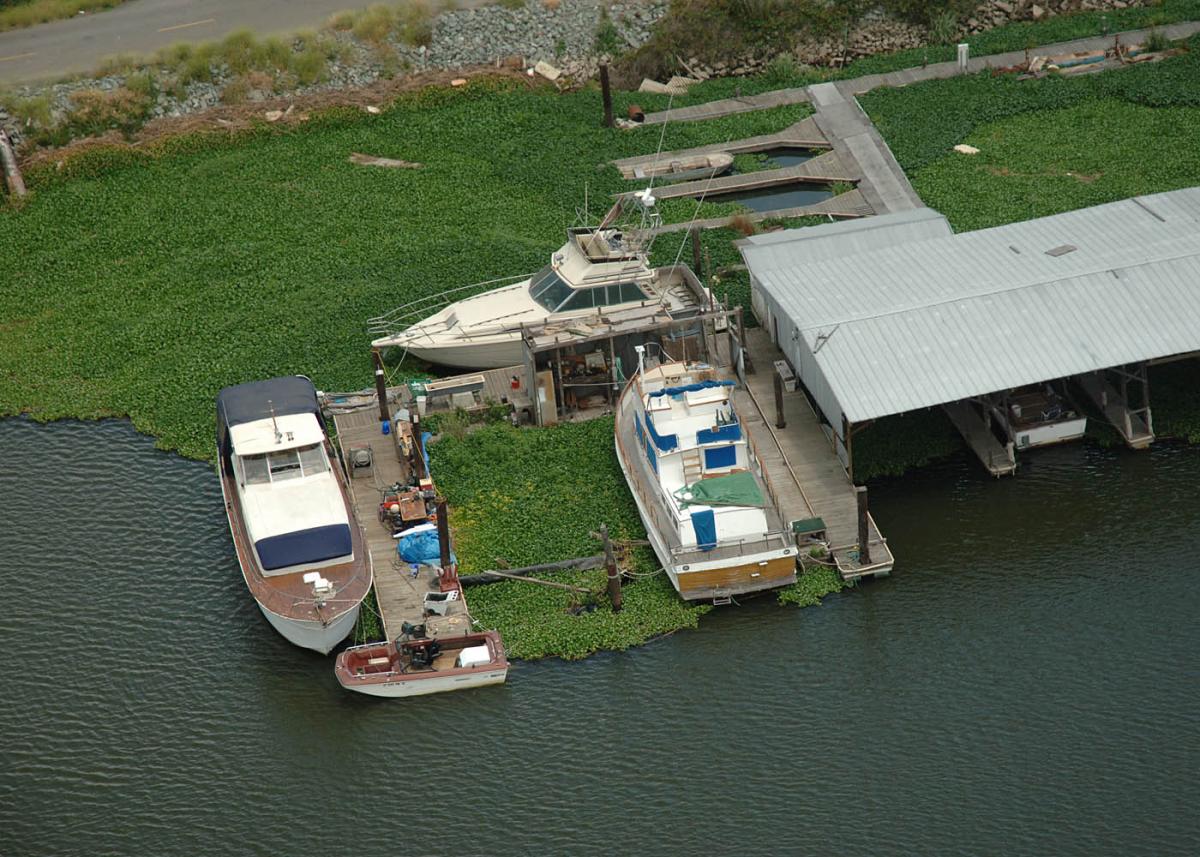
Brazilian waterweed and water hyacinth can alter ecosystem functions and choke waterways and marinas. Nutria, a large aquatic rodent from South America, are also causing major problems through burrowing (which weakens levees), their voracious eating habits and as vectors for pathogens and parasites.
In 2024, a new threat appeared: the golden mussel, which likely journeyed from Asia in the ballast water of a freighter bound for the Port of Stockton. The filter-feeding mussel, which is now widespread throughout the central and south Delta, can disrupt aquatic ecosystems and foul pumps and other water infrastructure. With its prolific reproduction, the golden mussel is particularly dangerous because it can colonize a wide range of aquatic habitats.
LOOKING AHEAD:
Recent decades have seen several efforts to restore native habitat in the Delta.
Today, the Department of Water Resources’ (DWR) Division of Multi-Benefit Initiatives oversees the majority of restoration work in the Delta, working in coordination with the Sacramento-San Joaquin Delta Conservancy and Delta Stewardship Council. The restoration effort puts special emphasis on projects that will yield not just ecosystem benefits but aid flood control as well. In one high-profile example, DWR and partners in 2024 completed the largest tidal restoration project yet at Lookout Slough in the northern Delta. As part of the project, “setback levees” were built to allow for a wider floodplain to support species like the Delta smelt. The existing levees were then breached in nine places to create 3,400 acres of habitat for native fish and various bird species as well as 40,000 additional acre-feet of floodwater storage to reduce flood risk.
 The Delta Plan, the state’s
comprehensive management strategy for the Delta, identifies a
restoration target of an additional roughly 70,000 acres in the
Delta by 2050 (measured against a 2007 baseline), including a mix
of tidal and non-tidal wetlands, riparian and floodplain habitat.
A 2025 analysis found that the effort was about 20 percent of the
way toward meeting those targets, with 14,269 acres of
restoration projects completed. Another 15,768 acres — equaling
an additional 22 percent of the final goal — was in progress or
being planned.
The Delta Plan, the state’s
comprehensive management strategy for the Delta, identifies a
restoration target of an additional roughly 70,000 acres in the
Delta by 2050 (measured against a 2007 baseline), including a mix
of tidal and non-tidal wetlands, riparian and floodplain habitat.
A 2025 analysis found that the effort was about 20 percent of the
way toward meeting those targets, with 14,269 acres of
restoration projects completed. Another 15,768 acres — equaling
an additional 22 percent of the final goal — was in progress or
being planned.
Much of the work is being guided by evolving science about habitat needs in the Delta, and by the concept of adaptive management, which allows managers to modify their actions based on improved scientific understanding of ecosystem dynamics.
Updated: May 2026


