




As Early Season Heat Wipes Out Sierra Snowpack, Can a New Approach Help California Catch More Runoff?
Read our Western Water Article, Water Word of the Day and Five Don't-Miss Water Reads from Across the West
Dear Western Water readers:
 California’s Department of Water
Resources is taking a hard look at a new way of using floodwater
to replenish the state’s chronically depleted aquifers. By
pairing more sophisticated reservoir operations with groundwater
recharge, water managers may be able to make greater use of the
increased floodwater that’s expected to come with flashier,
more-intense storms.
California’s Department of Water
Resources is taking a hard look at a new way of using floodwater
to replenish the state’s chronically depleted aquifers. By
pairing more sophisticated reservoir operations with groundwater
recharge, water managers may be able to make greater use of the
increased floodwater that’s expected to come with flashier,
more-intense storms.
The new approach is known as Forecast-Informed Reservoir Operations-Managed Aquifer Recharge or FIRO-MAR. In December, DWR released a study which found that, in the five main tributary watersheds of the San Joaquin River, “FIRO-MAR has the potential to increase the volume of recharge more than fourfold, and it can greatly diminish the size and frequency of flood flows.”
But FIRO-MAR still faces several substantial challenges before it can fully deliver on its promise. Learn more about the concept and what it will take to implement it more widely in our latest Western Water article, available online now.
Water Around the West
Five don’t-miss articles from California and across the West:
California cities and farms brace for water cutbacks as snow falls short: The San Francisco Chronicle’s Kurtis Alexander explains how this winter — in which more precipitation has arrived as rain than snow — is leaving parts of California facing a gloomy water-supply forecast for the rest of the year.
How a California desalination plant could ease water shortages on the Colorado River: The San Diego County Water Authority has voted to explore the possibility of trading a portion of California’s Colorado River water supply to water agencies in Arizona and Nevada, reports the LA Times’ Ian James. In exchange, those out-of-state agencies would help fund operation of the Carlsbad desalination plant to provide additional water to San Diego.
Conservation groups sue feds to save fish from Delta pumping: San Francisco Baykeeper, the Center for Biological Diversity and Friends of the River are taking the federal government to court over President Trump’s high-profile push to ramp up pumping from the Sacramento-San Joaquin Delta. As Alan Riquelmy of Courthouse News Service reports, the groups contend that increased pumping has harmed fish protected under the Endangered Species Act, including salmon, steelhead and sturgeon.
The West has been in a 32-year drought. But it may be worse than that: The Arizona Republic’s Hayleigh Evans explores whether the Southwest is experiencing not drought but “aridification” — a permanent shift to a drier climate. As University of Arizona climatologist Michael Crimmins told Evans: “Droughts, by definition, have beginnings and ends. Aridification is a systematic shift that doesn’t necessarily have an end to it.”
Finding common ground and practical solutions in a California water war zone: SJV Water’s Lisa McEwen reports on the Great Valley Farm Water Partnership, an effort to bridge the sometime-acrimonious divide between farmers and water managers in the San Joaquin Valley and those in the Sacramento-San Joaquin Delta itself — all of whom depend on water from the Delta and its larger watershed.
Western Water Word of the Day
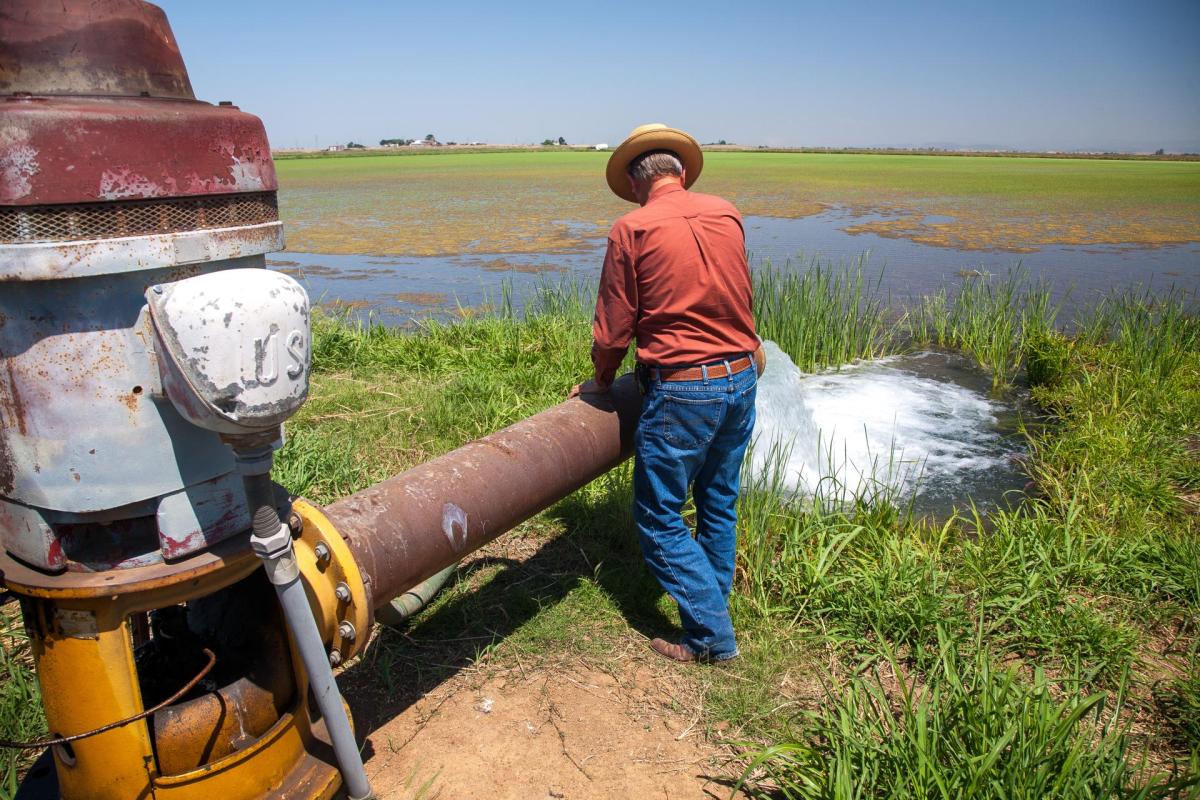 Each year, on average, 2 million
more acre-feet of groundwater is pumped out from under the
San Joaquin Valley than is replenished, leading to long-term
declines in many areas. To reverse that trend, California in
2014 passed the Sustainable Groundwater Management Act, which
requires local agencies to develop plans to ramp their pumping
down to sustainable levels by either 2040 or 2042. While
groundwater recharge projects can help resuscitate depleted
basins, they may not be enough. The Public Policy Institute of
California has estimated that ending groundwater overdraft
in the San Joaquin Valley could require taking at least 500,000
acres of irrigated cropland out of production. Learn more
about the
Sustainable Groundwater Management
Act in Aquapedia, our online water
encyclopedia.
Each year, on average, 2 million
more acre-feet of groundwater is pumped out from under the
San Joaquin Valley than is replenished, leading to long-term
declines in many areas. To reverse that trend, California in
2014 passed the Sustainable Groundwater Management Act, which
requires local agencies to develop plans to ramp their pumping
down to sustainable levels by either 2040 or 2042. While
groundwater recharge projects can help resuscitate depleted
basins, they may not be enough. The Public Policy Institute of
California has estimated that ending groundwater overdraft
in the San Joaquin Valley could require taking at least 500,000
acres of irrigated cropland out of production. Learn more
about the
Sustainable Groundwater Management
Act in Aquapedia, our online water
encyclopedia.
At the Foundation
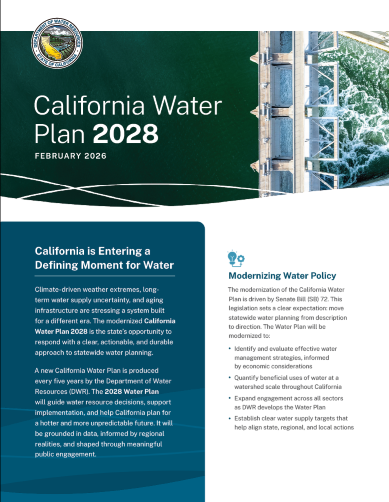 California’s water managers have
long been looking at ways to adapt to a hotter, drier future
where the impacts of climate change leave less water to meet the
state’s needs. At our annual Water
101 Workshop next Thursday in Sacramento,
participants will hear from Joel Metzger, deputy director
for statewide water resources planning, on efforts underway
by the California Department of Water Resources to achieve
a target of identifying 9 million acre-feet of
additional water supply by 2040. The agenda
for the workshop features some of the leading
policy and legal experts in California who will detail the
historical, legal and political facets of water management in the
state.
California’s water managers have
long been looking at ways to adapt to a hotter, drier future
where the impacts of climate change leave less water to meet the
state’s needs. At our annual Water
101 Workshop next Thursday in Sacramento,
participants will hear from Joel Metzger, deputy director
for statewide water resources planning, on efforts underway
by the California Department of Water Resources to achieve
a target of identifying 9 million acre-feet of
additional water supply by 2040. The agenda
for the workshop features some of the leading
policy and legal experts in California who will detail the
historical, legal and political facets of water management in the
state.
Seating is limited and filling up quickly, so don’t miss out! Get more details and register here by Monday!
Western Water Resource
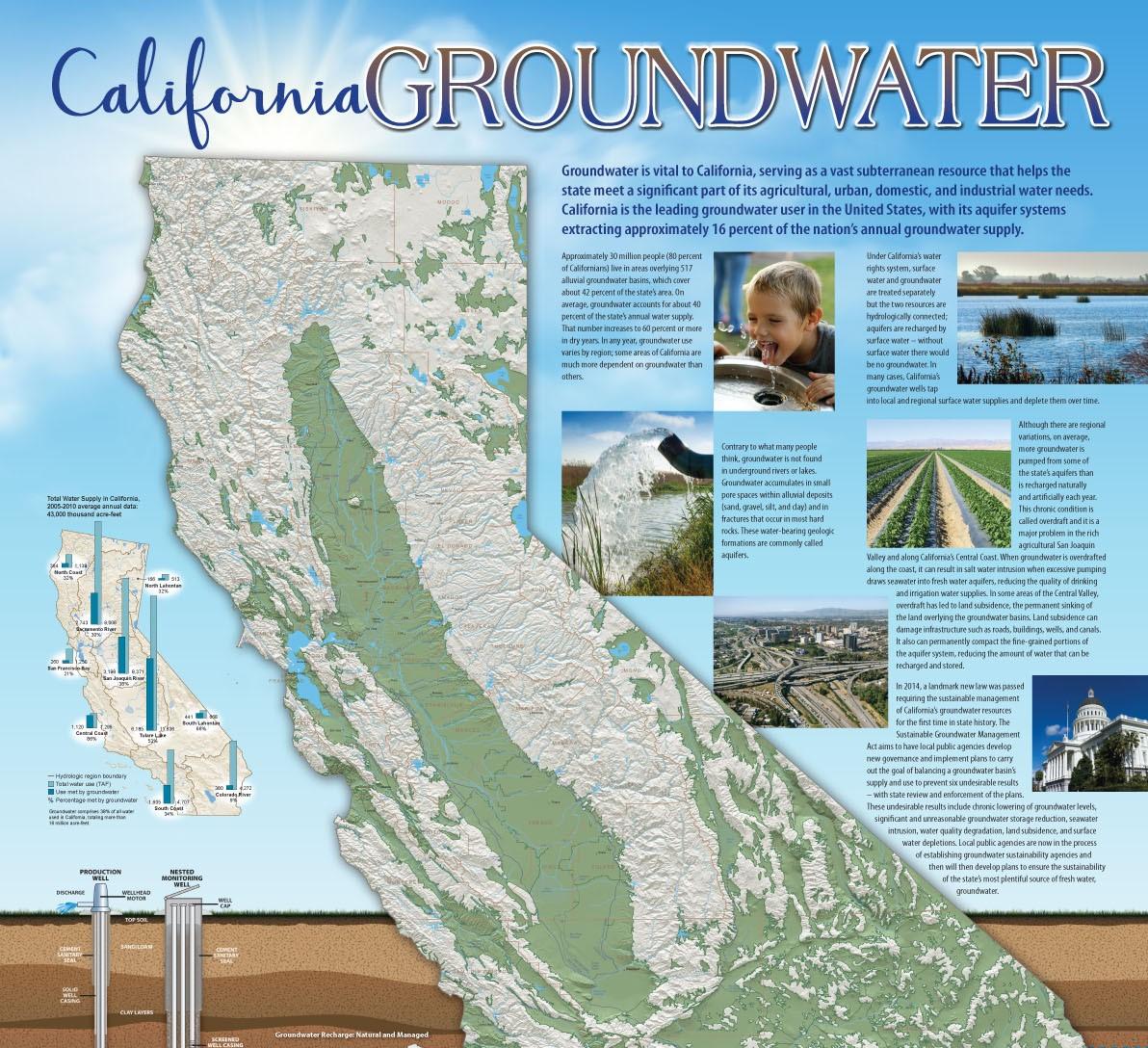 Our California Groundwater
Map illustrates the value and use of
groundwater, the main types of aquifers, and the connection
between groundwater and surface water. Aquifer cutaways represent
coastal, fractured rock and the San Joaquin Valley and Sacramento
Valley cross sections. In addition, graphics provide examples of
a production well and a monitoring well for the layperson to
better understand how groundwater is used and
tracked. Order your
copy here.
Our California Groundwater
Map illustrates the value and use of
groundwater, the main types of aquifers, and the connection
between groundwater and surface water. Aquifer cutaways represent
coastal, fractured rock and the San Joaquin Valley and Sacramento
Valley cross sections. In addition, graphics provide examples of
a production well and a monitoring well for the layperson to
better understand how groundwater is used and
tracked. Order your
copy here.


