


A New School Year, A New Flow: People & Water Charts a Fresh Course for Educators
California Project WET Gazette
“You cannot step into the same river twice, for it is not the same river and you are not the same person.” – Heraclitus, Greek philosopher ~500 BCE
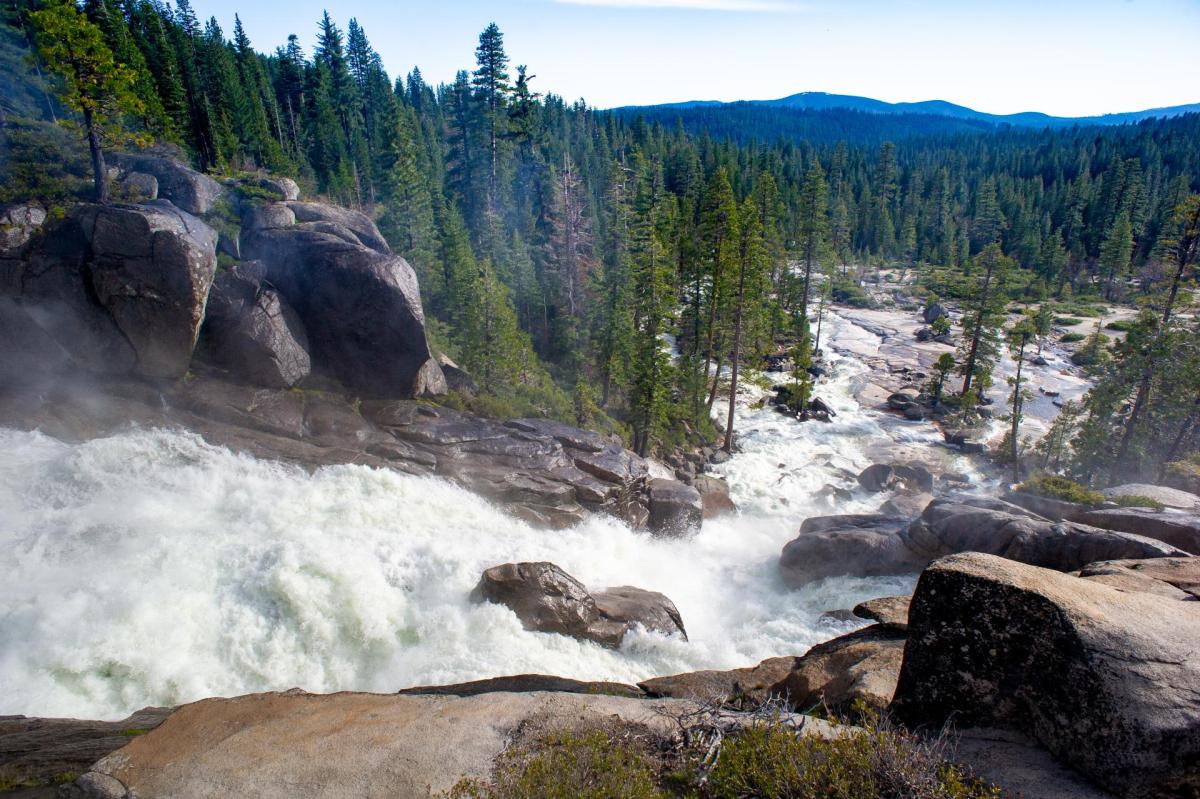 There is something about the start of a new school year that feels unmistakably like a river — full of potential, high energy, always finding its way forward and never the same as last year. Students arrive with new notebooks, new shoes and the quiet excitement of a blank slate. Teachers stand at the threshold of their classrooms with fresh intentions. And this fall, Project WET is meeting that energy with something educators have been eagerly anticipating: the release of People & Water, a brand-new guide designed to deepen the connection between learners and the world’s most essential natural resource.
A Guide for This Moment
People & Water arrives at exactly the right time. As California continues to navigate the complexities of drought, water equity and a changing climate, the guide offers educators a thoughtful, human-centered framework for exploring water not just as a scientific subject, but as a social, cultural and historical one. This is not a guide about water in the abstract. It is about water as it flows through communities, through generations, through the stories we tell and the decisions we make together.
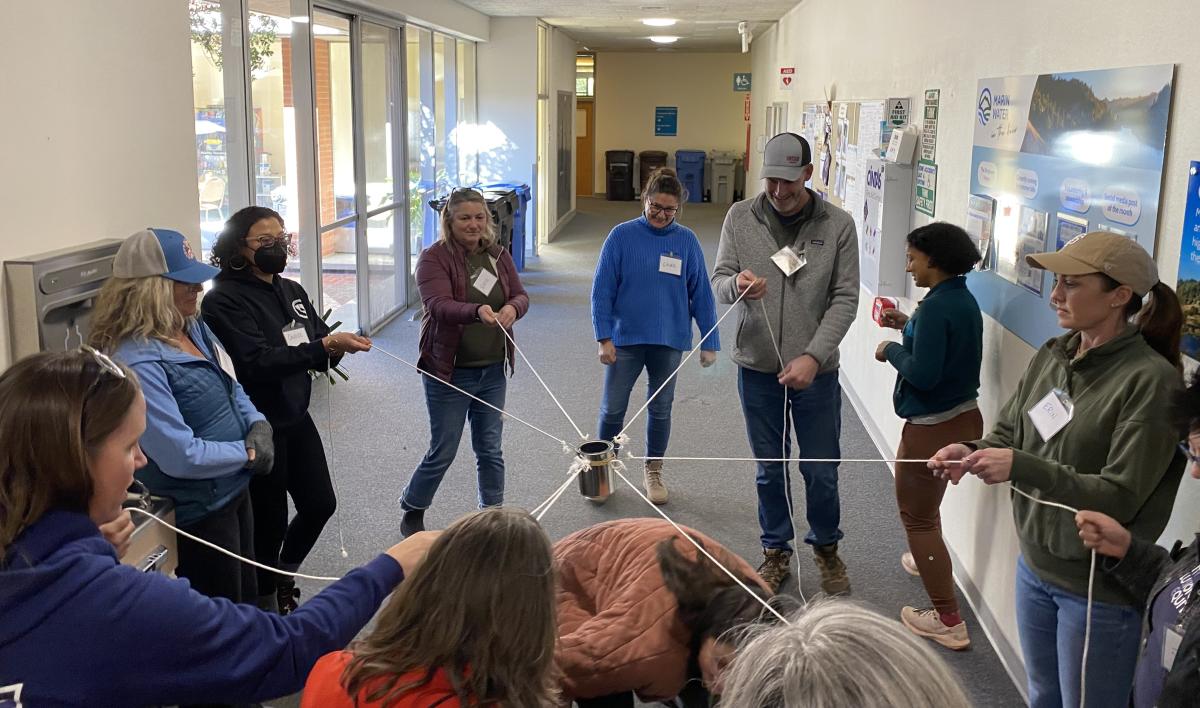 The very first activity in the guide, “Water For All,” tasks students with taking on roles of various water users within a community and working together to get the water where it needs to be. Another activity, “Sewer Science,” lets students model the wastewater filtration process and decide which items are flushable. In another real-world critical thinking problem, “Humpty Dumpty” asks students to face the challenges of landscape restoration projects by piecing together a broken item.
New Beginnings in the Classroom
Every teacher knows that the first weeks of school are precious. They set the tone, establish community and signal to students what kind of thinking will be valued throughout the year. People & Water is an ideal companion for this threshold moment. Its activities are designed to spark curiosity and build belonging — inviting students to share their personal experiences with water.
When students discover early in the year that their individual stories are part of a larger, interconnected water story, the classroom becomes something more than four walls. It becomes a watershed.
Water is Interdisciplinary
The guide aligns with California’s Math and ELA Common Core State Standards, California’s Environmental Principles and Concepts and Next Generation Science Standards, making cross-curricular integration not just possible but natural. Science teachers, history teachers, English language arts teachers and environmental educators will all find a foothold here.
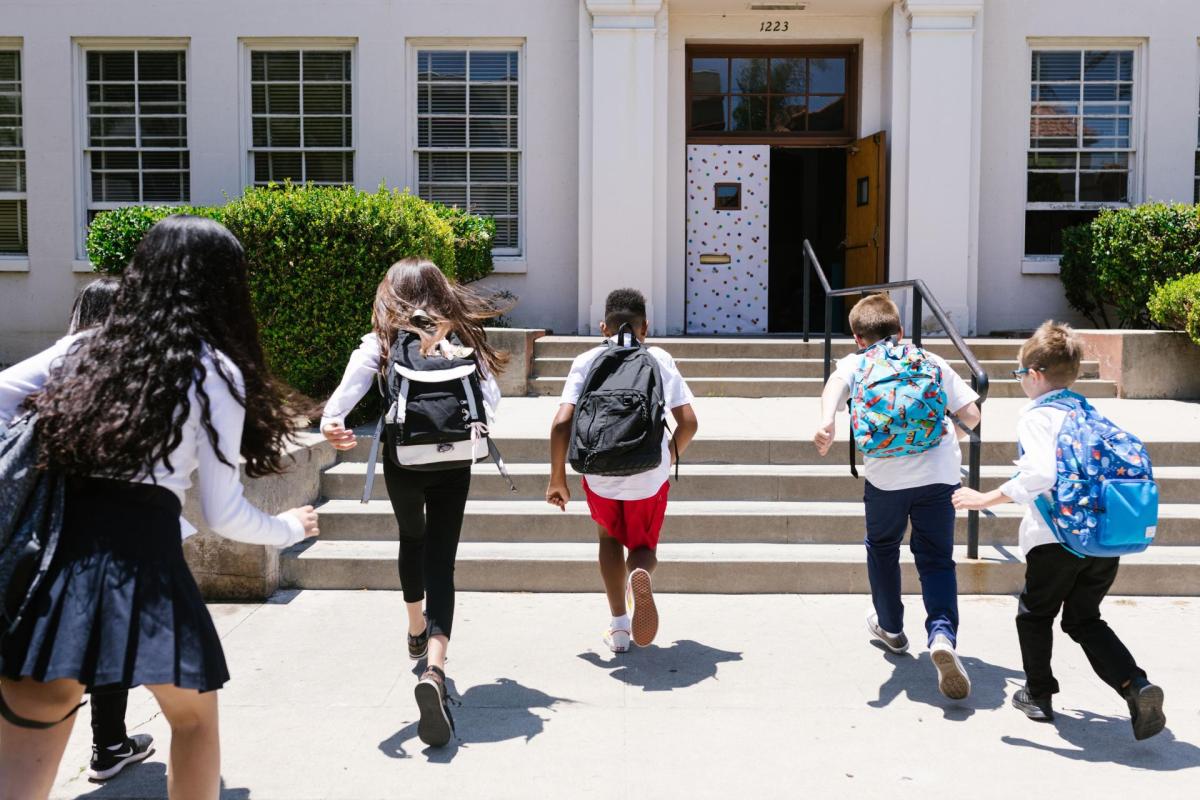 Break out the calculators for “Tracking Every Drop” where students monitor their water usage and calculate the cost of leaks. Do you know the meaning of the saying, “water under the bridge”? In an activity called “Raining Cats and Dogs,” students explore the origin of water-related proverbs and differentiate between literal and figurative phrasing. They can call a town hall meeting to discuss water management practices in “The Great Debate” activity. Let their creative juices flow as they create a mural using what they have learned about their local watershed in the activity “Make-a-Mural.”
Step Into the Current
New beginnings call for new tools. Whether you are returning to a classroom you know well or walking into one for the first time, People & Water offers a way to start the year with depth, relevance and wonder. It reminds us — and our students — that water is never just water. It is relationship. It is memory. It is responsibility.
California Project WET invites you to dive in as we navigate these shifting currents together.
WEBSITES OF INTEREST
US Geological Survey: Water Availability and Use Science Program
The Water Availability and Use Science Program (WAUSP) assists in the determination of water that is available for human and ecological uses, now and in the future. This includes evaluating the quantity and quality of water, identifying long-term trends in water availability, and developing an improved ability to forecast water availability for economic, energy production, and environmental uses.
US Geological Society: Water Use in the United States
Since 1950, the USGS has regularly produced nationwide water‑use data, creating one of the most comprehensive pictures of how water is used across the United States. Building on this rich historical record, these data give water managers a critical foundation to evaluate long‑term trends, plan strategically, and identify and quantify water availability so they can design more adaptive, resilient water management strategies.
US Geological Survey: A Visit to a Wastewater Treatment Plant
Have you ever wondered what happens to that water and waste after you flush? How about after you pull the plug on your tub? The modern wastewater-treatment plant employs basic physics and high technology to purify the dirtiest of water so it can go back into the environment as a member in good standing of the water cycle.
California Department of Water Resources: Education
We provide a variety of resources to K-12 educators to encourage water education in and out of the classroom. Our free supplementary materials can be used to help learn about California’s water resources. Check out our ‘Water Wednesdays’ You Tube page for conversations with DWR researchers on a range of water topics.
California Department of Water Resources: California Water Plan 2028
Climate-driven weather extremes, long-term water supply uncertainty, and aging infrastructure are stressing a system built for a different era. The modernized California Water Plan 2028 is the state’s opportunity to respond with a clear, actionable, and durable approach to statewide water planning.
California Department of Water Resources: The California Water System
California’s economy and culture have always been shaped by the abundance or scarcity of water. As people flocked to the mild climate and agricultural richness of southern California in the late 1800s and early 1900s, it was quickly apparent that the region’s water supply wouldn’t support the swelling population. Several water projects were built to import the precious resource to Southern California and the Central Valley.
US Environmental Protection Agency: National Primary Drinking Water Regulations
The National Primary Drinking Water Regulations (NPDWR) are legally enforceable primary standards and treatment techniques that apply to public water systems. Primary standards and treatment techniques protect public health by limiting the levels of contaminants in drinking water.
US Environmental Protection Agency: Water Quality Data
Water quality monitoring allows us to better understand and protect water resources. Under the Clean Water Act, state, tribal and federal agencies monitor lakes, streams, rivers and other types of water bodies to determine water quality condition. Additional data is collected by local governments, non-governmental organizations, and volunteers. The data generated from these monitoring activities help water resource managers know where pollution problems exist, where to focus pollution control efforts and where progress has been made.
NOAA Fisheries: Restoration Atlas
Explore our interactive Restoration Atlas to find habitat restoration projects near you. Search for projects by habitat type, location, or congressional district.
Water Replenishment District: Albert Robles Center for Water Recycling and Environmental Learning
The five-acre Albert Robles Center for Water Recycling & Environmental Learning (ARC) is located in the City of Pico Rivera. ARC is a multipurpose and multi-benefit site which encapsulates the Water Replenishment District’s commitment to the community through the construction of a state-of-the-art Advanced Water Treatment Facility, a fully digital Learning Center, and a water-efficient Demonstration Garden. Check out the Virtual Tour!
Water Energy Education Alliance: Careers in Water
In this activity, students will use California precipitation totals and evapotranspiration data to calculate and graph water deficits and surpluses. These spreadsheet models will help students understand droughts and the movement of water in the water cycle. A great NASA activity to use in tandem with “Water’s In, Water’s Out!”
Water Footprint Calculator: What’s Your Water Footprint?
Many of us have no idea what our daily water usage is, but we know that current and future water crises mean we need to use water as productively as possible. Understanding Daily Water Usage Helps Communities Become More Resilient to Crises We built the Water Footprint Calculator to help people figure out their daily water usage.
ThePlumber.com: Leak Calculator
How much water is wasted with “a slow drip” per day/month/year?
PBS Learning: The Urban Water Cycle
Where does the water we use to wash the dishes or flush the toilet come from and how does that play into the water cycle? Watch this animation to find out.
PPIC: Tribal Water Rights in California
Tribal water rights play an increasingly significant role in regional water management in California and on the Colorado River, benefiting both Tribal members and other water users. This report and accompanying appendix offer an overview and analysis of the Tribal water rights in California that have been quantified to date.
The Drop Podcast: Reimagining Recreation Through Recycled Water
In this episode Valley-Wide Recreation and Park District General Manager Dean Wetter discusses our agencies’ joint efforts to expand recycled water infrastructure and how these initiatives are transforming local parks and recreation spaces.
PPIC: Water Use in California’s Environment
On average, 50% of the state’s water goes to the environment. State accounting assigns water to the environment if it remains in ecosystems rather going to other uses like irrigation, industry, or drinking water.
Water Education Foundation: Los Angeles Aqueduct and Owens Valley
The Owens Valley in eastern California helped transform distant Los Angeles into today’s sprawling megalopolis. More than 100 years ago, Los Angeles recognized the need to augment local water supplies and decided to tap faraway sources.
Water Education Foundation: Hetch Hetchy Reservoir and Water System
Hetch Hetchy has generated controversy since it was first proposed as a source of water following the 1906 San Francisco earthquake. A 2006 University of California, Davis found the dam could be removed without much effect on the water supply, although removal would be costly because of lost hydropower generation for San Francisco and water drawn from other reservoirs would have to be treated.
Water Education Foundation: Colorado River
The Colorado River has been tapped for use by humans for at least 1,500 years. Colorado River water is shared by states, the federal government, American Indian tribes and Mexico. Today, more water is exported from the Colorado River Basin than any other river basin in the United States.
The Freshwater Trust: Sacramento & San Joaquin River Basins
Steadfast effort in Northern California is yielding an integrated strategy to coordinate environmental outcomes and build a more resilient ecosystem. Actions to improve land management and water availability include irrigation efficiency upgrades, cover cropping, and aquifer recharge. Chief among these projects is Harvest Water, a $600-million recycled water project to provide agricultural water supply.
PROFESSIONAL DEVELOPMENT OPPORTUNITIES
California Project WET Workshops (Water Education Foundation)
Check out our upcoming workshops in the above link. Don’t see anything in your area? Reach out to NRusso@WaterEducation.org to see if we can bring Project WET to your school or agency.
California Environmental Education Interagency Network (CEEIN)
This is a consortium of environmental educators representing state departments and partner organizations. Educators can find a variety of workshops and other participatory opportunities on our online events calendar to increase their environmental literacy on California natural resource topics and issues.
California Project Learning Tree Workshops
Project Learning Tree uses trees and forests as windows on the world to increase students’ understanding of the environment and actions they can take to conserve it. Trainings are offered to schools, teachers, parents, students and other non-profit organizations for outdoor environmental education programs.
California Project WILD Workshops
Project WILD is a wildlife-based conservation and environmental education program that fosters responsible actions toward wildlife and related natural resources. Project WILD activity guides provide curriculum specially designed for educators of kindergarten through high school youth.
Life Lab: Roots and Recipes workshop: Sept. 17-18
What if a garden could become a place to explore culture, geography, migration, community, and connection? That’s the idea behind Roots & Recipes: Teaching Social Studies and Nutrition Outdoors, our educator workshop happening September 17-18 at Life Lab’s Garden Classroom in Santa Cruz. You’ll spend two hands-on days exploring how food and gardens can help students make meaningful connections to the world around them. You’ll learn activities you can bring back to your classroom or garden program, and, of course, you’ll get to grow, harvest, cook, and taste along the way.
UPCOMING EVENTS
Aug. 25: National Park Service Birthday
The National Park Service was created on August 25, 1916 to “preserve unimpaired the natural and cultural resources and values of the National Park System for the enjoyment, education, and inspiration of this and future generations.” Come join our birthday celebration with an entrance fee free day on August 25!
September: National Preparedness Month
National Preparedness Month is an annual observance to raise public awareness about preparing for disasters and emergencies — man-made or natural — that could affect them, their homes, communities, or businesses. This month aims to reduce the fallout of large-scale emergencies by preparing every citizen, young and old.
Sept. 5: California Free Fishing Day
Here is another opportunity to fish without a sport fishing license. Some regions offer a Fishing in the City program and free fishing day clinics designed to educate novice anglers about fishing ethics, fish habits, effective methods for catching fish, fishing tackle and where you can go fishing in the middle of major metropolitan areas. You can even learn how to clean and prepare your catch so you can enjoy it for dinner that night.
Sept. 5 – 13: California Biodiversity Week
What makes California so special? California has the nation’s highest peaks and lowest desert valleys, vast coastlines with submarine gardens, and more plants and animals than any other US state – thus biodiversity is at the core of California’s remarkable nature!
Sept. 19: California Coastal Cleanup Day
Join the fight to help clean the beach by picking up litter in your community. Trash travels through storm drains, creeks, and rivers to become beach and ocean pollution. Cleaning your neighborhoods, local parks, streets, and storm drains helps protect our coast. Plan to spend a day outside connecting with your community to celebrate California!
Sept. & Oct.: California Agriculture in the Classroom Regional Conference
We’re bringing our teacher conference experience to you with Regional Teacher Conferences. This new format replaces one large event with smaller, local gatherings, making it easier to attend, connect, and learn. Each conference features hands-on workshops, classroom-ready resources, and opportunities to collaborate with educators in your region. Join us nearby and leave with fresh ideas for bringing agriculture to life for your students.
Sept. 26: National Public Lands Day
Our public lands are more than just places to visit—they are woven into the fabric of our everyday lives. From the trails we hike to the parks where we gather with family and friends, these spaces are our collective backyard, our shared front porch, our natural playground. Join us in September to care for the public lands we share.
Sept. 26: Free Entrance Days in the National Parks
Last year, over 130 national parks hosted National Public Lands Day events with 7,600 volunteers donating an impressive 41,500 hours of service. All national parks that charge an entrance fee will offer free admission to everyone on National Public Lands Day.
Oct. 10: 50th Anniversary of the California Coastal Act
More than a half century ago, California declared that its coast belongs to everyone! Please join a public celebration of the 50th Anniversary of the California Coastal Act at 1 PM at Junipero Beach in Long Beach. Enjoy live DJs, music, food, and fun along with special guest speakers and people like you, who have helped keep California’s coast open, healthy, and accessible to all!
Oct. 10: Take A Child Outside Day
Friends of the Arcata Marsh (FOAM) is an Arcata, California-based non-profit organization with a mission of educating the public about the wildlife, wetlands, and the wastewater treatment facility associated with the Arcata Marsh and Wildlife Sanctuary. Join us for Take A Child Outside (TACO) Day. We will have various environmental education groups hosting booths that introduce kids to outdoor ideas, crafts, and experimentation. All ages. Free
Nov. 6 – 8: California Science Education Conference
More than 1,000 science educators from around the state are expected to attend this year’s conference. The CASE Conference is well-known by science educators as the place to make connections, generate new ideas, energize their teaching, and learn, and grow as professionals. The goal of the California Science Education Conference is to give California science educators an opportunity to grow professionally in order to improve student outcomes in and access to a high-quality science education. You can even check out a Project WET mini-workshop!
SCHOOL GRANTS & OPPORTUNITIES
The Forestry Challenge is an academic event for high school students in technical forestry and current forestry topics. Participants spend four days in the forest learning about the ecology and management of the forested landscapes that provide communities with water, recreational opportunities, wood products, and wildlife habitat. Fall 2026 Pre-registration – Now Open!
Philanthropic Ventures Foundation Teacher Grants
Teachers come up with good ideas all the time, but don’t have the resources to fund them or the time to pursue arduous funding requirements. That’s why we launched Teacher Resource Grants. These small but critically needed grants for teachers help to address inequalities in public education and build future generations of strong leaders. Grants available while funding lasts!
Why salad bars? Supporting Research shows that incorporating salad bars into school lunches increases children’s consumption of fresh fruits and vegetables. SB2S is committed to helping schools make this positive change. We donate salad bars to schools so that every child across our nation has daily access to fresh fruits and vegetables. Available while funding lasts!
Through the “Let’s Go!” Field Trip Fund, the Environmental Volunteers provides affordable, easy-to-schedule, efficient and safe transportation for low-income youth (K-12) in San Mateo county to facilitate access to science and environmental education field trips. Applications for the 2026/2027 school year open in August
Learn About Ag Story Writing Contest: Due Nov. 1
The Imagine this… Story Writing Contest invites California students in grades 3–8 to explore the world of agriculture through creative writing. Students select an agricultural topic, research it, and craft an original story—real or imagined—that highlights the importance of agriculture in our lives. Winning stories are illustrated by California high school art students and published in our annual Imagine this… Stories Inspired by Agriculture book.
Karma for Cara Microgrant Program: Due Oct. 1
Students 18 years of age and under may apply for funds between $250 and $1,000 to complete service projects in their communities. Whether you plan to turn a vacant lot into a community garden, rebuild a school playground or help senior citizens ready their homes for the winter, we want to hear what project you’re passionate about!
MEEC School Garden Grant: Due Nov. 1
Educators can apply for up to $1,000 to start, expand, or sustain a school garden lab and provide students with hands-on environmental and STEM learning opportunities. Projects should demonstrate an environmental education, water conservation component, support applicable educational standards, and include a plan for implementation with a detailed project budget. Applicants must teach at a school located in the High Desert portion of San Bernardino County, Antelope Valley, or Palo Verde Valley of Riverside County.
MEEC Environmental STEM Mini Grant: Due Nov. 1
Teachers can apply for funding to support classroom projects that connect STEM learning with real-world environmental topics. Projects must include: An environmental connection or correlation, and align to current curriculum standards. Open to teachers working in classrooms located in the High Desert portion of San Bernardino County, Antelope Valley, or Palo Verde Valley of Riverside County.
Cal Water Aqua Adventure Field trips: Due Nov. 20
Aqua Adventures offers free water and nature-based field trips for upper elementary classrooms, grades 4-6, in Cal Water service areas. Teachers simply enter their classroom online for a chance at one of twelve annual field trips.
Water Smart Grants: Due Nov. 20
The Water Smart Grant is a grants program open to 4th-6th grade teachers conducting classroom projects focused on caring for water. Classrooms must be part of a school in a Cal Water service area. Teachers may apply for a grant, explaining their proposed project, and are notified within 30 days of their grant status.
Walmart Community Grant Program: Due Nov. 30
Our local community grants are awarded through an open application process and provide funding directly from Walmart and Sam’s Club facilities to local organizations, including K-12 public, nonprofit private schools, and charter schools, community/junior colleges, state/private colleges; or a church or other faith-based organization with a proposed project that benefits the community.
Toshiba America Foundation 6-12 Grant: Due Nov. 1 or Dec. 1
Do you teach in a middle and high school classroom and have an innovative idea for improving STEM (Science, technology, engineering and math) learning in your classroom with measurable outcomes? Sixth to 12th grade teachers are invited to apply on-line for a Toshiba America Foundation grant of up to $5,000 to help bring an innovative project into their own classroom.
Toshiba America Foundation Grades K – 5 Grant: Due Oct. 1
Do you have an innovative idea for improving science, technology, engineering and math learning in your classroom? What do you need to make learning math and science fun for your students? K-5 grade teachers are invited to apply on-line for a $1,000 Toshiba America Foundation grant to help bring an innovative hands-on project into their own classroom.
CREDITS
California Project WET Gazette is published by the Water Education Foundation, which serves as the state coordinator and host institution for Project WET USA, a program of the Project WET Foundation.
This material is based upon work supported by the U.S. Geological Survey under Cooperative Agreement # G25AC00438. The views and conclusions contained in this document are those of the authors and should not be interpreted as representing the opinions or policies of the U.S. Geological Survey. Mention of trade names or commercial products does not constitute their endorsement by the U.S. Geological Survey.
Editor: Nic Russo, California Project WET Coordinator
Water Education Foundation
2151 River Plaza Drive, Suite 205
Sacramento CA 95833
916.444.6240
www.watereducation.org