




George Chaffey
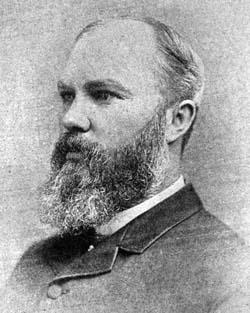 George Chaffey (1848-1932) was an
engineer, inventor and irrigation pioneer who played significant
roles in the diversion of Colorado River water to the
Imperial Valley and the development of irrigation colonies in
Inland Southern California and Australia.
George Chaffey (1848-1932) was an
engineer, inventor and irrigation pioneer who played significant
roles in the diversion of Colorado River water to the
Imperial Valley and the development of irrigation colonies in
Inland Southern California and Australia.
Chaffey was born in Ontario, Canada, and was a self-taught engineer. He apprenticed as a marine engineer on Lake Ontario and eventually became a partner in his father’s shipyard there.
In 1878, Chaffey’s father moved to Riverside, California, joining other Canadian families in developing profitable citrus orchards. Chaffey’s brother, William, joined their father in Riverside, and George Chaffey soon followed.
In 1881, flush with profits from their Riverside venture, George and William Chaffey set out as partners to create irrigation colonies in Etiwanda and Ontario on Southern California’s Rancho Cucamonga plain. They acquired land and water rights and then sold to individual settlers the 10-acre lots supplied with irrigation water through a nonprofit mutual water company. Their water distribution was done through a system of concrete pipes to conserve water.
The success of the Ontario and Etiwanda irrigation colonies caught the eye of Australian officials, who after a prolonged drought were eager to develop irrigated agricultural projects. They invited the brothers to pursue similar irrigation colonies in the Murray River basin in southeastern Australia. After some initial success, including the development of steam-powered pumps to draw water from the river, the Australian colonies foundered. William Chaffey remained in Australia, trying to make the projects a success, but George Chaffey returned to the United States.
In 1901, Chaffey teamed up with the California Development Company in an effort to tap the Colorado River for irrigation in the Imperial Valley. Chaffey led the construction of an inlet along the river and canals to bring water to the valley. But he left the company the following year. Three years later, flood waters on the Colorado River smashed through the inlet and flooded the Salton Sink, creating today’s Salton Sea.
Updated June 2026.


