




Tehama-Colusa and Corning Canals
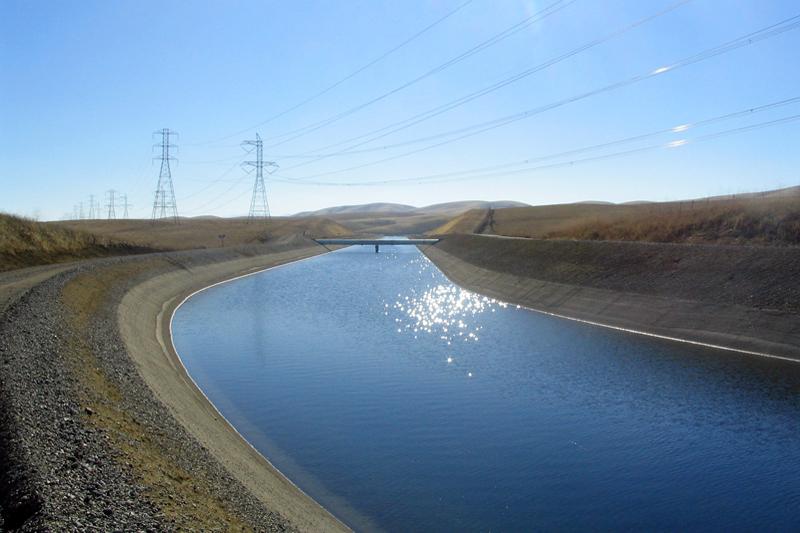 The Tehama-Colusa and Corning canals
receive water from the Sacramento River just upstream of the
Red Bluff Diversion Dam. That water is then used to irrigate
the west side of the Sacramento Valley as part of the federal
Central Valley
Project.
The Tehama-Colusa and Corning canals
receive water from the Sacramento River just upstream of the
Red Bluff Diversion Dam. That water is then used to irrigate
the west side of the Sacramento Valley as part of the federal
Central Valley
Project.
Construction of the Tehama-Colusa Canal and the diversion dam began in the 1960s, with the dam raising the level of the Sacramento River so that water could flow into the Tehama Colusa Canal by gravity. (Construction of the 21-mile-long Corning Canal was completed in 1959.)
Initially, to help fish reach spawning areas, gravel beds were placed along the upper 3.2 miles of the 111-mile-long Tehama-Colusa Canal. But the spawning beds failed due to a number of problems and adult fish had difficulty locating fish ladders. In addition, young fish migrating downstream were either entrained at the head of the Tehama-Colusa Canal or eaten by predator fish congregating at the dam.
Consequently, the Bureau of Reclamation made major renovations and operational adjustments to improve fish passage.
Improvements included 32 rotating drums to screen fish from entering the Tehama-Colusa Canal and a temporary fish ladder at the center of the dam for fish passage when the gates are closed. The changes had limited success in boosting numbers of migrating salmon and steelhead. The gates of the diversion dam are now left open year-round.
In 2010, construction began on a new fish passage improvement project upstream of the diversion dam. The $180 million project included fish screens and fish-friendly pumps to draw water from the Sacramento River and move it into the Tehama-Colusa Canal, which delivers water to 150,000 agricultural acres. It began operation in 2012. As part of the project, 32 acres of riparian habitat intended to benefit fish was constructed across the river.
The Tehama-Colusa Canal is viewed as a key component of the proposed Sites Reservoir in the foothills west of the Sacramento Valley town of Maxwell. Developers of the off-stream reservoir propose to use the canal to move high flows from the Sacramento River south to pumps that would fill the reservoir.
Updated May 2026


