




Carley V. Porter
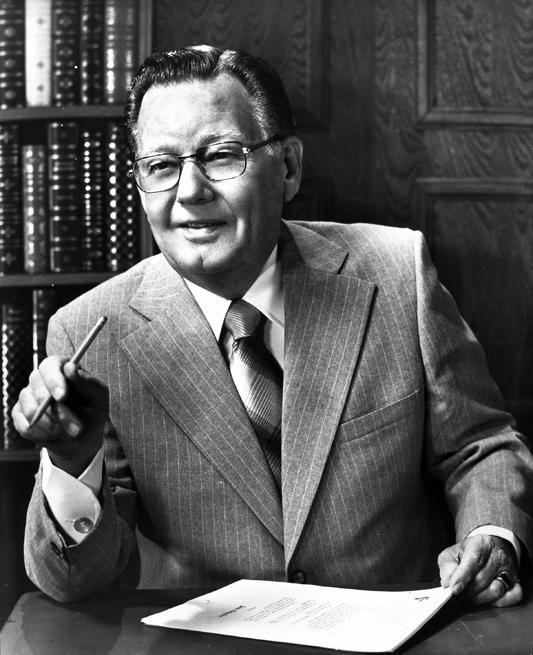 Carley V. Porter (1906-1972) was
the longtime chairman of the California Legislature’s Assembly
Committee on Water who has two historical and important water
laws named after him. He was a Democrat from Compton in Los
Angeles County and a teacher before being elected to the Assembly
in 1949.
Carley V. Porter (1906-1972) was
the longtime chairman of the California Legislature’s Assembly
Committee on Water who has two historical and important water
laws named after him. He was a Democrat from Compton in Los
Angeles County and a teacher before being elected to the Assembly
in 1949.
Porter made the state’s water problems a major focus of his legislative career. He served on the Legislature’s Joint Water Problems Committee in the 1950s and chaired the Assembly Water Committee from its creation in 1959.
In 1960, Porter joined with Sen. Hugh Burns, a Fresno County Democrat, to pass the Burns-Porter Act, the landmark legislation that authorized the State Water Project.
In 1969, Porter joined with Sen. Gordon Cologne of Riverside County to pass the Porter-Cologne Water Quality Control Act, which strengthened the state’s water quality control program.
In between those years, Porter played a key role in reshaping California water resources. Among his accomplishments, Porter carried legislation in 1967 that created the modern State Water Resources Control Board, merging the State Water Quality Control Board with the State Water Rights Board.
“It was his realization of the needs of the state which contributed largely to the successful passage of the Burns-Porter Act which resulted in the California Water Project,” according to an excerpt from a eulogy published in the Lodi News-Sentinel Dec. 19, 1972. “Porter was not only concerned with water supply but with quality as well. He, along with Gordon Cologne, authored the state’s Water Quality Control Act to clean up the lakes and streams.”
The Burns-Porter Act, formally known as the California Water Resources Development Bond Act, was passed by voters in November 1960 to finance and build the nation’s largest state-built water and power development and distribution system — the State Water Project. The Porter-Cologne Act, enacted by the state Legislature in 1969, was recognized as one of the nation’s strongest anti-pollution laws and influenced the development of the federal Clean Water Act in 1972.
Updated December 2025.


