



Drought
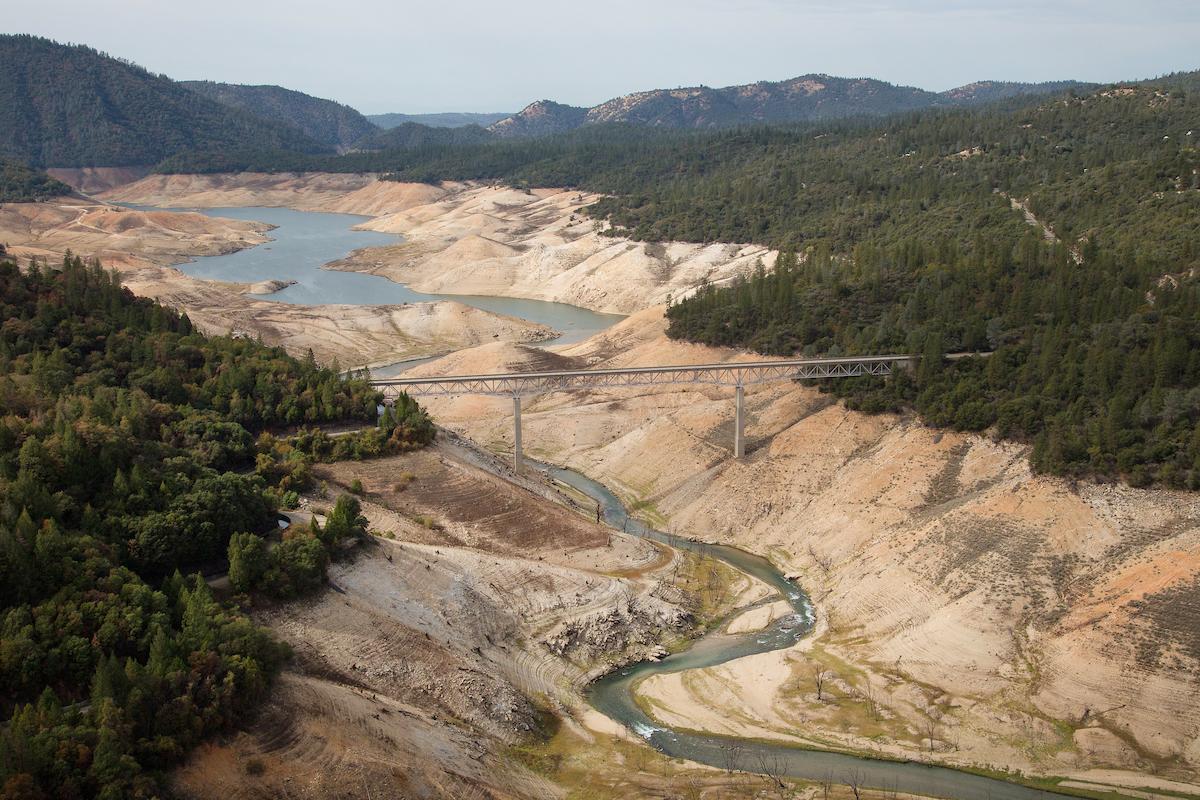
Drought — an extended period of limited or no precipitation — is a fact of life in California and the West, with water resources following boom-and-bust patterns. No portion of the West has been immune to drought during the last century and it occurs with much greater frequency in the West than in any other region of the country.
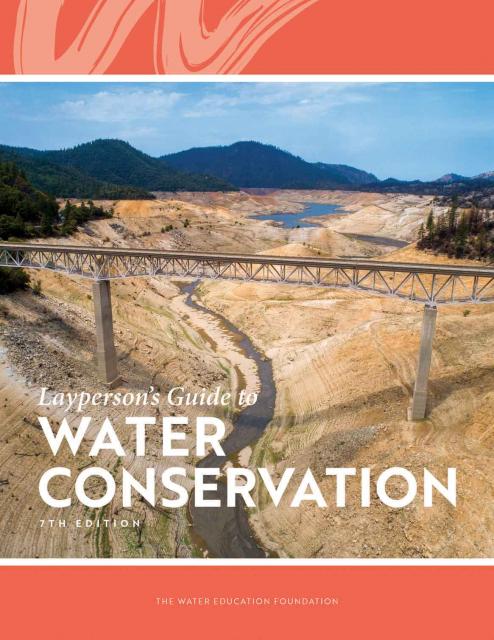
During California’s 2012–2016 drought, for example, much of the state experienced severe drought conditions: significantly less precipitation and snowpack, reduced streamflow, higher temperatures and depleted reservoirs. Similar conditions have persisted in the Colorado River Basin since 2000, resulting in a historic drought that has substantially depleted its major reservoirs. Arizona, which derives 40 percent of its water from the Colorado River, has been in long-term drought for more than 30 years.
Most of the West experiences what is classified as severe to extreme drought more than 10 percent of the time, and a significant portion of the region experiences severe to extreme drought more than 15 percent of the time, according to the National Drought Mitigation Center. Tree ring studies suggest that some areas of the arid West experienced longer and more severe droughts than what the West has seen in the last 175 years.
BACKGROUND
Droughts generally happen gradually and are often called a “creeping disaster.” Water shortages to forests, aquatic ecosystems, hydroelectric power plants, rural drinking water supplies, agriculture and cities can cause billions of dollars in economic losses.
Water stored in reservoirs and groundwater blunt the effects of drought and influence when the state is deemed to be in drought, according to the California Department of Water Resources (DWR). A single dry year does not lead to drought in California because of the state’s extensive water infrastructure, including major reservoirs and groundwater resources. Other Western states have similar water storage and groundwater resources that can lessen the effects of drought.
Click here to get the latest developments on drought in California and across the West in Aquafornia, our weekday water news feed.
There is no universal definition of when a drought begins or ends, nor is there a statutory process for defining or declaring drought in most Western states. (An exception is the state of Washington, which established certain criteria for defining when an area is in drought condition.) Furthermore, it is important to distinguish between drought conditions and a state of emergency. The former is a condition of prolonged dryness that causes impacts; the latter is a statutory finding that enables specified actions.
The severity of drought is often a matter of perspective. Farmers and ranchers who depend solely on rainfall or the natural flow of a river may experience water shortage sooner than farmers with access to groundwater or water stored in reservoirs. Rural residents dependent on shallow domestic wells might be affected sooner than urbanites on a municipal system who might not feel drought’s effects until they’re required to stop watering their lawns.
CHALLENGES AND CONTROVERSIES
Throughout the West, states have responded to the typical pattern of flooding and drought by building a network of dams, reservoirs and canals that capture rainfall and snowmelt runoff.
The systems are designed to collect surface runoff during winter months, when precipitation generally is plentiful, and store it for use during summer months, when rainfall is virtually nonexistent.
As long as precipitation occurs in normal amounts, these systems work quite well. But they become stressed if precipitation levels fall below normal for even a couple of years. The problem lies in the fact that much of the west is an arid desert that water has transformed into farmland and communities.
Such transformation created an agricultural empire in California’s Sacramento, San Joaquin and Imperial valleys while facilitating the developments of vast amounts of land for cities. In consequence, demands for water by people, farms and the environment have generated controversy and conflict because, even in years with abundant precipitation, the supply of water is not always able to match the need. In dry years, there is simply not enough water to go around.
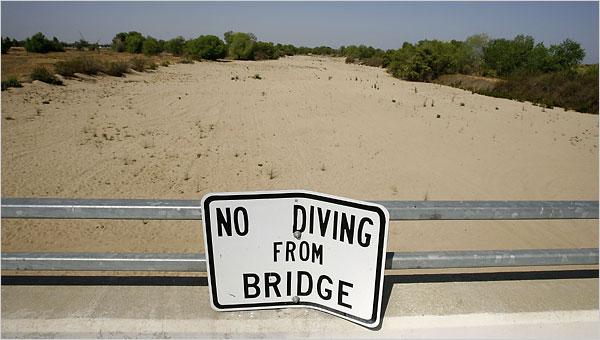 Drought can cause other impacts.
Drought can cause devastating effects on the environment, drying
out watersheds and leaving
them more vulnerable to widespread tree deaths and destructive
wildfires. Reduced stream flows can impair fish populations and
warmer water temperatures can cause harmful algal blooms. With less
snow and rain falling in watersheds, hydroelectric power plants
are less able to produce electricity, which can force utilities
to turn to more expensive power generation. In 2021, for example,
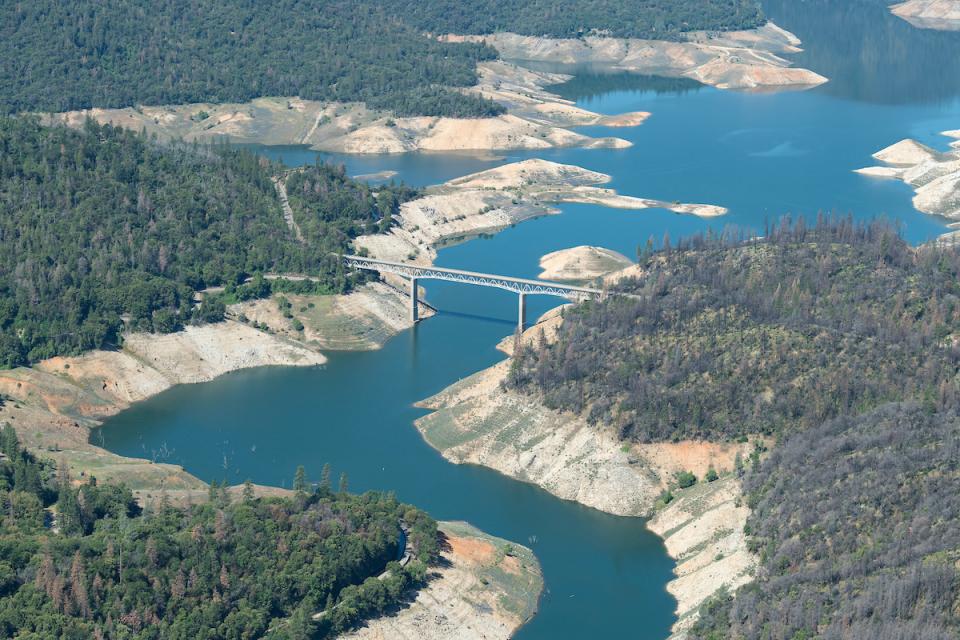
drought caused California’s state-run Edward Hyatt Powerplant at
Lake Oroville to
shut down due to low water levels for the first time since it
opened in 1968. The plant resumed operations five months later.
Drought can cause other impacts.
Drought can cause devastating effects on the environment, drying
out watersheds and leaving
them more vulnerable to widespread tree deaths and destructive
wildfires. Reduced stream flows can impair fish populations and
warmer water temperatures can cause harmful algal blooms. With less
snow and rain falling in watersheds, hydroelectric power plants
are less able to produce electricity, which can force utilities
to turn to more expensive power generation. In 2021, for example,
drought caused California’s state-run Edward Hyatt Powerplant at
Lake Oroville to
shut down due to low water levels for the first time since it
opened in 1968. The plant resumed operations five months later.
Droughts traditionally have been managed as crises, using short-term, ad hoc water management measures that are often abandoned once precipitation returns to normal levels. Among the more painful measures: Water rights may be curtailed for some junior rights holders, as has happened in a number of Western states, among them Colorado, Utah and California.
Because droughts cannot be prevented, experts are seeking better ways to forecast them and new approaches to managing droughts when they occur. More long-term plans for mitigating the effects of droughts should be made before water shortages occur, crisis management experts say, and should include water resources monitoring, graduated water conservation measures and public education.
In California, a severe drought in 1976 and 1977 served as a wake-up call for the state, helped spark the water conservation movement, and spurred the creation of the Water Education Foundation to educate the public and lawmakers on critical water issues.
The 2012-2016 drought — one of the deepest, longest and warmest of California’s historical droughts — tested the state’s drought preparedness. In January 2014, then-California Gov. Jerry Brown proclaimed a state of emergency and directed state officials to take all necessary actions to prepare for drought conditions.
That drought also provided the impetus for the state to enact the Sustainable Groundwater Management Act, initiating a multi-decade effort to bring groundwater use and replenishment into balance. Groundwater is often relied on in drought to offset reductions in surface water supplies, but unsustainable pumping in some parts of California had led to wells going dry and widespread land subsidence that damaged roads and water infrastructure.
In 2015, the state set a new low when the April snowpack was recorded at 5 percent of the April 1st average, making the 2015 water year the driest winter in the state’s recorded history. (The water year runs from October 1 to September 30.) Californians responded to the state government’s pleas to conserve water. During June, July and August 2015, water agencies met or exceeded Gov. Brown’s call for a 25 percent reduction in water use.
A wet winter in 2016-2017 brought an end to the drought emergency. But the lessons of the drought prompted lawmakers to enact new laws to create a long-term water conservation framework for California based on wise water use, eliminating water waste and improved agricultural water use efficiency.
In the years since, continued swings between wet and dry years and growing concerns about the impact climate change will have on water supplies have driven California and other Western states to pursue new initiatives to address drought risks and other climate impacts. Among the initiatives are building more infrastructure to move water around to where it’s needed, bolstering dry-year supplies by storing more water in aquifers during wet years, and adjusting water rights rules to allow more floodwater capture for storage.
LOOKING AHEAD
California has the most variable year-to-year precipitation in the lower 48 states. Already, droughts in the 21st century are hotter, last longer, and are more widespread, according to the 2022 report, “Indicators of Climate Change in California.” Future droughts are expected to grow more frequent, last longer and be more intense. As air temperatures warm, soils will become drier, leading to drier seasonal conditions.
These same effects are being seen in the Colorado River Basin, where drought and hotter temperatures are causing the parched soil to soak up more of the rain and spring snowmelt, leaving less to reach the tributaries and rivers that flow into the Colorado River. By 2050, according to some estimates, flows in the Colorado River — a source of water for 40 million people across seven Western states and Mexico — could decline by 20 to 30 percent.
Updated July 2026