



As Shortages Loom in the Colorado River Basin, Indian Tribes Seek to Secure Their Water Rights
Dear Western Water readers:
 As the Colorado River Basin becomes
drier and shortage conditions loom, one great variable remains:
How much of the river’s water belongs to Native American tribes?
As the Colorado River Basin becomes
drier and shortage conditions loom, one great variable remains:
How much of the river’s water belongs to Native American tribes?
Native Americans already use water from the Colorado River and its tributaries for a variety of purposes. But some tribes aren’t using their full federal Indian reserved water right and others have water rights claims that have yet to be resolved. Increasingly, tribes are pressing to have the importance of their water rights recognized. And because of a century-old U.S. Supreme Court case, Indian tribes in most cases are likely to be the last to have to absorb a cut when water’s in short supply. An impending tribal water study should shed light on the issue.
Western Water’s Gary Pitzer examines how tribal water rights could matter as questions are addressed about how water in an already overallocated Colorado River Basin is shared by everyone in a sustainable manner. Read the full story here.
Water Around the West
Here are five don’t-miss articles from the last week:
Massive California Water Tunnel Project Forges Ahead on Several Fronts. Cariad Hayes Thronson, in a story published in Water Deeply, explores the status of Gov. Jerry Brown’s giant twin tunnel project that is still plodding through several permitting steps as his term winds down with just two months left.
The biggest share of Colorado River water in the West is up for grabs. Sammy Roth, writing in the Palm Springs Desert Sun, examines a high stakes court fight between a public agency and a powerful Imperial Valley farmer to determine who owns the largest share of Colorado River water in the West, complicating the river’s future as seven Western states scramble to avoid severe water shortages.
Think modern wildfires are bad? Fires once burned up to 36 times more of the West, study says. Jared Gilmour, writing for McClatchy.com, reports on a new study suggesting that while the wildfires tearing through the Western U.S. in recent years might seem unprecedented, they are still consuming “a small fraction” of the land fires consumed before European settlers arrived en masse in the West.
Bringing Olympia oysters back to Elkhorn Slough. Erin I. Garcia De Jesus with the Santa Cruz Sentinel reports on an effort to use aquaculture methods to try to restore breeding populations of Olympia oysters — the West Coast’s only native oyster — in the state marine reserve at Monterey Bay’s Elkhorn Slough.
Cry me a river: Low water levels causing chaos in Germany. David Rising with The Associated Press chronicles how a hot, dry summer has left German rivers and lakes at record low water levels, causing chaos for the inland shipping industry, environmental damage and billions of euros (dollars) in losses — a scenario that experts warn could portend the future as global temperatures rise.
Water Word
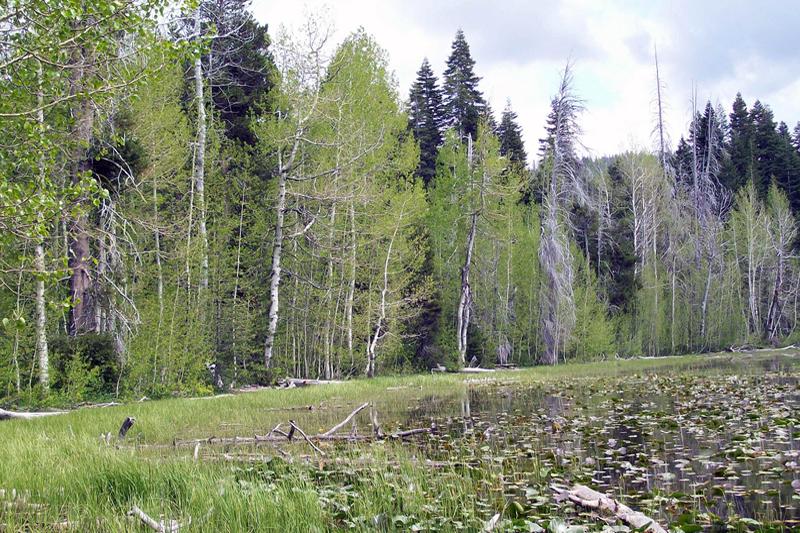 Water Word of the Day: Federal Reserved
Rights. Federal reserved rights were
created when the United States reserved land from the public
domain for uses such as Indian reservations, military bases and
national parks. They often are senior in priority to water rights
established under state law. The date of priority of a federal
reserved right is the date the reservation was established, and
many were established prior to state water claims. Learn more
about federal reserved rights in Aquapedia, our free, vetted online water
encyclopedia.
Water Word of the Day: Federal Reserved
Rights. Federal reserved rights were
created when the United States reserved land from the public
domain for uses such as Indian reservations, military bases and
national parks. They often are senior in priority to water rights
established under state law. The date of priority of a federal
reserved right is the date the reservation was established, and
many were established prior to state water claims. Learn more
about federal reserved rights in Aquapedia, our free, vetted online water
encyclopedia.
At the Foundation
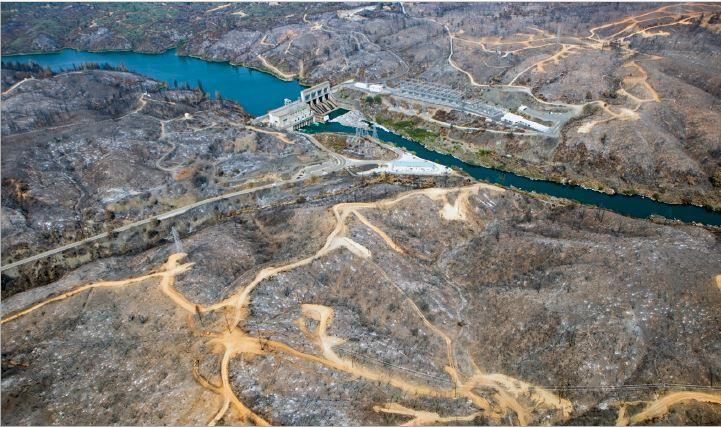 Water Year 2018 marked a return to
dry conditions statewide following an exceptionally wet
2017. Was Water Year 2018 — from Oct. 1, 2017 to Sept. 30,
2018 — simply a single dry year or does it signal the beginning
of another drought? And what can reliably be said about the
prospects for Water Year 2019? Find out at a one-day event Dec. 5
in Irvine, Water Year
2019: Feast or Famine?
Water Year 2018 marked a return to
dry conditions statewide following an exceptionally wet
2017. Was Water Year 2018 — from Oct. 1, 2017 to Sept. 30,
2018 — simply a single dry year or does it signal the beginning
of another drought? And what can reliably be said about the
prospects for Water Year 2019? Find out at a one-day event Dec. 5
in Irvine, Water Year
2019: Feast or Famine?
Water Academy
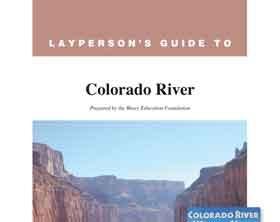 The Colorado River provides water to
more than 35 million people and 4 million acres of farmland in a
region encompassing some 246,000 square miles in the southwestern
United States. Our 32-page Layperson’s Guide
to the Colorado River covers the history of the river’s
development; negotiations over division of its water; the items
that comprise the Law of the River; and a chronology of
significant Colorado River events. Other issues discussed include
Indian water rights, the recent efforts to draft comprehensive,
collaborative solutions to the river’s future water supply-demand
shortfall and efforts to restore the environment. Here’s where to
get your
copy.
The Colorado River provides water to
more than 35 million people and 4 million acres of farmland in a
region encompassing some 246,000 square miles in the southwestern
United States. Our 32-page Layperson’s Guide
to the Colorado River covers the history of the river’s
development; negotiations over division of its water; the items
that comprise the Law of the River; and a chronology of
significant Colorado River events. Other issues discussed include
Indian water rights, the recent efforts to draft comprehensive,
collaborative solutions to the river’s future water supply-demand
shortfall and efforts to restore the environment. Here’s where to
get your
copy.


